


Declining transition rate in ultra high risk (prodromal) services: dilution or reduction of risk?
- PMID: 17404389
- PMCID: PMC2526154
- DOI: 10.1093/schbul/sbm015
Declining transition rate in ultra high risk (prodromal) services: dilution or reduction of risk?
Abstract
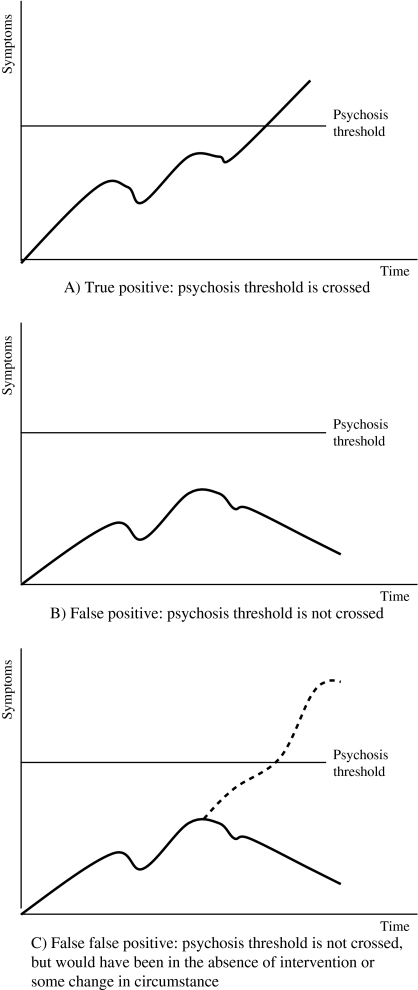
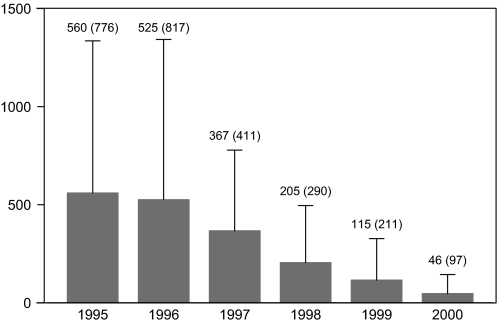
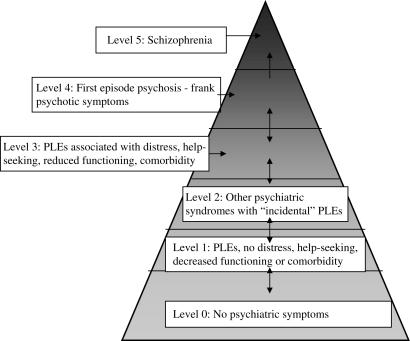
There is growing interest in the prodromal stage of psychotic disorders, with many services now providing care for these "ultra high risk" (UHR) individuals. However, a reduction in the rate of transition to psychosis has been suspected over the last few years. This has implications for the use of interventions in this population and for the validity of research findings. This study examined the transition rate in one UHR service, the Personal Assessment and Crisis Evaluation Clinic, over the years 1995-2000 and investigated possible causes for the transition rate reduction. There was evidence for a declining transition rate, with each successive year showing a rate 0.80 times that of the preceding year. Functioning and symptom level were not responsible for the change. The decreased transition rate was partly explained by a reduction in the duration of symptoms of patients prior to receiving help. That is, UHR individuals are being detected and provided with care earlier than in the past. Thus, the decline in transition rate may be due to treatment being more effective at this very early stage of illness or it may be due to finding more false positives who were never at risk of psychosis, ie, a "dilution" effect. Given that it is not possible to distinguish between these alternatives at least phenotypically at present, perhaps it is time to rethink the role and practice of UHR clinics. Patients presenting to them need help. It may be that we need to aim to prevent a range of target syndromes.
Figures
References
-
- Hafner H, Loffler W, Maurer K, Hambrecht M, an der Heiden WA. Depression, negative symptoms, social stagnation and social decline in the early course of schizophrenia. Acta Psychiatr Scand. 1999;100:105–118. - PubMed
-
- Yung AR, McGorry PD. The prodromal phase of first episode psychosis: past and current conceptualisations. Schizophr Bull. 1996;22:353–370. - PubMed
-
- Yung AR, McGorry PD. The initial prodrome in psychosis: descriptive and qualitative aspects. Aust N Z J Psychiatry. 1996;30:587–599. - PubMed
-
- Pantelis C, Velakoulis D, McGorry PD, et al. Neuroanatomical abnormalities before and after onset of psychosis: a cross-sectional and longitudinal MRI study. Lancet. 2003;361:281–288. - PubMed
MeSH terms
LinkOut - more resources
Full Text Sources
Medical
Miscellaneous
