


Chronic inflammation: a failure of resolution?
- PMID: 17408451
- PMCID: PMC2517296
- DOI: 10.1111/j.1365-2613.2006.00507.x
Chronic inflammation: a failure of resolution?
Abstract
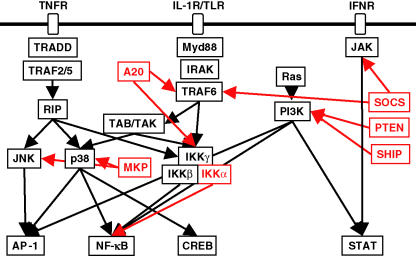
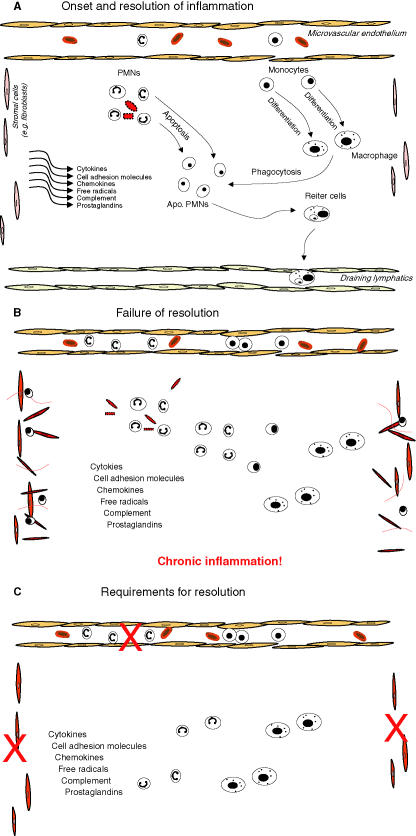
Inflammation has evolved as a protective response to insult or injury, it's a primordial response that eliminates or neutralises foreign organisms or material, the resolution of inflammation encompasses the endogenous anti-inflammatory mechanisms that protect us against excessive tissue injury and promote the restoration of tissue structure and function. In fact, our well being and survival depends upon its efficiency and carefully-balanced control. In general, the innate inflammatory response initiates within minutes and, if all is well, resolves within hours. In contrast, chronic inflammation persists for weeks, months or even years. Here, we are going to discuss the key endogenous checkpoints necessary for mounting an effective yet limited inflammatory response and the crucial biochemical pathways necessary to prevent its persistence.
Figures
References
-
- Alexander WS, Hilton DJ. The role of suppressors of cytokine signaling (SOCS) proteins in regulation of the immune response. Annu. Rev. Immunol. 2004;22:503–529. - PubMed
-
- Arch RH, Gedrich RW, Thompson CB. Tumor necrosis factor receptor-associated factors (TRAFs) – a family of adapter proteins that regulates life and death. Genes. Dev. 1998;12:2821–2830. - PubMed
-
- Baud V, Karin M. Signal transduction by tumor necrosis factor and its relatives. Trends Cell Biol. 2001;11:372–377. - PubMed
-
- Bellingan GJ, Caldwell H, Howie SE, Dransfield I, Haslett C. In vivo fate of the inflammatory macrophage during the resolution of inflammation: inflammatory macrophages do not die locally, but emigrate to the draining lymph nodes. J. Immunol. 1996;157:2577–2585. - PubMed
Publication types
MeSH terms
Substances
LinkOut - more resources
Full Text Sources
Other Literature Sources
