


Doppler waveforms of the ureteric jet: an overview and implications for the presence of a functional sphincter at the vesicoureteric junction
- PMID: 17415600
- PMCID: PMC1891641
- DOI: 10.1007/s00247-007-0433-1
Doppler waveforms of the ureteric jet: an overview and implications for the presence of a functional sphincter at the vesicoureteric junction
Abstract
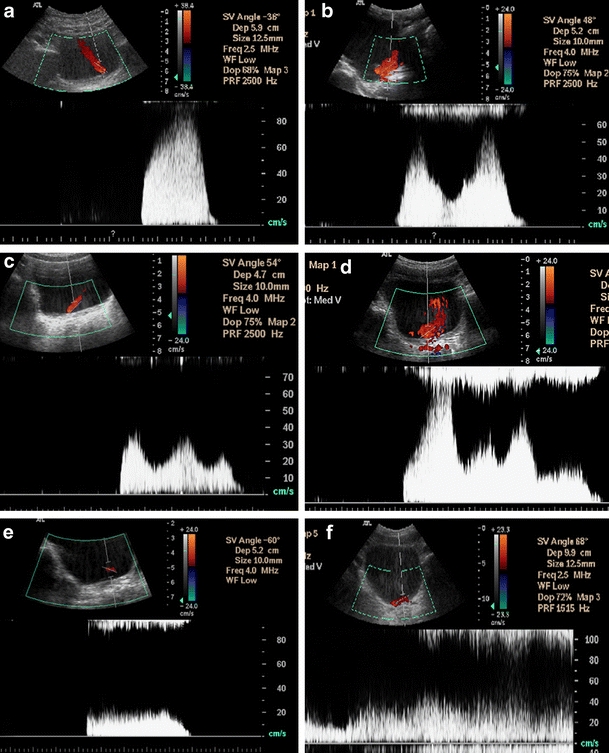
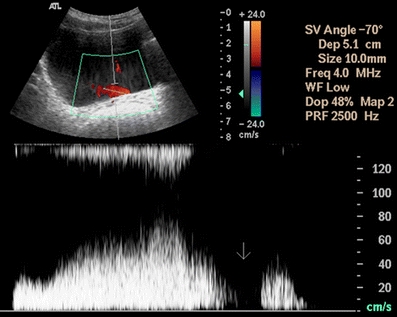
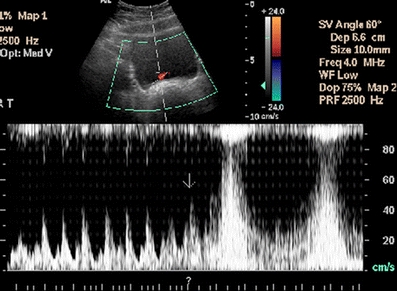
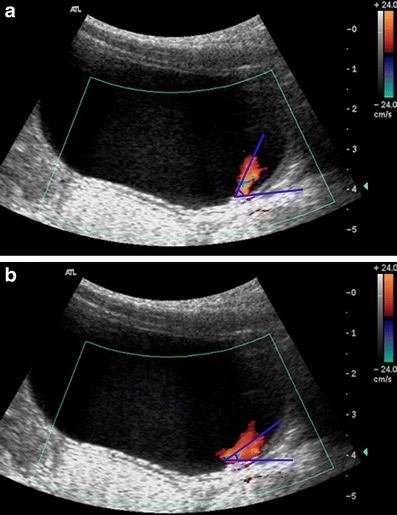
This paper is a comprehensive review of the Doppler waveform appearance of ureteric jets. Six jet waveform patterns have been identified: monophasic, biphasic, triphasic, polyphasic, square and continuous. Details of the physical properties of jet patterns and their changes under various physiological conditions are illustrated. The immature monophasic ureteric jet pattern is common in infancy and early childhood up to around 4 years of age. This pattern is also noted to have a high incidence in older children with urinary tract infection/vesicoureteric reflux, nocturnal enuresis and in other special physiological conditions such as in children undergoing general anaesthesia, in women during pregnancy, and in patients who have had ureteric transplantation. A hypothesis of dual myogenic and neurogenic components is proposed to explain the mode of action of the vesicoureteric junction (VUJ). The implication of this hypothesis is that it alters the scientific basis of the understanding of the VUJ. Furthermore, the application of colour Doppler US to ureteric jets may provide a non-invasive technique to study the physiology or pathophysiology of the VUJ in humans. This might shed light on new novel approaches to the monitoring and treatment of diseases related to VUJ function.
Figures
References
-
- Dubbins PA, Kurtz AB, Darby J et al (1981) Ureteric jet effect: the echogenic appearance of urine entering the bladder. Radiology 140:513–515 - PubMed
-
- Cox IH, Erickson SJ, Foley WD et al (1992) Ureteric jets: evaluation of normal flow dynamics with color Doppler sonography. AJR 158:1051–1055 - PubMed
-
- Lamb CR, Gregory SP (1994) Ultrasonography of the ureterovesical junction in the dog: a preliminary report. Vet Rec 134:36–38 - PubMed
Publication types
MeSH terms
LinkOut - more resources
Full Text Sources
