


Better the DVL you know: acronyms reveal the contribution of familiarity to single-word reading
- PMID: 17425530
- PMCID: PMC2692048
- DOI: 10.1111/j.1467-9280.2007.01859.x
Better the DVL you know: acronyms reveal the contribution of familiarity to single-word reading
Abstract
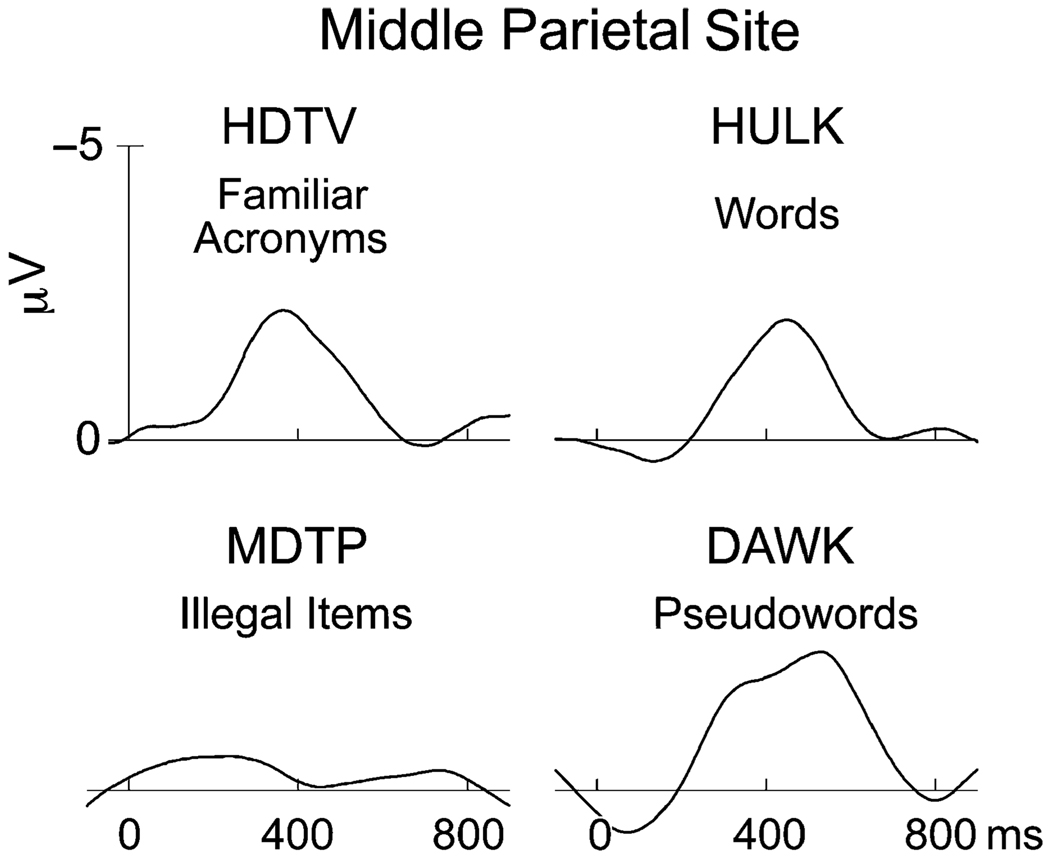
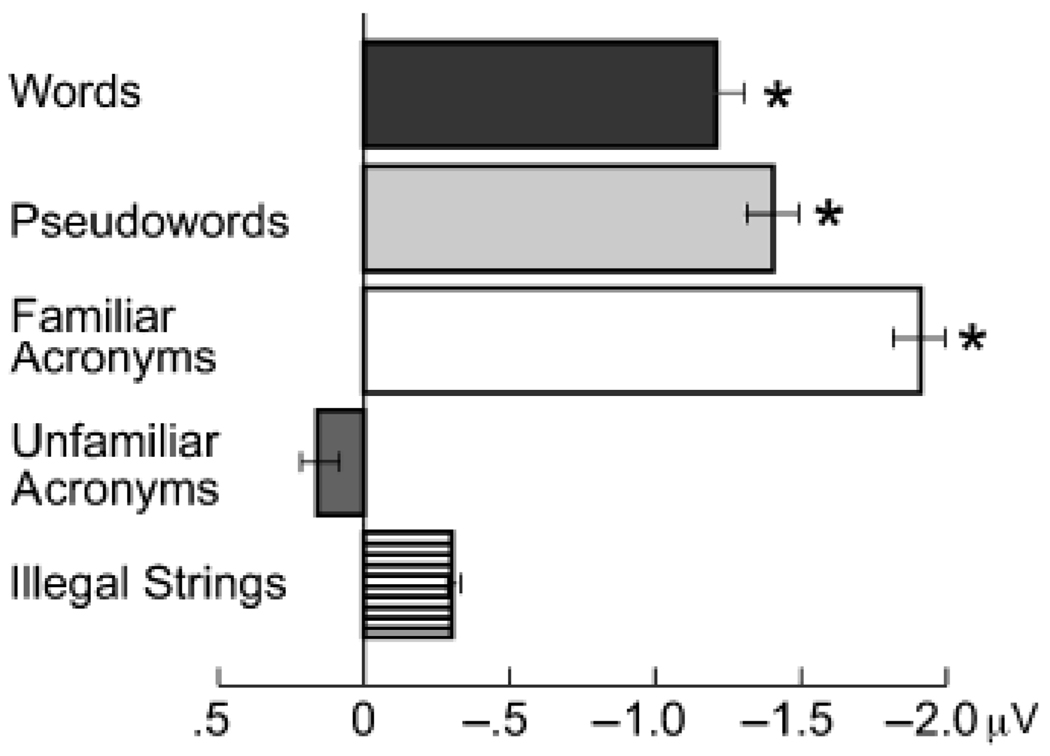
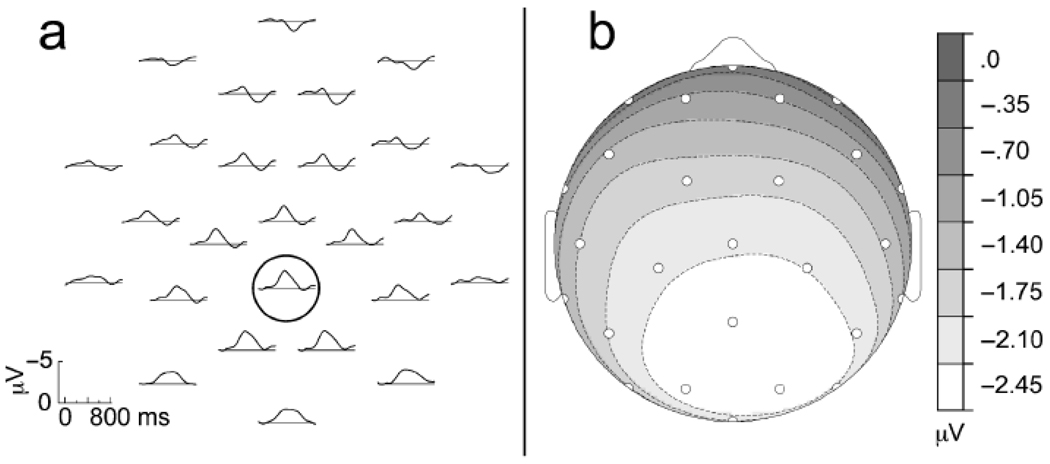
Current theories of reading are divided between dual-route accounts, which propose that separable processes subserve word recognition for orthographically regular and irregular strings, and connectionist models, which propose a single mechanism mapping form to meaning. These theories make distinct predictions about the processing of acronyms, which can be orthographically illegal and yet familiar, as compared with the processing of pseudowords, which are regular but unfamiliar. This study examined whether acronyms are processed like pseudowords and words. Event-related potentials (ERPs) were recorded as subjects viewed familiar and unfamiliar acronyms, words, pseudowords, illegal strings, and--as the targets of the substantive behavioral task--proper names. Familiar acronyms elicited repetition effects on the N400 component, a functionally specific index of semantic activation processes; repetition effects for familiar acronyms were similar in magnitude, timing, and scalp distribution to those for words and pseudowords. The similarity of the brain response to familiar--but--illegal and unfamiliar--but--legal classes of stimuli is inconsistent with predictions of dual-route models of reading.
Figures
References
-
- Coltheart M, Rastle K, Perry C, Langdon R, Ziegler J. DRC: A dual route cascaded model of visual word recognition and reading aloud. Psychological Review. 2001;108:204–256. - PubMed
-
- Deacon D, Dynowska A, Ritter W, Grose-Fifer J. Repetition and semantic priming of nonwords: Implications for theories of N400 and word recognition. Psychophysiology. 2004;41:60–74. - PubMed
-
- Dennis S. The Sydney Morning Herald Word Database. 1995. Retrieved October 2004 from http://www2.psy.uq.edu.au/CogPsych/Noetica/OpenForumIssue4/SMH.html.
-
- Harm MW, Seidenberg MS. Computing the meanings of words in reading: Cooperative division of labor between visual and phonological processes. Psychological Review. 2004;111:662–720. - PubMed
-
- Holcomb PJ, Grainger J, O’Rourke T. An electrophysiological study of the effects of orthographic neighborhood size on printed word perception. Journal of Cognitive Neuroscience. 2002;14:938–950. - PubMed
Publication types
MeSH terms
Grants and funding
LinkOut - more resources
Full Text Sources
