Comparative Study
. 2007 May 25;282(21):15416-29.
doi: 10.1074/jbc.M610432200. Epub 2007 Apr 10.

Tissue-specific mechanisms for CCN2/CTGF persistence in fibrotic gingiva: interactions between cAMP and MAPK signaling pathways, and prostaglandin E2-EP3 receptor mediated activation of the c-JUN N-terminal kinase

Affiliations
Comparative Study

Tissue-specific mechanisms for CCN2/CTGF persistence in fibrotic gingiva: interactions between cAMP and MAPK signaling pathways, and prostaglandin E2-EP3 receptor mediated activation of the c-JUN N-terminal kinase

Samuel A Black Jr et al. J Biol Chem. .

Abstract

Prostaglandin E(2) blocks transforming growth factor TGF beta1-induced CCN2/CTGF expression in lung and kidney fibroblasts. PGE(2) levels are high in gingival tissues yet CCN2/CTGF expression is elevated in fibrotic gingival overgrowth. Gingival fibroblast expression of CCN2/CTGF in the presence of PGE(2) led us to compare the regulation of CCN2/CTGF expression in fibroblasts cultured from different tissues. Data demonstrate that the TGFbeta1-induced expression of CCN2/CTGF in human lung and renal mesangial cells is inhibited by 10 nm PGE(2), whereas human gingival fibroblasts are resistant. Ten nm PGE(2) increases cAMP accumulation in lung but not gingival fibroblasts, which require 1 mum PGE(2) to elevate cAMP. Micromolar PGE(2) only slightly reduces the TGFbeta1-stimulated CCN2/CTGF levels in gingival cells. EP2 prostaglandin receptor activation with butaprost blocks the TGFbeta1-stimulated expression of CCN2/CTGF expression in lung, but not gingival, fibroblasts. In lung fibroblasts, inhibition of the TGFbeta1-stimulated CCN2/CTGF by PGE(2), butaprost, or forskolin is due to p38, ERK, and JNK MAP kinase inhibition that is cAMP-dependent. Inhibition of any two MAPKs completely blocks CCN2/CTGF expression stimulated by TGFbeta1. These data mimic the inhibitory effects of 10 nm PGE(2) and forskolin that were dependent on PKA activity. In gingival fibroblasts, the sole MAPK mediating the TGFbeta1-stimulated CCN2/CTGF expression is JNK. Whereas forskolin reduces TGFbeta1-stimulated expression of CCN2/CTGF by 35% and JNK activation in gingival fibroblasts, micromolar PGE(2)-stimulated JNK in gingival fibroblasts and opposes the inhibitory effects of cAMP on CCN2/CTGF expression. Stimulation of the EP3 receptor with sulprostone results in a robust increase in JNK activation in these cells. Taken together, data identify two mechanisms by which TGFbeta1-stimulated CCN2/CTGF levels in human gingival fibroblasts resist down-regulation by PGE(2): (i) cAMP cross-talk with MAPK pathways is limited in gingival fibroblasts; (ii) PGE(2) activation of the EP3 prostanoid receptor stimulates the activation of JNK.


Figures
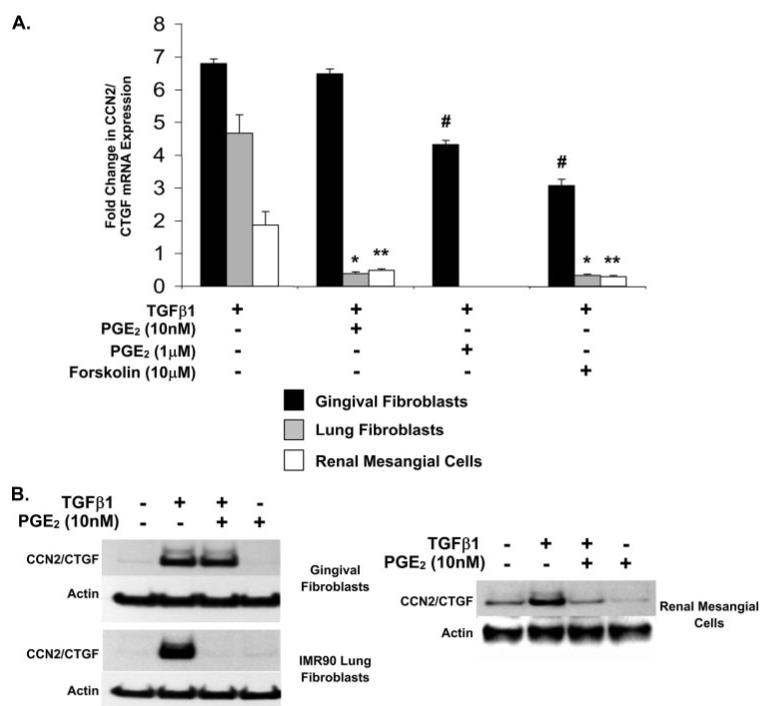
FIGURE 1
FIGURE 1. Gingival fibroblasts are resistant to PGE2 down-regulation of TGF β1-stimulated CCN2/CTGF levels
Cultured fibroblasts derived from different human tissues were treated with 10 nm PGE2 or 10 μm forskolin for 30 min prior to the addition of 5 ng/ml TGFβ1 and CCN2/CTGF mRNA and protein levels were determined by real time PCR or Western blot analysis following a 4- or 6-h incubation, respectively. CCN2/CTGF mRNA expression in response to 1 μm PGE2 was also evaluated in gingival fibroblasts. A, real time PCR analysis of RNA isolated from cultured human IMR90 lung, renal, and gingival fibroblastic cells. Data are measured as the mean ± S.D. Analyses were conducted using triplicate cultures and experiments were repeated at least three times with identical results. CCN2/CTGF mRNA expression was normalized to glyceraldehyde-3-phosphate dehydrogenase mRNA and compared with no treatment control cultures for the evaluation of statistically significant changes (*, p < 0.0005, **, p < 0.005, # p < 0.0001). B, Western blot analysis of the inhibition of the TGFβ1-induced expression of CCN2/CTGF protein by PGE2 in human gingival fibroblasts, lung fibroblasts, and renal mesangial cells. Total β-actin was used as a gel-loading control. Each analysis was conducted at least twice with identical results.
FIGURE 2
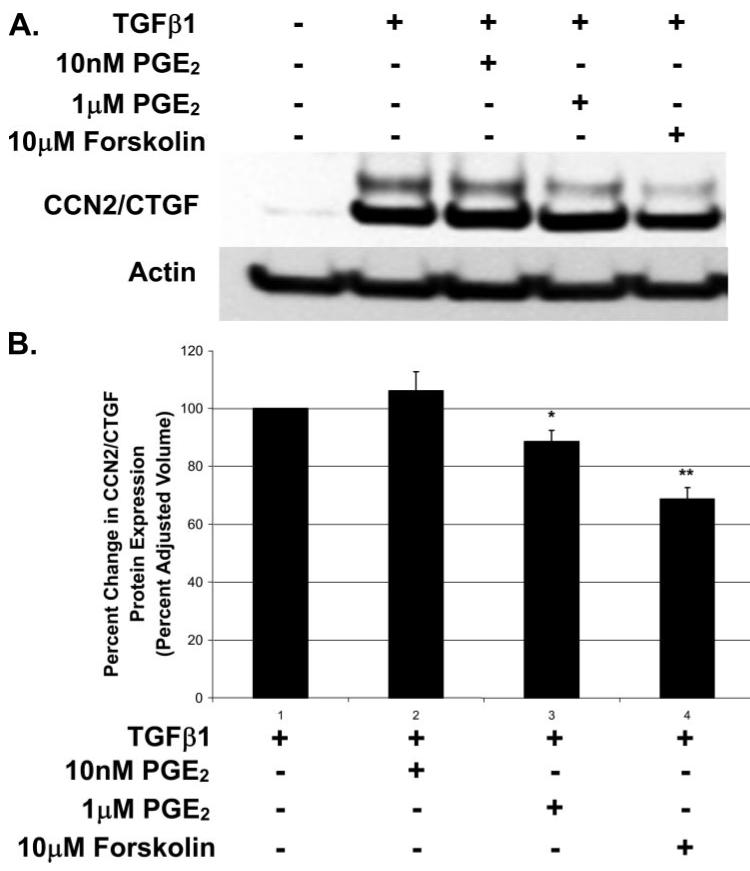
FIGURE 2. Weak down-regulation of CCN2/CTGF protein by 1 μm PGE2 and forskolin in human gingival cells
Human gingival fibroblast cultures were treated with 10 nm PGE2, 1 μm PGE2, or 10 μm forskolin 30 min prior to the addition of 5 ng/ml TGFβ1. Total protein was collected 6 h later and CCN2/CTGF protein expression was determined via Western blot analysis. A, Western blots showing CCN2/CTGF protein expression in human gingival fibroblasts in response to micromolar concentrations of PGE2 or forskolin and 5 ng/ml TGFβ1. B, densitometric analysis of CCN2/CTGF protein expression in gingival fibroblasts from three separate experiments. Data are represented as the mean ± S.D. and statistical evaluation per each experimental condition determined (*, p < 0.005; **, p < 0.0005) versus cultures stimulated with TGFβ1 alone.
FIGURE 3
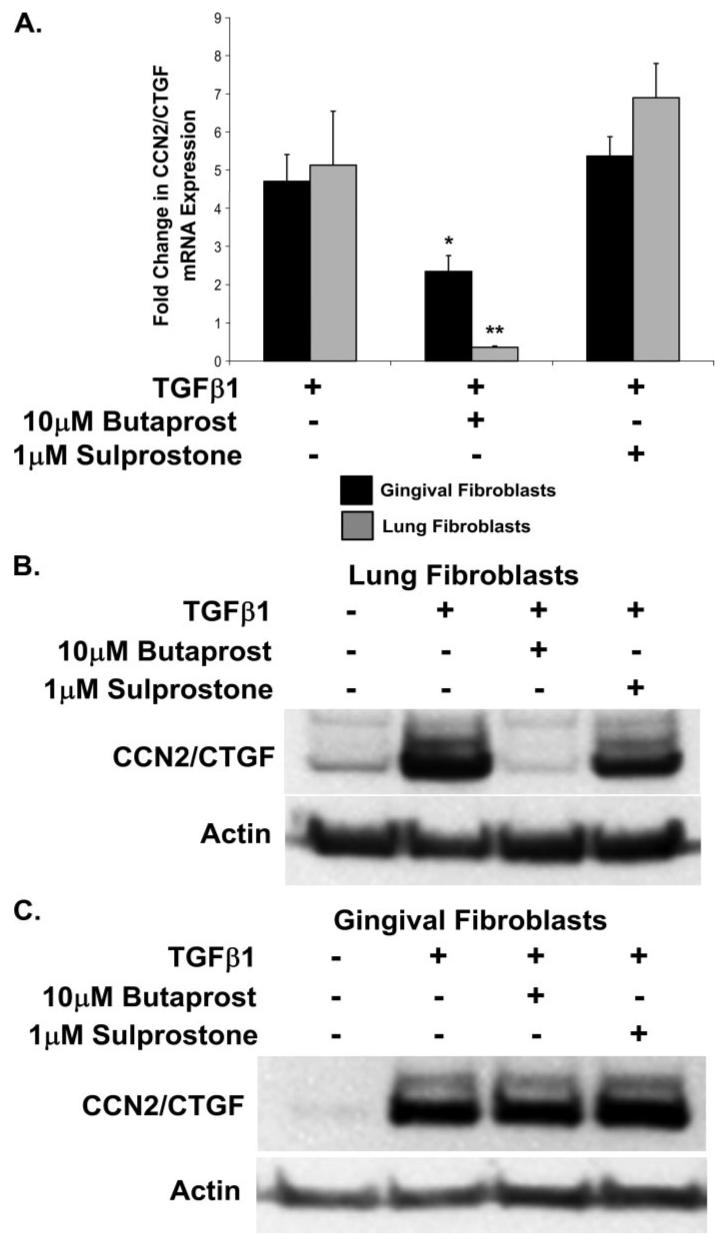
FIGURE 3. EP2 and EP3 prostaglandin receptor agonist regulation of TGFβ1-stimulated CCN2/CTGF
Fibroblast cultures were pretreated for 30 min with an agonist of either EP2 or EP3 prostanoid receptors, butaprost and sulprostone, respectively, prior to the addition of 5 ng/ml TGFβ1. Cultures were incubated for an additional 4 h prior to harvest of total RNA for real time PCR analysis or 6 h prior to harvest of total protein for Western blot. A, real time PCR analysis demonstrating that CCN2/CTGF mRNA expression is completely inhibited by EP2, but not EP3, receptor stimulation in human lung fibroblasts (**, p < 0.005). Stimulation of the EP2 prostanoid receptor with butaprost only partially reduced CCN2/CTGF mRNA in human gingival fibroblasts (*, p < 0.01). Data represent the mean ± S.D. from at least three separate experiments, each performed in triplicate. CCN2/CTGF mRNA was normalized to glyceraldehyde-3-phosphate dehydrogenase mRNA expression. B, Western blot for CCN2/CTGF protein levels normalized to β-actin showing that the TGFβ1-stimulated expression of CCN2/CTGF protein was completely blocked by the activation of EP2 but not EP3 in human lung fibroblasts, and (C) the activation of the EP3, but not the EP2, prostanoid receptor slightly increased the TGFβ1-induced expression of CCN2/CTGF protein in human gingival fibroblasts. Western blot analyses were conducted at least twice with identical results.
FIGURE 4
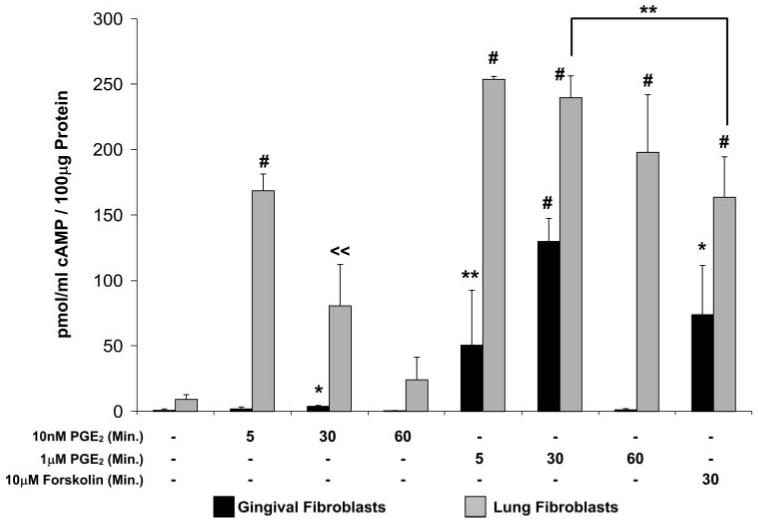
FIGURE 4. PGE2-stimulated cAMP production by human lung and gingival fibroblasts
Fibroblast cultures were treated with 10 nm PGE2, 1 μm PGE2, or 10 μm forskolin for the times indicated. Cyclic AMP levels were assessed using cAMP ELISA as described under “Experimental Procedures” and normalized against total cell layer protein as determined by the Bradford assay. Each experimental condition was performed multiple times (n = 5). Data are expressed as the mean ± S.D. Statistically significant increases in cAMP are based on comparison with control versus treated cultures of the same cell type. In lung but not gingival fibroblast cultures, 1 μm PGE2 stimulated a significant increase compared with stimulation with 10 μm forskolin (*, p < 0.005; **, p < 0.02; # p < 0.00001; ≪ p < 0.001).
FIGURE 5
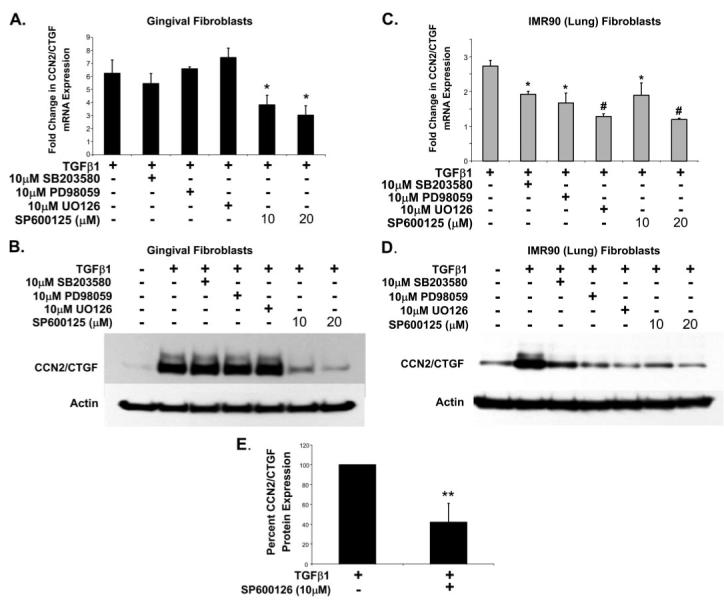
FIGURE 5. MAP kinase inhibitors and effects on TGFβ1-stimulated CCN2/CTGF production
Cultured human lung and gingival fibroblasts were treated with MAPK inhibitors for 1 h and media was then replaced with fresh MAPK inhibitor and 5 ng/ml TGFβ1. CCN2/CTGF mRNA and protein expression levels were determined by real time PCR or Western blot analysis following a 4- or 6-h incubation, respectively, following the introduction of TGFβ1. Real time PCR and Western blot analyses in cultures of gingival fibroblasts (A and B), or IMR90 lung fibroblasts (C and D), are shown, respectively. Each experimental condition was conducted in triplicate and each experiment conducted twice with identical results. E, densitometric analysis from four separate experiments was conducted to determine the extent of inhibition on gingival CCN2/CTGF protein expression by the JNK inhibitor SP600125 (*, p < 0.05; #, p < 0.01; **, p < 0.005).
FIGURE 6
FIGURE 6. The overexpression of dominant-negative JNK1 blocks CCN2/CTGF expression
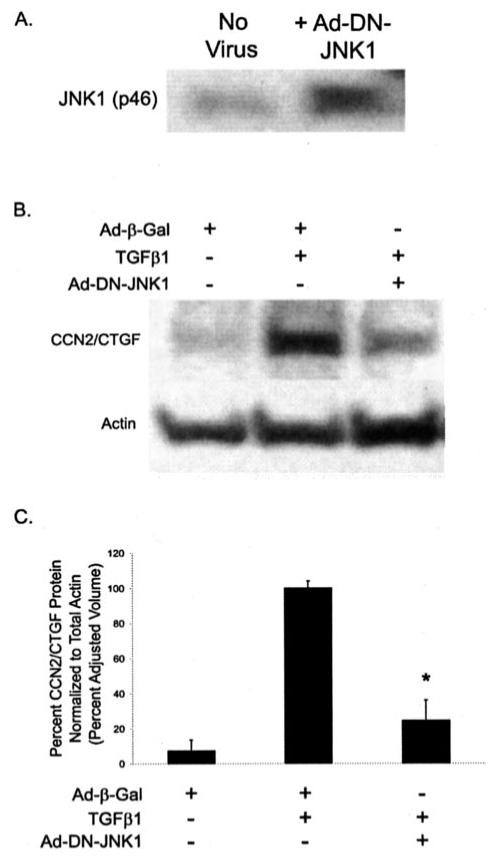
Gingival fibroblasts infected with recombinant adenovirus as described under “Experimental Procedures.” Infection with recombinant adenovirus resulted in nearly 100% infection efficiency and expression of β-galactosidase (data not shown). With an identical viral load of recombinant adenovirus expressing a dominant-negative (DN) form of JNK1 (p46), infected cultures showed an increase in the expression of JNK1 2-2.5-fold greater compared with uninfected cultures as determined using Western blot (A), normalized to total JNK2. Gingival fibroblast cultures infected with DN-JNK1 expressing adenovirus resulted in a significant decrease in the TGFβ1-induced expression of CCN2/CTGF (B and C) (*, p < 0.0005). No significant difference in CCN2/CTGF protein levels was determined between Ad-β-galactosidase-infected control cultures and cultures infected with adenovirus expressing DN-JNK1 and treated with TGFβ1. Three separate experiments are represented by these data.
FIGURE 7
FIGURE 7. JNK inhibition does not inhibit TGFβ-1-induced Smad-3 activation or nuclear localization
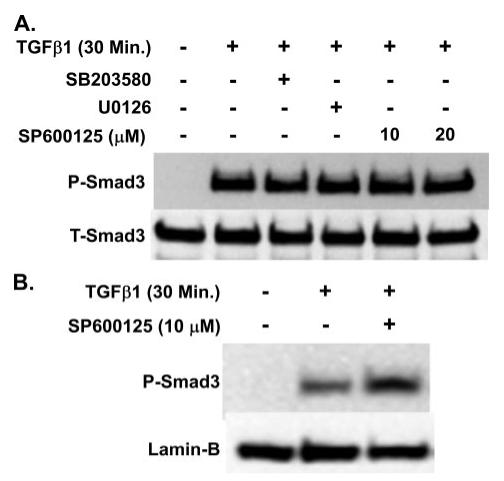
Treatment of gingival fibroblast cultures with 10 μm MAPK inhibitors, or 20 μm of the JNK inhibitor SP600125, had no effect on the TGFβ1-induced phosphorylation of Smad-3 (A). Inhibition of JNK activity with 10 μm SP600125 did not inhibit the nuclear localization of Smad-3 stimulated by TGFβ1 (B). Experiments were conducted twice with identical results.
FIGURE 8
FIGURE 8. Effect of forskolin on TGFβ1-stimulated MAPK activation
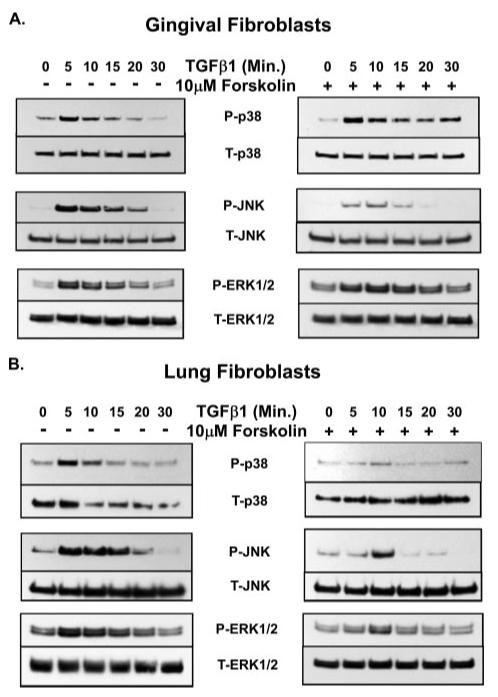
Fibroblast cultures were treated with 5 ng/ml TGFβ1 for the times indicated and total cellular protein was harvested for Western blot analysis of the phosphorylation status of MAPKs (JNK, ERK, and p38). Forskolin (10 μm) was added to some cultures for 30 min prior to the addition of TGFβ1 to determine the effect of forskolin on MAPK activation. Forskolin-mediated inhibition of MAPK activation in human gingival fibroblasts (A) and human lung fibroblasts (B) is shown. Each experiment was performed at least twice with identical results. P-MAPK, phosphorylated MAPK; T-MAPK, total MAPK.
FIGURE 9
FIGURE 9. Effect of pairs of MAP kinase inhibitors on TGFβ1-stimulated CCN2/CTGF levels
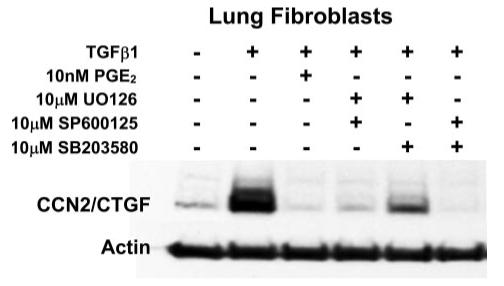
Cultures of IMR90 lung fibroblasts were pretreated with different combinations of MAPK inhibitors for 1 h, or 10 nm PGE2 for 30 min, prior to the addition of 5 ng/ml TGFβ1. Cultures were then incubated for an additional 6 h with fresh medium containing fresh MAPK inhibitor or PGE2 and TGFβ1 prior to harvest of total cellular protein for Western blot analysis of CCN2/CTGF protein. Experiments were conducted twice with identical results.
FIGURE 10
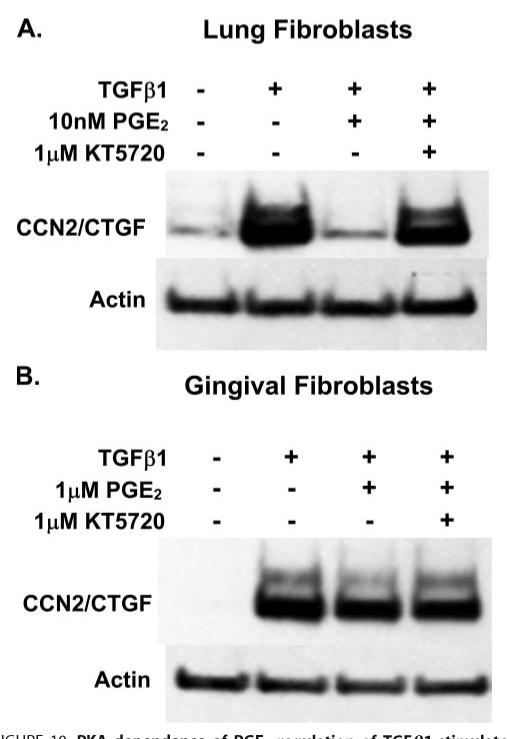
FIGURE 10. PKA dependence of PGE2 regulation of TGFβ1-stimulated CCN2/CTGF
Cells were pretreated with 1 μm KT5720 for 1 h. Medium was aspirated and replaced with fresh medium containing KT5720 and the indicated concentrations of PGE2 and incubated for 30 min. Medium was again removed and replaced with medium containing KT5720, PGE2, and 5 ng/ml TGFβ1. After a 6-h incubation, total cell layer protein was harvested for Western blot analysis for CCN2/CTGF protein. A, the complete inhibition of CCN2/CTGF protein expression is rescued by PKA inhibition in human lung fibroblasts. B, the modest inhibition of CCN2/CTGF expression by PGE2 is relieved by the presence of the PKA inhibitor in human gingival fibroblasts. Experiments were conducted twice with similar results.
FIGURE 11
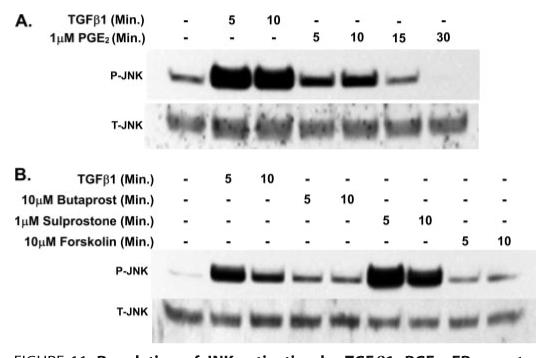
FIGURE 11. Regulation of JNK activation by TGFβ1, PGE2, EP-receptor agonists and forskolin
A, human gingival fibroblast cultures were treated with 1 μm PGE2 or 5 ng/ml TGFβ1 for the times indicated and total cellular protein harvested for Western blot analysis of JNK phosphorylation. B, Western blot for phosphorylated (P) and total (T) JNK showing that treatment of gingival fibroblasts with a specific agonist of the EP3 receptor (sulprostone) resulted in a strong stimulation of JNK. Experiments were conducted twice with identical results.
FIGURE 12
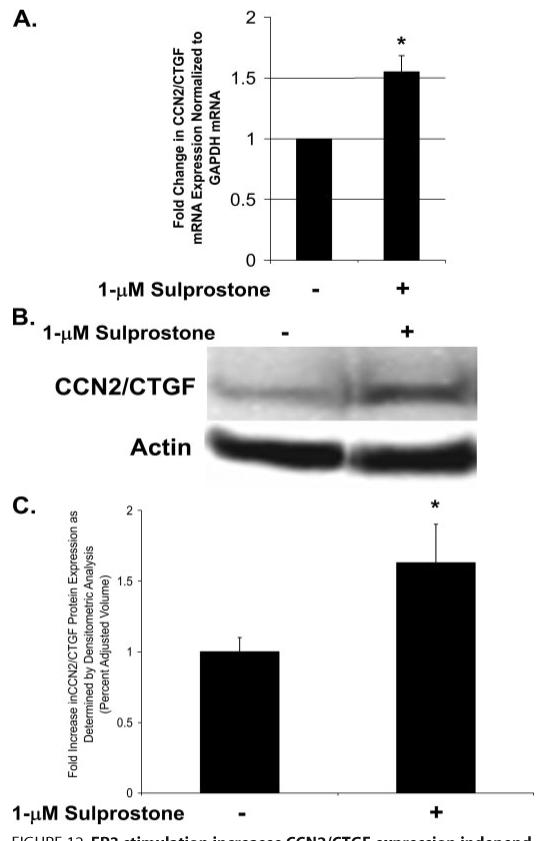
FIGURE 12. EP3 stimulation increases CCN2/CTGF expression independent of TGFβ1
Cultures of gingival fibroblasts treated with the EP3 agonist sulprostone that stimulates CCN2/CTGF mRNA expression as determined by real time PCR analysis (A). Western blot analysis of CCN2/CTGF protein levels demonstrate a similar increase in CCN2/CTGF protein in response to stimulation with sulprostone (B and C) (*, p < 0.05). Data collected are representative from three separate experiments.
FIGURE 13
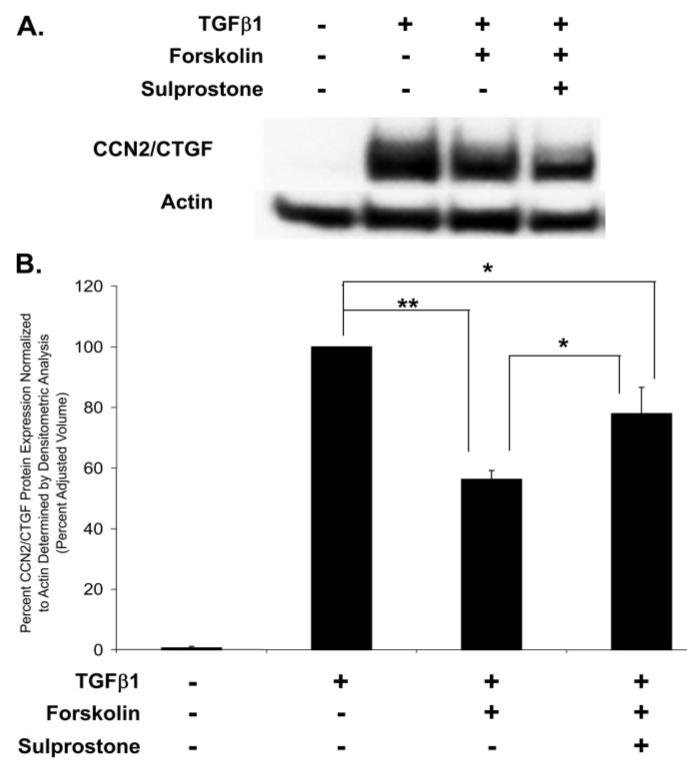
FIGURE 13. EP3 stimulation partially rescues CCN2/CTGF expression inhibited by forskolin
Gingival fibroblast cultures treated with forskolin, or a combination of forskolin and the EP3 agonist sulprostone, demonstrate that stimulation of the EP3 receptor partially rescues the TGFβ1-induced expression of CCN2/CTGF inhibited by forskolin, representative Western blot (A) and densitometric analysis from Western blots from three separate experiments (B) (*, p < 0.05; **, p < 0.00005).
FIGURE 14
FIGURE 14. Regulation of CCN2/CTGF expression in human gingival fibroblasts
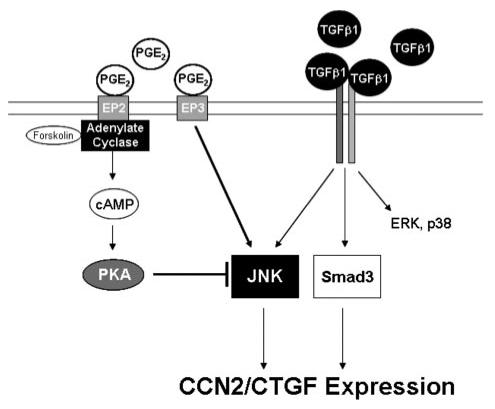
In human gingival fibroblasts, the sole MAPK requirement for TGFβ1 to promote optimal CCN2/CTGF expression is JNK. Whereas receptor-independent cAMP elevating agents reduce JNK activation induced by TGFβ1, the stimulation of the EP3 prostanoid receptor by PGE2 overcomes this inhibition by stimulating JNK activation to promote CCN2/CTGF expression in these cells.

References

    1. Oemar BS, Luscher TF. Arterioscler. Thromb. Vasc. Biol. 1997;17:1483–1489. - PubMed
    1. Brigstock DR. Endocr. Rev. 1999;20:189–206. - PubMed
    1. Bork P. FEBS Lett. 1993;327:125–130. - PubMed
    1. Moussad EE, Brigstock DR. Mol. Genet. Metab. 2000;71:276–292. - PubMed
    1. Chujo S, Shirasaki F, Kawara S, Inagaki Y, Kinbara T, Inaoki M, Takigawa M, Takehara K. J. Cell. Physiol. 2005;203:447–456. - PubMed

Publication types

MeSH terms