


Oral fluid-based biomarkers of alveolar bone loss in periodontitis
- PMID: 17435132
- PMCID: PMC2570328
- DOI: 10.1196/annals.1384.028
Oral fluid-based biomarkers of alveolar bone loss in periodontitis
Abstract
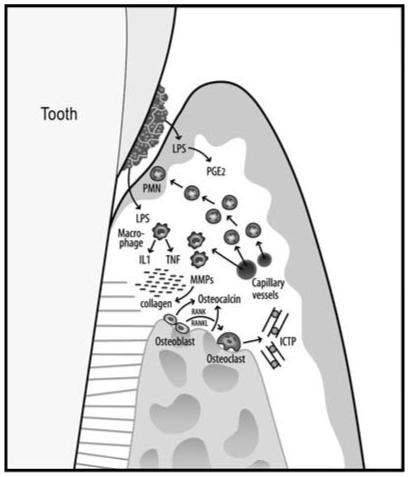
Periodontal disease is a bacteria-induced chronic inflammatory disease affecting the soft and hard supporting structures encompassing the teeth. When left untreated, the ultimate outcome is alveolar bone loss and exfoliation of the involved teeth. Traditional periodontal diagnostic methods include assessment of clinical parameters and radiographs. Though efficient, these conventional techniques are inherently limited in that only a historical perspective, not current appraisal, of disease status can be determined. Advances in the use of oral fluids as possible biological samples for objective measures of current disease state, treatment monitoring, and prognostic indicators have boosted saliva and other oral-based fluids to the forefront of technology. Oral fluids contain locally and systemically derived mediators of periodontal disease, including microbial, host-response, and bone-specific resorptive markers. Although most biomarkers in oral fluids represent inflammatory mediators, several specific collagen degradation and bone turnover-related molecules have emerged as possible measures of periodontal disease activity. Pyridinoline cross-linked carboxyterminal telopeptide (ICTP), for example, has been highly correlated with clinical features of the disease and decreases in response to intervention therapies, and has been shown to possess predictive properties for possible future disease activity. One foreseeable benefit of an oral fluid-based periodontal diagnostic would be identification of highly susceptible individuals prior to overt disease. Timely detection and diagnosis of disease may significantly affect the clinical management of periodontal patients by offering earlier, less invasive, and more cost-effective treatment therapies.
Figures
References
-
- Armitage GC. Development of a classification system for periodontal diseases and conditions. Ann. Periodontol. 1999;4:1–6. - PubMed
-
- Socransky SS, Haffajee AD. The bacterial etiology of destructive periodontal disease: current concepts. J. Periodontol. 1992;63(4 Suppl):322–331. - PubMed
-
- Genco RJ. Host responses in periodontal diseases: current concepts. J. Periodontol. 1992;63(4 Suppl):338–355. - PubMed
-
- Page RC, Kornman KS. The pathogenesis of human periodontitis: an introduction. Periodontol. 2000;14:9–11. 1997. - PubMed
-
- Offenbacher S. Periodontal diseases: pathogenesis. Ann. Periodontol. 1996;1:821–878. - PubMed
Publication types
MeSH terms
Substances
Grants and funding
LinkOut - more resources
Full Text Sources
Other Literature Sources
Medical
