


Enteral vancomycin controls methicillin-resistant Staphylococcus aureus endemicity in an intensive care burn unit: a 9-year prospective study
- PMID: 17435547
- PMCID: PMC1877020
- DOI: 10.1097/01.sla.0000250418.14359.31
Enteral vancomycin controls methicillin-resistant Staphylococcus aureus endemicity in an intensive care burn unit: a 9-year prospective study
Abstract
Objective: The aim of this study was to assess the efficacy and safety of enteral vancomycin in controlling MRSA endemicity in an intensive care burn unit.
Summary background data: MRSA is a serious clinical and epidemiologic problem. It is not uncommon that the traditional maneuvers, detection and isolation of carriers, fail to control endemicity due to MRSA.
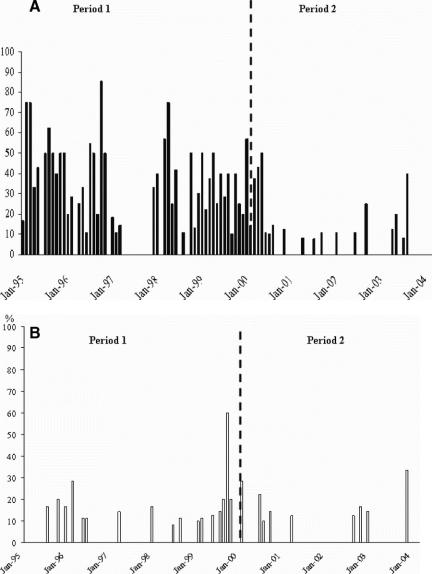
Methods: All patients admitted to an Intensive Care Burn unit from January 1995 to February 2004 have been included in this prospective cohort study comprised 2 different periods. During period 1 (January 1995 to January 2000), barrier and isolation measures were enforced. During period 2 (February 2000 to February 2004), patients received enteral vancomycin 4 times daily in addition to selective digestive decontamination.
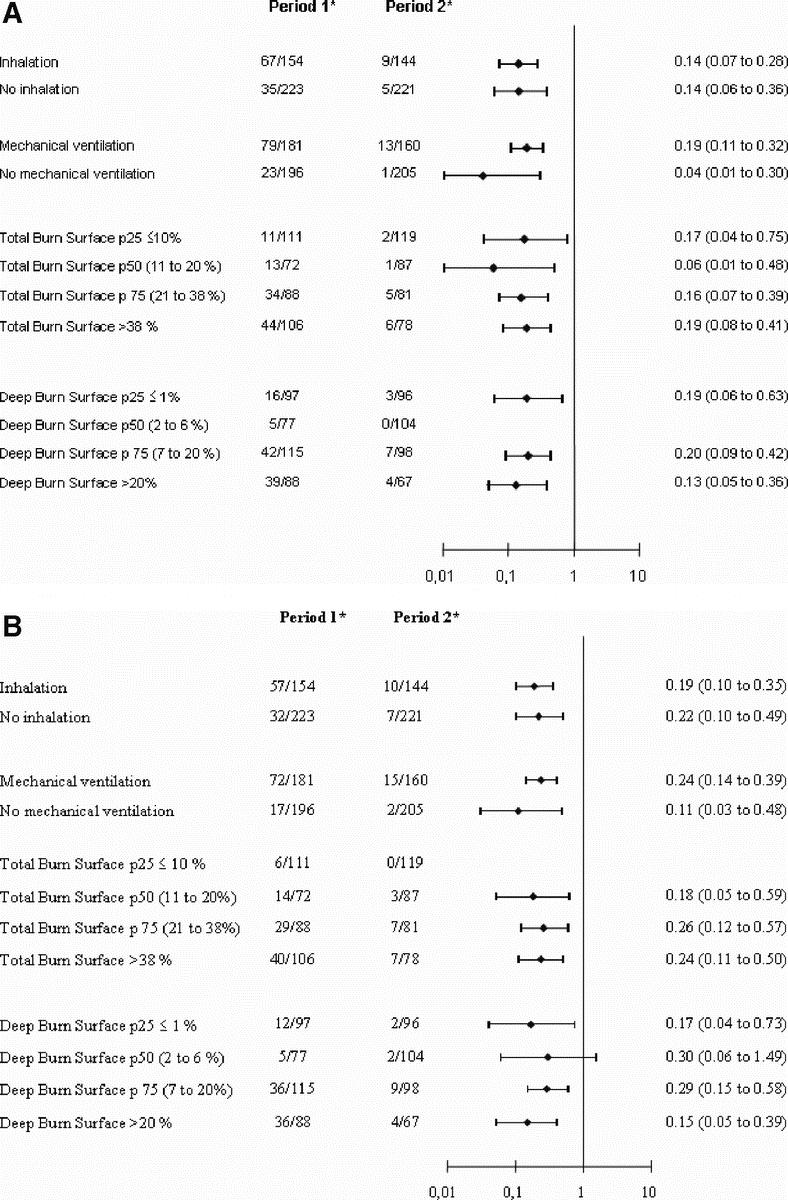
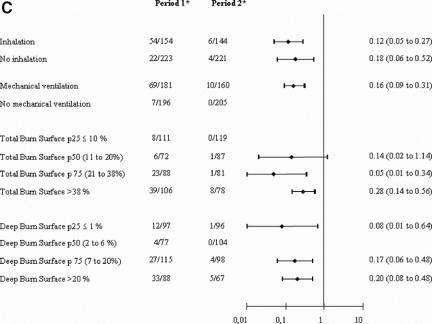
Results: A total of 777 patients were enrolled into the study: 402 in period 1, and 375 in period 2. There were no significant differences in the characteristics of patients between the 2 periods, except for the total body surface burned area, 30.3% in period 1 and 25.61% in period 2 (P = 0.009). There was a significant reduction in the incidence of patients who acquired MRSA from 115 in period 1 to 25 in period 2 (RR, 0.22; 95% confidence interval [CI], 0.15-0.34). Similar reductions were observed in the number of patients with wound (RR, 0.20; 95% CI, 0.12-0.32), blood (RR, 0.13; 95% CI, 0.04-0.35), and tracheal aspirate (RR, 0.07; 95% CI, 0.03-0.19), samples positive for MRSA. There was no emergence of either vancomycin-resistant enterococci or Staphylococcus aureus with intermediate sensitivity to glycopeptides in period 2.
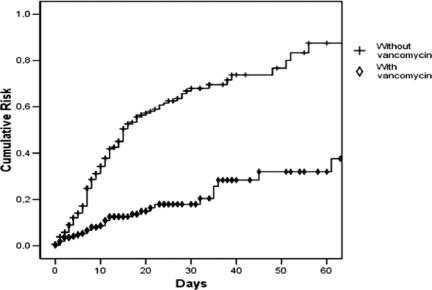
Conclusions: Enteral vancomycin is an effective and safe method to control MRSA in intensive care burn units without VRE.
Figures
References
-
- Deitch EA. The management of burns. N Engl J Med. 1990;323:1249–1253. - PubMed
-
- Pruitt BJ, McManus AT. The changing epidemiology of infection in burn patients. World J Surg. 1992;16:57–67. - PubMed
-
- O'Sullivan ST, O'Connor TPF. Immunosuppression following thermal injury: the pathogenesis of immunodysfunction. Br J Plast Surg. 1997;50:615–623. - PubMed
-
- Rue LW III, Cioffi WG, Mason AD Jr, et al. The risk of pneumonia in thermally injured patients requiring ventilatory support. J Burn Care Rehabil. 1995;16:262–268. - PubMed
-
- de la Cal MA, Cerda E, Garcia-Hierro P, et al. Pneumonia in patients with severe burns: a classification according to the concept of the carrier state. Chest. 2001;119:1160–1165. - PubMed
Publication types
MeSH terms
Substances
LinkOut - more resources
Full Text Sources
Medical
