. 2007 Dec 22;4(17):1159-67.
doi: 10.1098/rsif.2007.1026.

Tensile and dynamic mechanical analysis of the distal portion of mussel (Mytilus edulis) byssal threads

Affiliations

Tensile and dynamic mechanical analysis of the distal portion of mussel (Mytilus edulis) byssal threads

N Aldred et al. J R Soc Interface. .

Abstract

Dynamic mechanical analysis was used to record the behaviour of hydrated and dehydrated byssal threads under tensile stress and during dynamic thermal cycling. Fresh byssi, and byssi aged two weeks prior to testing, were used to further study the effects of age on the mechanical properties of this material. It was found that while older threads demonstrated increased stiffness, age did not necessarily affect their ultimate tensile strength. Dehydration had a more pronounced effect on thread stiffness and also increased the ultimate strength of the material. In their dry state, byssal threads displayed multiple yield points under tension and these, it is suggested, could equate to different phases within the bulk of the material. Dynamic analysis revealed glass transition (Tg) and ecologically relevant operational temperatures for byssi, where their modulus (E') remained constant. These discoveries are related to the ecological function of byssal threads and to the emerging field of biomimetics.


Figures
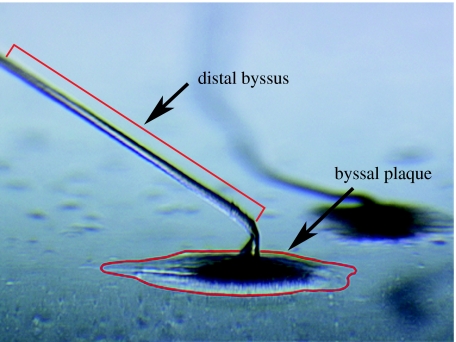
Figure 1
Figure 1
A light micrograph of the adhesive plaque secreted by M. edulis to facilitate its attachment to surfaces. The distal region of the byssal thread, the material used in the present study, can be seen extending towards the body of the mussel.
Figure 2
Figure 2
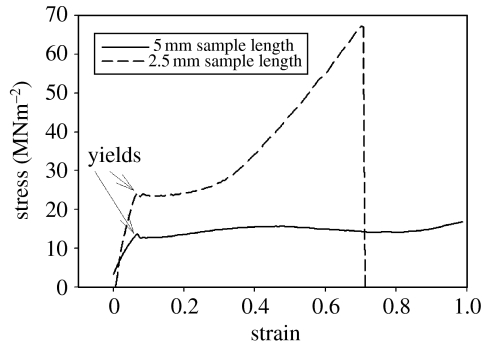
The tensile behaviour of fresh, hydrated mussel byssus demonstrating ‘Hookean’ stress/strain characteristics (5 and 2.5 mm sample lengths).
Figure 3
Figure 3
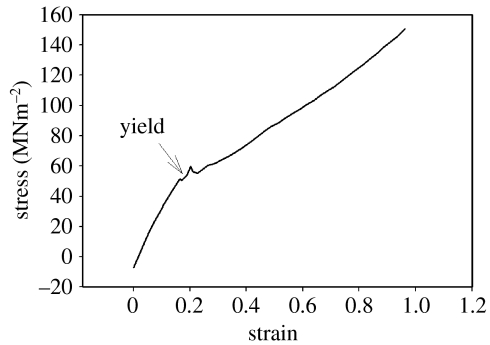
Tensile stress/strain characteristics of aged, hydrated byssi (5 mm sample length).
Figure 4
Figure 4
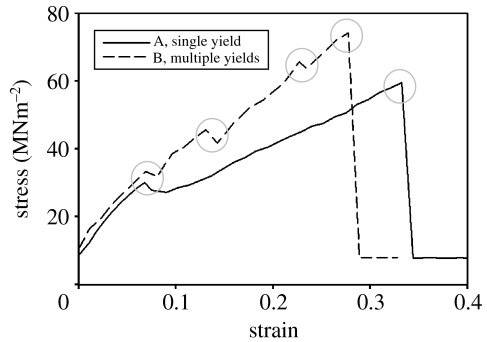
Typical plots showing the multiple yields evident during the stretching and subsequent failure of dehydrated fresh byssi (5 mm sample length). Yield points are highlighted.
Figure 5
Figure 5
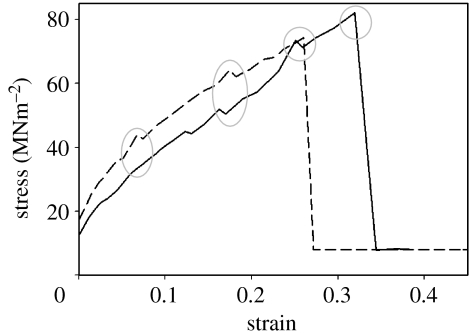
Two plots demonstrating the typical yielding behaviour of dehydrated, aged byssal threads (5 mm sample length). Yields tended to occur in similar locations for all threads, although not all yields were always evident in every thread. These yield points are highlighted.
Figure 6
Figure 6
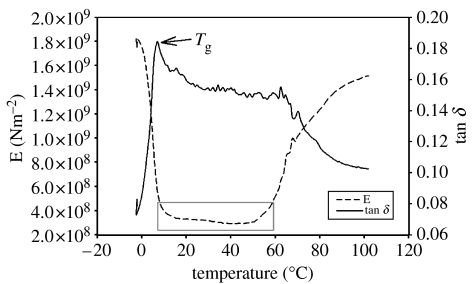
The changes in storage modulus (E′) and heat dissipation (tan δ) that occurred during dynamic analysis of byssi under a force of 10 mN in dry conditions. The operational temperature range of the byssus is highlighted.
Figure 7
Figure 7
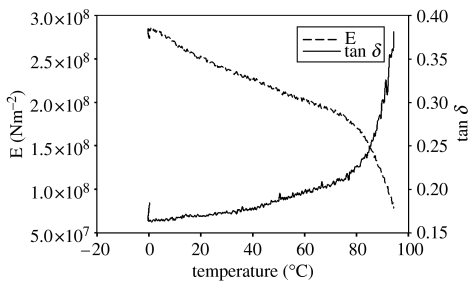
The changes in modulus (E′) and heat dissipation (tan δ) that occurred during dynamic analysis of byssi under a force of 20 mN in the hydrated state.

References

    1. Bell E, Gosline J.M. Mechanical design of mussel byssus: material yield enhances attachment strength. J. Exp. Biol. 1995;199:1005–1017. - PubMed
    1. Benedict C.V, Waite J.H. Location and analysis of byssal structural proteins of Mytilus edulis. J. Morphol. 1986;189:171–181. doi: 10.1002/jmor.1051890207. - DOI - PubMed
    1. Carrington E, Gosline J.M. Mechanical design of mussel byssus: load cycle and strain rate dependence. Am. Malacol. Bull. 2004;18:135–142.
    1. Chomczynski P, Sacci N. Single-step method of RNA isolation by acid guanidinium thiocyanate phenol chloroform extraction. Anal. Biochem. 1987;162:156–159. doi: 10.1016/0003-2697(87)90021-2. - DOI - PubMed
    1. Demming T.J. Mussel byssus and biomolecular materials. Curr. Opin. Chem. Biol. 1999;3:100–105. doi: 10.1016/S1367-5931(99)80018-0. - DOI - PubMed

Publication types