


Ketamine Injection among High Risk Youth: Preliminary Findings from New York City
- PMID: 17440604
- PMCID: PMC1852470
- DOI: 10.1177/002204260203200311
Ketamine Injection among High Risk Youth: Preliminary Findings from New York City
Abstract
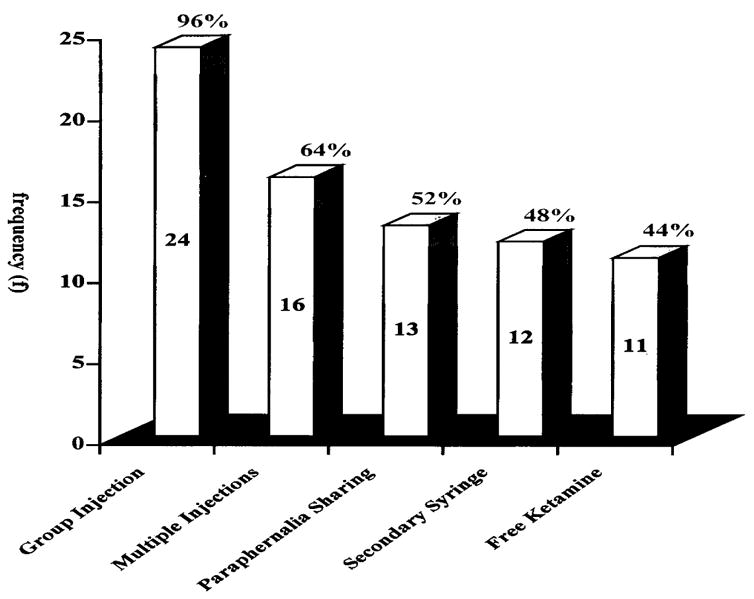
Ketamine, a synthetic drug commonly consumed by high risk youth, produces a range of experiences, including sedation, dissociation, and hallucinations. While ketamine is more typically sniffed, we describe a small sample of young ketamine injectors (n=25) in New York City and highlight risks associated with this emerging type of injection drug use. Our findings indicate that the injection practices, injection groups, and use norms surrounding ketamine often differ from other injection drug use: intramuscular injections were more common than intravenous injections; injection groups were often large; multiple injections within a single episode were common; bottles rather than cookers were shared; and the drug was often obtained for free. Our findings suggest that the drug injection practices exercised by ketamine injectors place them at risk for bloodborne pathogens, such as HIV, HBV, and HCV. We conclude that ketamine injectors represent an emerging, though often hidden, population of injection drug users, particularly among high risk, street-involved youth.
Figures
References
-
- Clatts MC, Heimer R, Abdala N, Goldsamt L, Sotheran JL, Anderson KT, Gallo TM, Hoffer LD, Luciano PA, Kyriakides T. HIV-1 transmission in injection paraphernalia: Heating drug solutions may inactive HIV-1. JAIDS. 1999;22:194–199. - PubMed
-
- Community Epidemiological Working Group (CEWG) Proceedings of the Community Epidemiological Work Group. Vol. 1. Bethesda, MD: National Institutes of Health, Division of Epidemiology and Prevention Research, National Institute of Drug Abuse; 1999. Epidemiological trends in drug abuse.
-
- Community Epidemiological Working Group (CEWG) Proceedings of the Community Epidemiological Work Group. Vol. 1. Bethesda, MD: National Institutes of Health, Division of Epidemiology and Prevention Research, National Institute of Drug Abuse; 2000. Epidemiological trends in drug abuse.
-
- Curran V, Morgan C. Cognitive, dissociative and psychotogenic effects of ketamine in recreational users on the night of drug use and 3 days later. Addiction. 2000;95:575–590. - PubMed
-
- Des Jarlais DC, Friedman SR, Stoneburner R. HIV infection and intravenous drug use: Critical issues in transmission dynamics, infection outcomes, and prevention. Review of Infectious Disease. 1988;10:151–158. - PubMed
Grants and funding
LinkOut - more resources
Full Text Sources