


The Women's Recovery Group Study: a Stage I trial of women-focused group therapy for substance use disorders versus mixed-gender group drug counseling
- PMID: 17446014
- PMCID: PMC3679366
- DOI: 10.1016/j.drugalcdep.2007.02.009
The Women's Recovery Group Study: a Stage I trial of women-focused group therapy for substance use disorders versus mixed-gender group drug counseling
Abstract
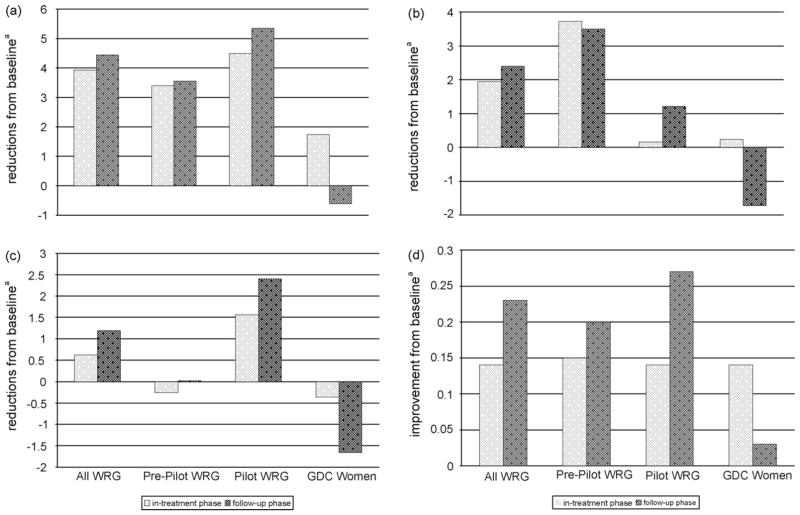
The aim of this Stage I Behavioral Development Trial was to develop a manual-based 12-session Women's Recovery Group (WRG) and to pilot test this new treatment in a randomized controlled trial against a mixed-gender Group Drug Counseling (GDC), an effective manual-based treatment for substance use disorders. After initial manual development, two pre-pilot groups of WRG were conducted to determine feasibility and initial acceptability of the treatment among subjects and therapists. In the pilot stage, women were randomized to either WRG or GDC. No significant differences in substance use outcomes were found between WRG and GDC during the 12-week group treatment. However, during the 6-month post-treatment follow-up, WRG members demonstrated a pattern of continued reductions in substance use while GDC women did not. In addition, pilot WRG women with alcohol dependence had significantly greater reductions in average drinks/drinking day than GDC women 6 months post-treatment (p<.03, effect size=0.81). While satisfaction with both groups was high, women were significantly more satisfied with WRG than GDC (p<.009, effect size=1.11). In this study, the newly developed 12-session women-focused WRG was feasible with high satisfaction among participants. It was equally effective as mixed-gender GDC in reducing substance use during the 12-week in-treatment phase, but demonstrated significantly greater improvement in reductions in drug and alcohol use over the post-treatment follow-up phase compared with GDC. A women-focused single-gender group treatment may enhance longer-term clinical outcomes among women with substance use disorders.
Figures
References
-
- Beckman L. Entry of women of diverse backgrounds into alcoholism treatment. In: Lewis JA, editor. Addictions: Concepts and Strategies for Treatment. Aspen Publishers; Gaithersburg, MD: 1994. pp. 365–374.
-
- Berkowitz G, Peterson S, Brindis C. Methodological issues and practices in measuring perinatal alcohol and other drug treatment outcomes. Addict Res. 1998;6 (5):435–452.
-
- Blume S. Chemical dependency in women: important issues. Am J Drug Alcohol Abuse. 1990;16 (3):297–307. - PubMed
-
- Brady KT, Randall CL. Gender differences in substance use disorders. Psychiatr Clin North Am. 1999;22:241–252. - PubMed
-
- Carroll KM, Rounsaville BJ, Nich C, Gordon LT, Wirtz PW, Gawin F. One-year follow-up of psychotherapy and pharmacotherapy for cocaine dependence: delayed emergence of psychotherapy effects. Arch Gen Psychiatry. 1994;51:989–997. - PubMed
