


Choice of interactive dance and bicycle games in overweight and nonoverweight youth
- PMID: 17447864
- PMCID: PMC2213751
- DOI: 10.1007/BF02879893
Choice of interactive dance and bicycle games in overweight and nonoverweight youth
Abstract
Background: Interactive video games are a popular alternative to physical activity in youth. One advancement in computer games are interactive games that use physical activity as a game playing controller, combining exercise and entertainment, or exertainment.
Purpose: This study tested the reinforcing value and activity levels of interactive dance and bicycle race games in 18 overweight and 17 nonoverweight 8- to 12-year-old youth.
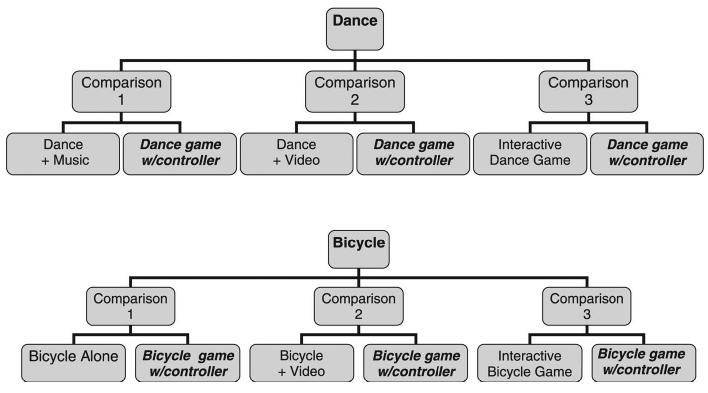
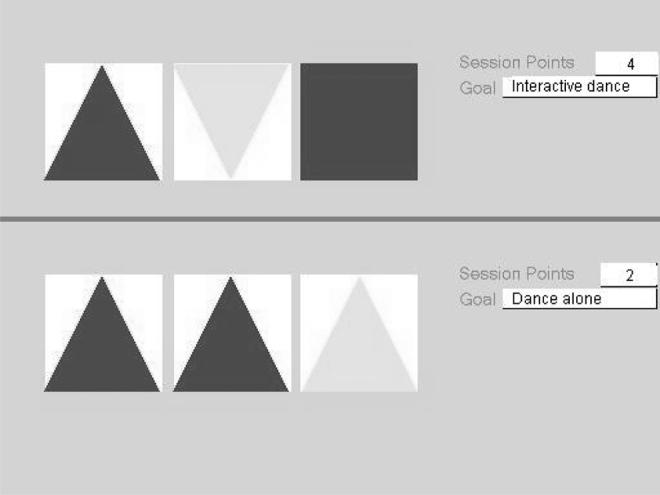
Methods: Reinforcing value was studied using a behavioral choice paradigm that provided children the opportunity to respond on progressive ratio schedules of reinforcement for a choice of either playing the video dance or bicycle game using a handheld video game controller or one of three options: dancing or bicycling alone, dancing or bicycling while watching a video, or playing the interactive dance or bicycle game. Reinforcing value was defined in relationship to the amount of responding children engaged in for either choice.
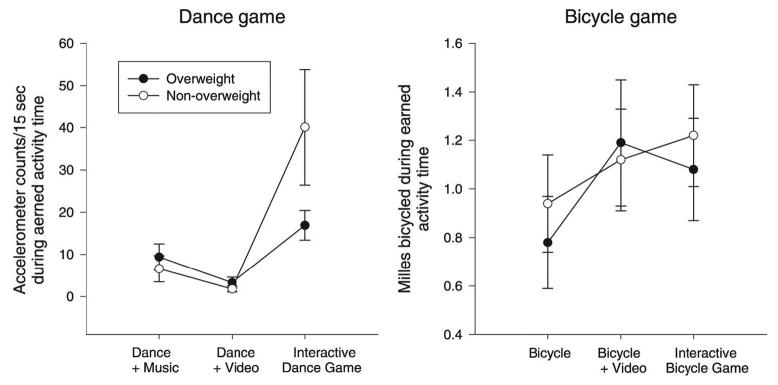
Results: Results showed the interactive dance game was more reinforcing than dancing alone or dancing while watching the video (p = .003), but there was no difference across bicycling conditions. Nonoverweight youth were more active when given the opportunity to play the interactive dance game than overweight children (p = .05).
Conclusions: These results suggest that children may be motivated to be active when given the opportunity to play an interactive dance game.
Figures

References
-
- Sallis JF, Prochaska JJ, Taylor WC, Hill JO, Geraci JC. Correlates of physical activity in a national sample of girls and boys in grades 4 through 12. Health Psychology. 1999;18:410–415. - PubMed
-
- Dishman RK, Motl RW, Saunders R, et al. Enjoyment mediates effects of a school-based physical-activity intervention. Medicine and Science in Sports and Exercise. 2005;37:478–487. - PubMed
-
- Epstein LH, Smith JA, Vara LS, Rodefer JS. Behavioral economic analysis of activity choice in obese children. Health Psychology. 1991;10:311–316. - PubMed
-
- Saelens BE, Epstein LH. The rate of sedentary activities determines the reinforcing value of physical activity. Health Psychology. 1999;18:655–659. - PubMed
-
- Goldfield GS, Kalakanis LE, Ernst MM, Epstein LH. Open-loop feedback to increase physical activity in obese children. International Journal of Obesity and Related Metabolic Disorders. 2000;24:888–892. - PubMed
Publication types
MeSH terms
Grants and funding
LinkOut - more resources
Full Text Sources
Miscellaneous
