


A reevaluation of the key factors that influence tomato fruit softening and integrity
- PMID: 17449643
- PMCID: PMC1914194
- DOI: 10.1104/pp.107.097477
A reevaluation of the key factors that influence tomato fruit softening and integrity
Abstract
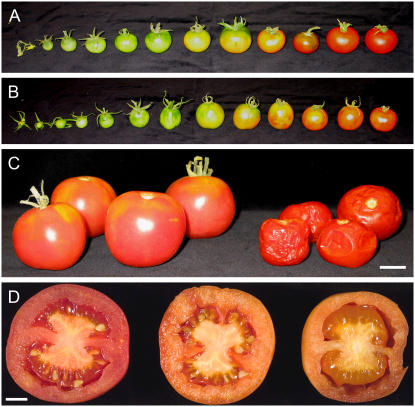
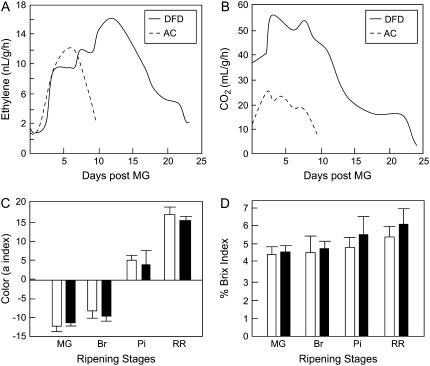
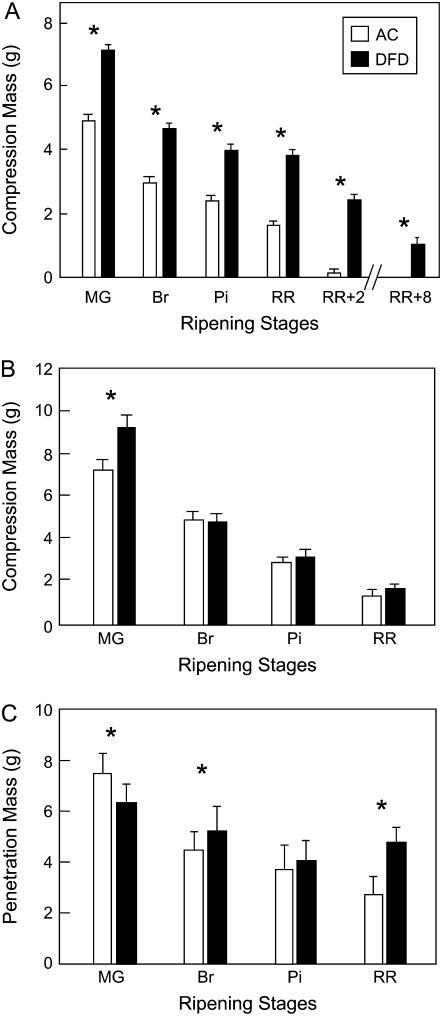
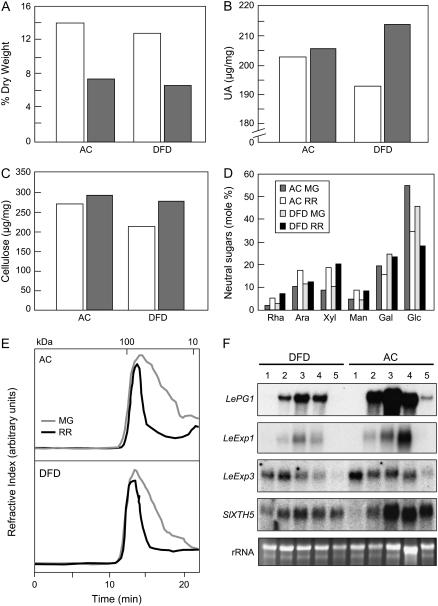
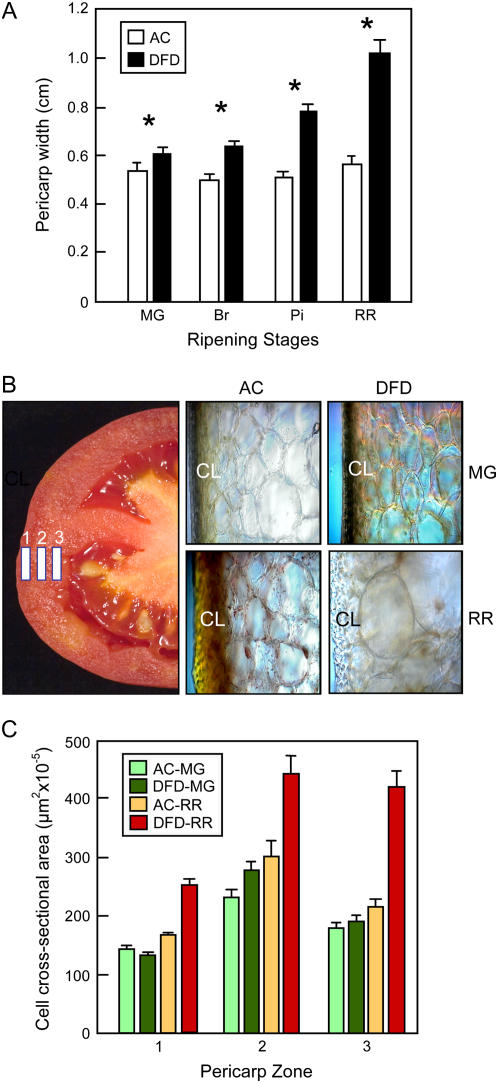
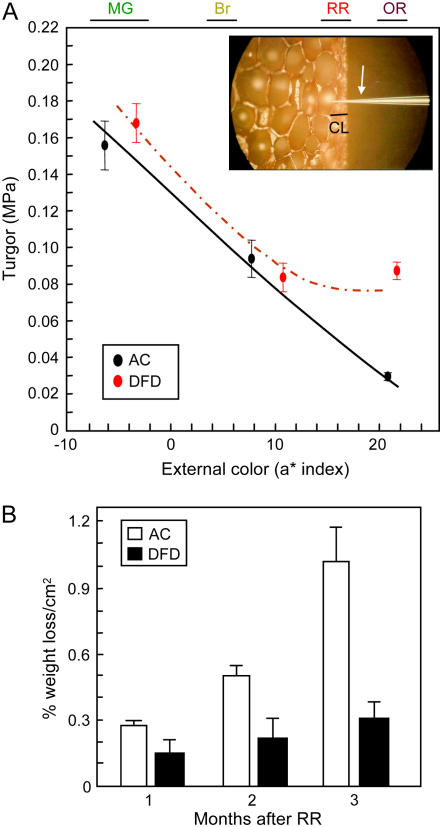
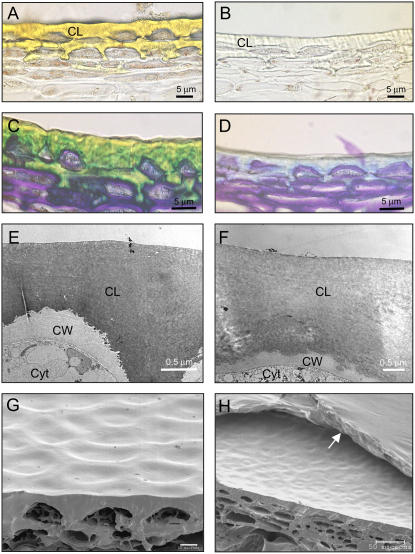
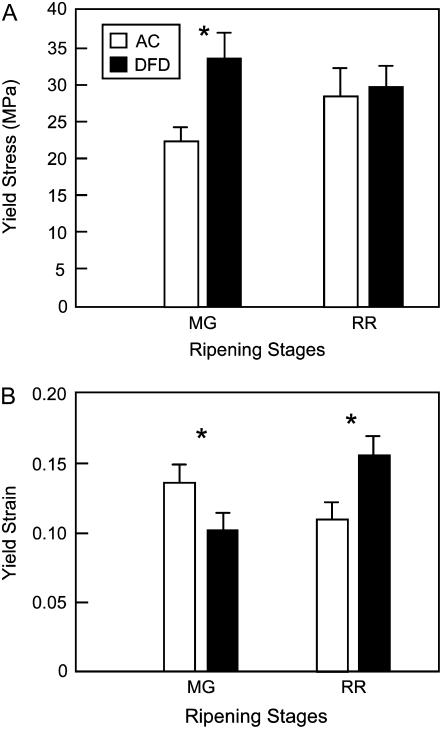
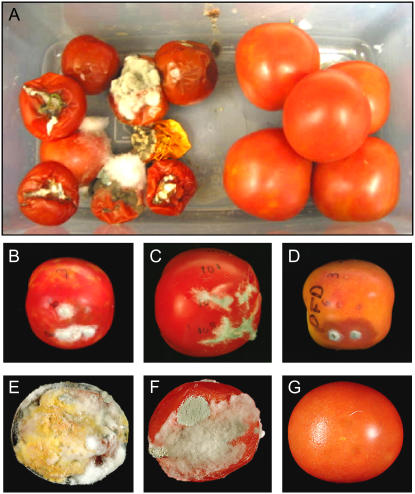
The softening of fleshy fruits, such as tomato (Solanum lycopersicum), during ripening is generally reported to result principally from disassembly of the primary cell wall and middle lamella. However, unsuccessful attempts to prolong fruit firmness by suppressing the expression of a range of wall-modifying proteins in transgenic tomato fruits do not support such a simple model. 'Delayed Fruit Deterioration' (DFD) is a previously unreported tomato cultivar that provides a unique opportunity to assess the contribution of wall metabolism to fruit firmness, since DFD fruits exhibit minimal softening but undergo otherwise normal ripening, unlike all known nonsoftening tomato mutants reported to date. Wall disassembly, reduced intercellular adhesion, and the expression of genes associated with wall degradation were similar in DFD fruit and those of the normally softening 'Ailsa Craig'. However, ripening DFD fruit showed minimal transpirational water loss and substantially elevated cellular turgor. This allowed an evaluation of the relative contribution and timing of wall disassembly and water loss to fruit softening, which suggested that both processes have a critical influence. Biochemical and biomechanical analyses identified several unusual features of DFD cuticles and the data indicate that, as with wall metabolism, changes in cuticle composition and architecture are an integral and regulated part of the ripening program. A model is proposed in which the cuticle affects the softening of intact tomato fruit both directly, by providing a physical support, and indirectly, by regulating water status.
Figures
References
-
- Ahmed AER, Labavitch JM (1977) A simplified method for accurate determination of cell wall uronic acid content. J Food Biochem 1 361–365
-
- Almeida DPF, Huber DJ (1999) Apoplastic pH and inorganic ion levels in tomato fruit: a potential means for regulation of cell wall metabolism during ripening. Physiol Plant 105 506–512
-
- Baker EA, Bukovac MJ, Hunt GM (1982) Composition of tomato fruit cuticle as related to fruit growth and development. In DF Cutler, KL Alvin, CE Price, eds, The Plant Cuticle. Academic Press, London, pp 33–44
-
- Banik M, Bourgault R, Bewley JD (2001) Endo-β-mannanase is present in an inactive form in ripening tomato fruits of the cultivar Walter. J Exp Bot 52 105–111 - PubMed
-
- Bargel H, Neinhuis C (2004) Altered tomato (Lycopersicon esculentum Mill.) fruit cuticle biomechanics of a pleiotropic non ripening mutant. J Plant Growth Regul 23 61–75
Publication types
MeSH terms
Substances
LinkOut - more resources
Full Text Sources
Other Literature Sources
