


Both P-gp and MRP2 mediate transport of Lopinavir, a protease inhibitor
- PMID: 17451894
- PMCID: PMC3166960
- DOI: 10.1016/j.ijpharm.2007.02.036
Both P-gp and MRP2 mediate transport of Lopinavir, a protease inhibitor
Abstract
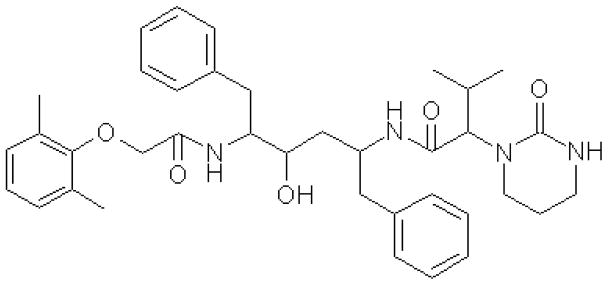
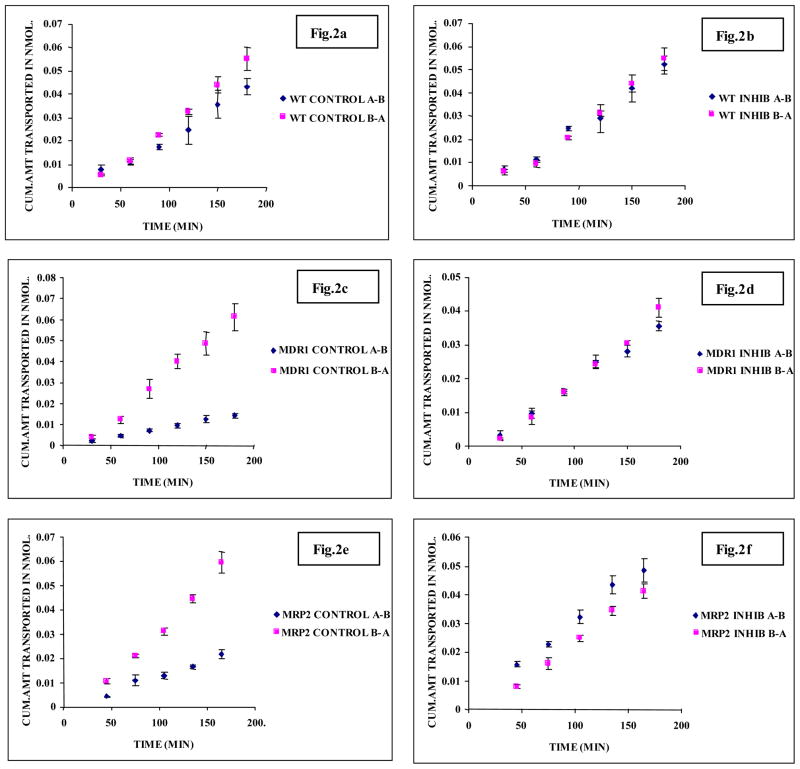
Polarized epithelial non-human (canine) cell lines stably transfected with human or murine complementary DNA (cDNA) encoding for various efflux transporters (P-gp/MDR1, MRP1, MRP2, and Bcrp1) were used to study transepithelial transport of Lopinavir (LVR) and compare results with the MDCKII-wild type cells. These transmembrane proteins cause multidrug resistance by decreasing the total intracellular accumulation of drugs. Lopinavir efflux was directional and was completely inhibited by MK-571, a selective MRP family inhibitor in the MDCKII-MRP2 cell line. Similarly, LVR efflux was also inhibited by P-gp inhibitors P-gp-4008 and GF120918 in the MDCKII-MDR1 cell line. The efflux ratios of LVR in the absence of any efflux inhibitors in the MDCK-wild type, MDCKII-MDR1, MDCKII-MRP1 and MDCKII-MRP2 cell monolayers were 1.32, 4.91, 1.26 and 2.89 respectively. The MDCKII-MDR1 and MDCKII-MRP2 cells have significantly increased LVR efflux ratio relative to the parental cells due to the apically directed transport by MDR1 and MRP2 respectively. The efflux ratios in MRP2 and MDR1 transfected cell lines were close to unity in the presence of MK-571 and P-gp-4008, respectively, indicating that LVR efflux by MRP2 and P-gp was completely inhibited by their selective inhibitors. MDCKII-MRP1 cells did not exhibit a significant reduction in the LVR efflux relative to the parental cells, indicating that LVR is not a good substrate for MRP1. Transport studies across MDCKII-Bcrp1 cells indicated that LVR is not transported by Bcrp1 and is not a substrate for this efflux protein. In conclusion, this study presents direct evidence that LVR is effluxed by both P-gp and MRP2 which may contribute to its poor oral bioavailability and limited penetration into the CNS.
Figures
References
-
- Bachmeier CJ, Spitzenberger TJ, Elmquist WF, Miller DW. Quantitative assessment of HIV-1 protease inhibitor interactions with drug efflux transporters in the blood-brain barrier. Pharm Res. 2005;22:1259–1268. - PubMed
-
- Bates SE, Robey R, Miyake K, Rao K, Ross DD, Litman T. The role of half-transporters in multidrug resistance. J Bioenerg Biomembr. 2001;33:503–511. - PubMed
-
- Borst P, Evers R, Kool M, Wijnholds J. A family of drug transporters: the multidrug resistance-associated proteins. J Natl Cancer Inst. 2000;92:1295–1302. - PubMed
-
- Borst P, Schinkel AH, Smit JJ, Wagenaar E, Van Deemter L, Smith AJ, Eijdems EW, Baas F, Zaman GJ. Classical and novel forms of multidrug resistance and the physiological functions of P-glycoproteins in mammals. Pharmacol Ther. 1993;60:289–299. - PubMed
-
- Chen ZS, Kawabe T, Ono M, Aoki S, Sumizawa T, Furukawa T, Uchiumi T, Wada M, Kuwano M, Akiyama SI. Effect of multidrug resistance-reversing agents on transporting activity of human canalicular multispecific organic anion transporter. Mol Pharmacol. 1999;56:1219–1228. - PubMed
Publication types
MeSH terms
Substances
Grants and funding
LinkOut - more resources
Full Text Sources
Miscellaneous
