


Differential motivational properties of ethanol during early ontogeny as a function of dose and postadministration time
- PMID: 17452298
- PMCID: PMC1906736
- DOI: 10.1016/j.alcohol.2007.01.005
Differential motivational properties of ethanol during early ontogeny as a function of dose and postadministration time
Abstract
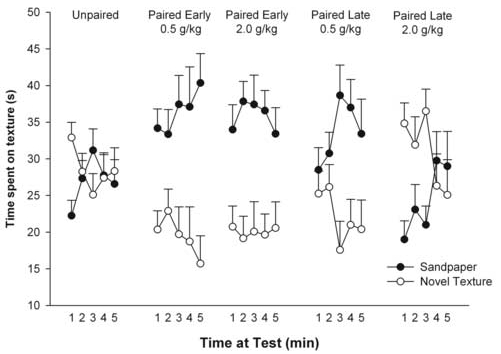
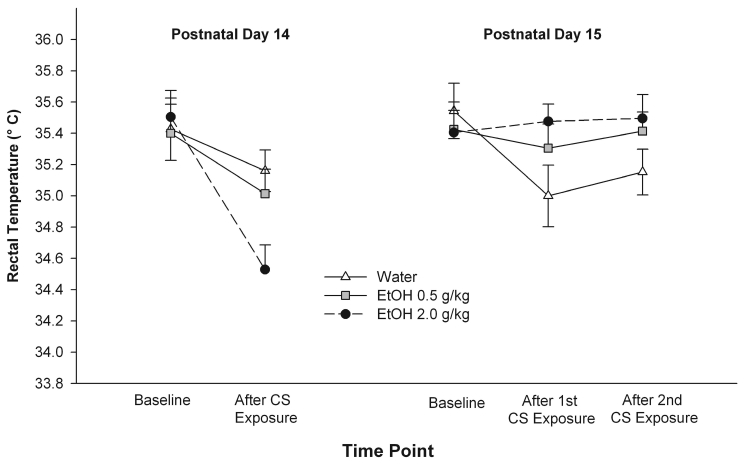
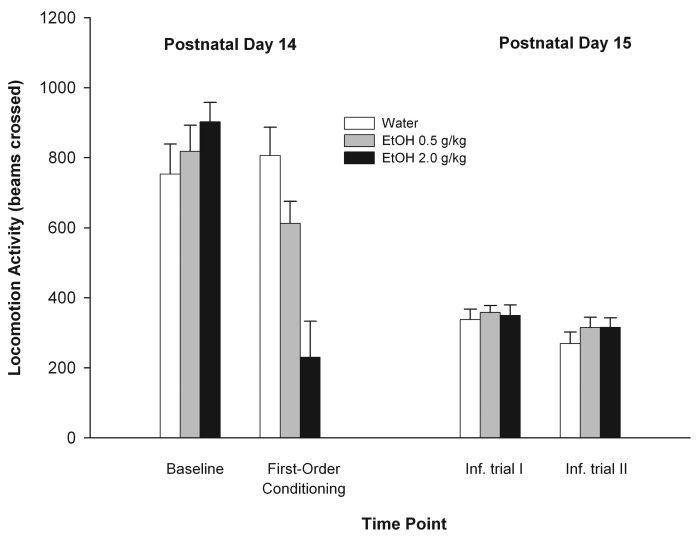
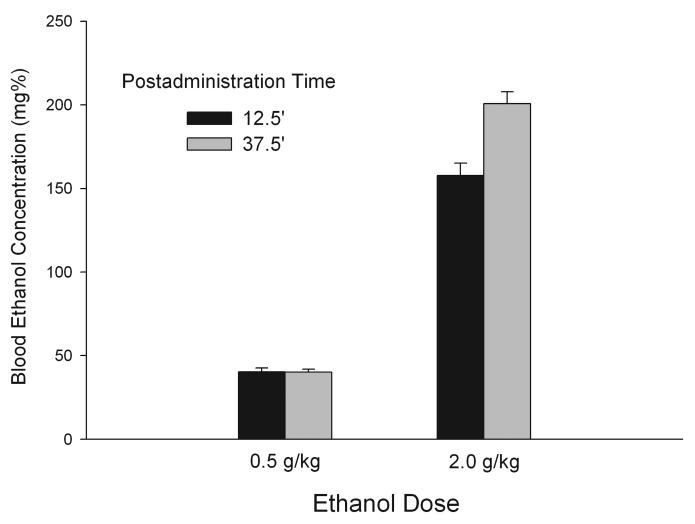
While appetitive reinforcement effects of ethanol are easily detected in rat neonates, such phenomena rarely have been observed in older infants. Recently, Molina et al. [Molina, J. C., Ponce L. F., Truxell, E., & Spear N. E. (2006). Infantile sensitivity to ethanol's motivational effects: ethanol reinforcement during the third postnatal week. Alcohol Clin Exp Res 30, 1506-1519] reported such effects of ethanol in 14-day-olds using a second-order conditioning procedure. Infants also appear to be sensitive to biphasic reinforcement or general motivational effects of ethanol, with appetitive effects seeming to occur early in the state of intoxication and aversive effects predominant during late stages, but tests have been inconclusive. The present study examined the possibility of biphasic motivational effects of ethanol during infancy through the use of second-order conditioning procedures. Preweanling rats (14 days old) experienced intraoral water infusions (conditioned stimulus, CS) either 5-20 or 30-45 min after administration of 0.5 or 2.0 g/kg i.g. ethanol. Pups were then exposed to the CS while over a novel texture (second-order phase). Tests of tactile preference for that texture followed. Locomotive, thermal, hormonal (corticosterone release), and pharmacokinetic patterns likely to underlie the acquisition of ethanol-mediated conditioning were also examined in subsequent experiments. Intraoral CSs paired with either early or late effects of low-dose ethanol (0.5 g/kg, blood ethanol concentration: 40 mg%) became positive second-order reinforcers. Appetitive effects were also exhibited by pups exposed to the CS during commencement of the toxic episode induced by a 2.0 g/kg ethanol dose, 5-20 min after administration of ethanol, whereas aversions emerged when CS presentation occurred 30-45 min postadministration time (blood ethanol concentrations: 157 and 200 mg%, respectively). Overall, the results indicate that infants rapidly detect differential motivational properties of ethanol as a function of dose or drug postadministration time. Relatively neutral stimuli associated with these properties are later capable of acting as either positive or aversive reinforcers. Thermal and motor responses that accompany ethanol intoxication do not seem to be directly associated with differential hedonic properties of the drug at this stage of development.
Figures
References
-
- Abate P, Dominguez HD, Pepino MY, Spear NE, Molina JC. Fetal associative learning mediated through maternal alcohol administration. Alcohol Clin Exp Res. 2000;24:39–47. - PubMed
-
- Abate P, Varlinskaya EI, Cheslock SJ, Spear NE, Molina JC. Neonatal activation of alcohol-related prenatal memories: impact on the first suckling response. Alcohol Clin Exp Res. 2002;26:1512–1522. - PubMed
-
- Aguilera G, Kiss A, Hauger R, Tizabi Y. Regulation of the hypothalamic–pituitary–adrenal axis during stress: role of neuropeptides and neurotransmitters. In: Kvetnansky R, McCarthy R, Axelrod J, editors. Stress: Neuroendocrine and Molecular Approaches. Gordon & Breach Science Publishers S.A.; New York: 1992. pp. 365–381.
-
- Arias C, Chotro MG. Increased palatability of ethanol after prenatal ethanol exposure is mediated by the opioid System. Pharmacol Biochem Behav. 2005;82:434–442. - PubMed
-
- Bau PF, Bau CH, Naujorks AA, Rosito GA. Early and late effects of alcohol ingestion on blood pressure and endothelial function. Alcohol. 2005;36:53–58. - PubMed
Publication types
MeSH terms
Substances
Grants and funding
LinkOut - more resources
Full Text Sources
