


Predicting unknown species numbers using discovery curves
- PMID: 17456460
- PMCID: PMC2169286
- DOI: 10.1098/rspb.2007.0464
Predicting unknown species numbers using discovery curves
Abstract
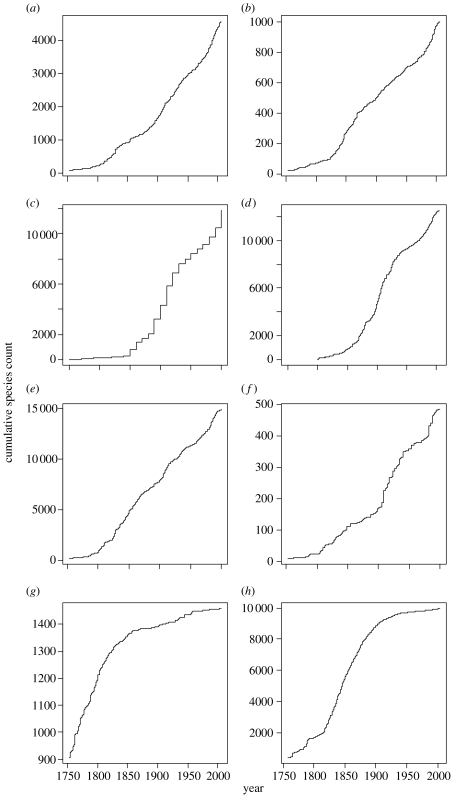
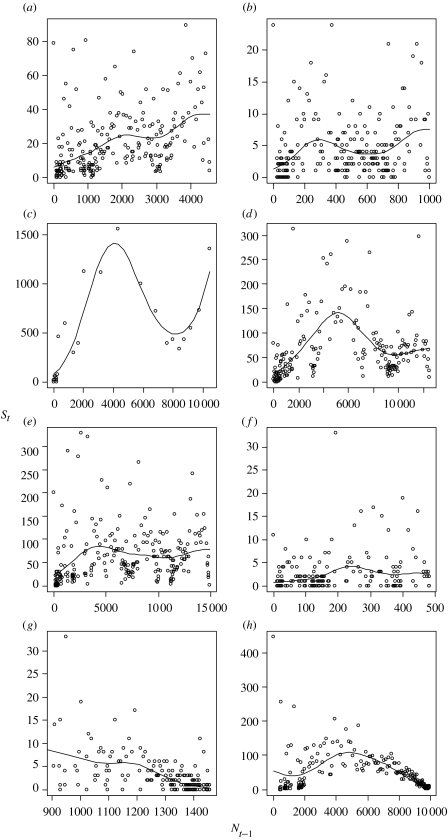
A common approach to estimating the total number of extant species in a taxonomic group is to extrapolate from the temporal pattern of known species descriptions. A formal statistical approach to this problem is provided. The approach is applied to a number of global datasets for birds, ants, mosses, lycophytes, monilophytes (ferns and horsetails), gymnosperms and also to New World grasses and UK flowering plants. Overall, our results suggest that unless the inventory of a group is nearly complete, estimating the total number of species is associated with very large margins of error. The strong influence of unpredictable variations in the discovery process on species accumulation curves makes these data unreliable in estimating total species numbers.
Figures
References
-
- Agosti, D. & Johnson, N. F. 2005 Antbase. See http://antbase.org/
-
- Aravind N.A, Shaanker R.U, Ganeshaiah K.N. Croak, croak, croak: are there more frogs to be discovered in the Western Ghats? Curr. Sci. 2004;86:1471–1472.
-
- Bebber D.P, Harris S.A, Gaston K.J, Scotland R.W. Ethnobotany, plant discovery and the first written records of UK flowering plants. Glob. Ecol. Biogeogr. 2007;16:103–108. doi:10.1111/j.1466-8238.2006.00266.x - DOI
-
- Crosby, M. R., Magill, R. E., Allen, B. & He, S. 2006 A checklist for the mosses St Louis, MO: Missouri Botanical Garden.
-
- Ertter B. Floristic surprises in North America north of Mexico. Ann. Mo. Bot. Gard. 2000;87:81–109. doi:10.2307/2666211 - DOI
MeSH terms
LinkOut - more resources
Full Text Sources
