


Reduced mucosal antimicrobial activity in Crohn's disease of the colon
- PMID: 17456510
- PMCID: PMC1954969
- DOI: 10.1136/gut.2006.118646
Reduced mucosal antimicrobial activity in Crohn's disease of the colon
Abstract
Objectives: In order to maintain the mucosal barrier against luminal microorganisms the intestinal epithelial cells synthesise various broad-spectrum antimicrobial peptides including defensins and cathelicidins. Recent studies indicate that both may be deficient in Crohn's disease. To elucidate the possible functional consequences of this deficiency antimicrobial activity in colonic mucosa from patients with inflammatory bowel disease and healthy controls was investigated.
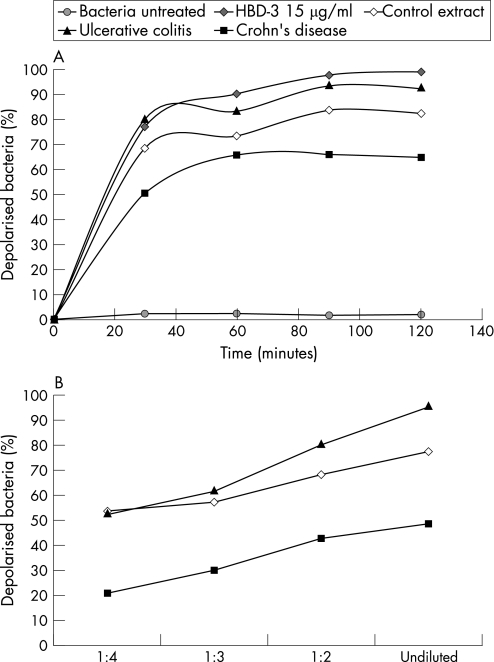
Methods: A flow cytometric assay was established to quantitate bacterial killing and test the antibacterial activity of cationic peptide extracts from colonic biopsies taken from patients with active or inactive ileocolonic or colonic Crohn's disease (n = 22), ulcerative colitis (n = 29) and controls (n = 13) against clinical isolates of Bacteroides vulgatus and Enterococcus faecalis or the reference strains Escherichia coli American Type Culture Collection (ATCC) 25922 and Staphylococcus aureus ATCC 25923.
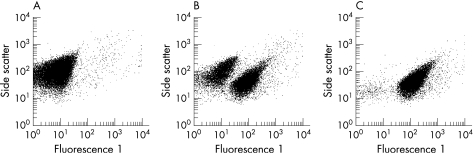
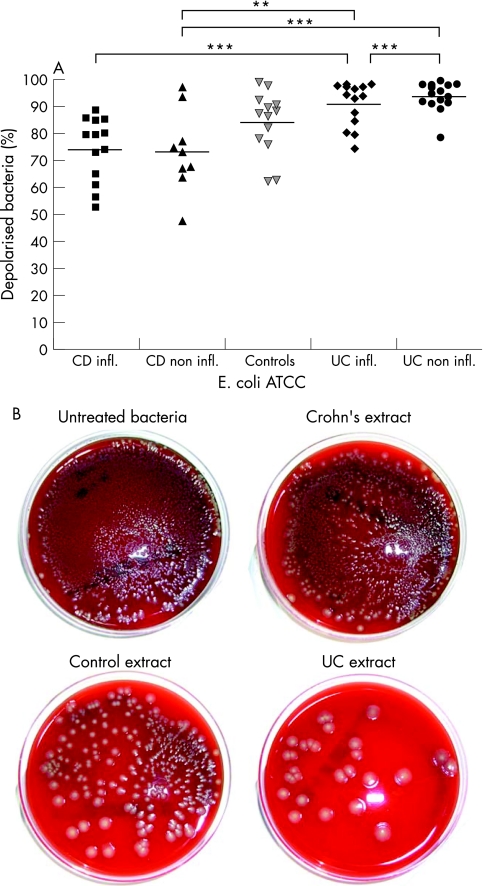
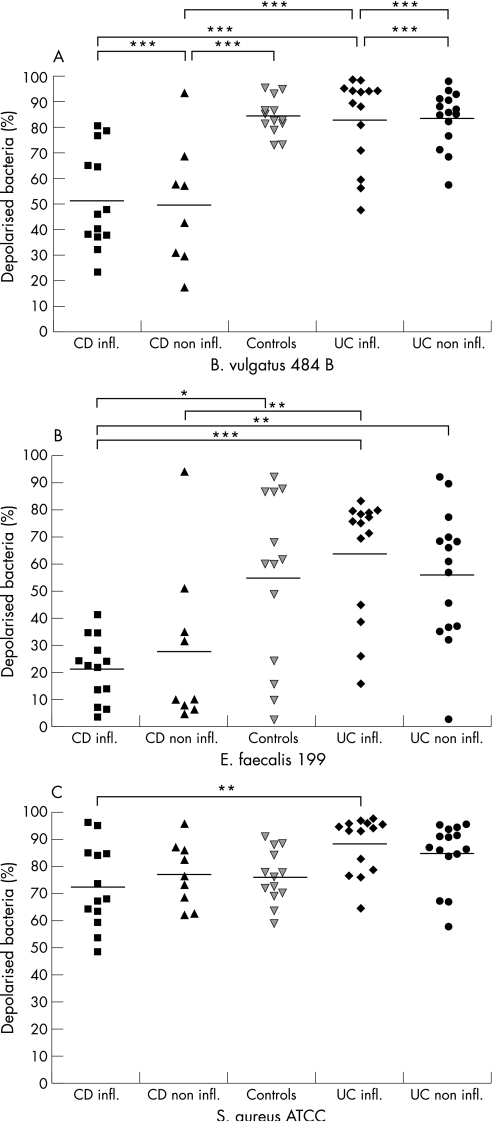
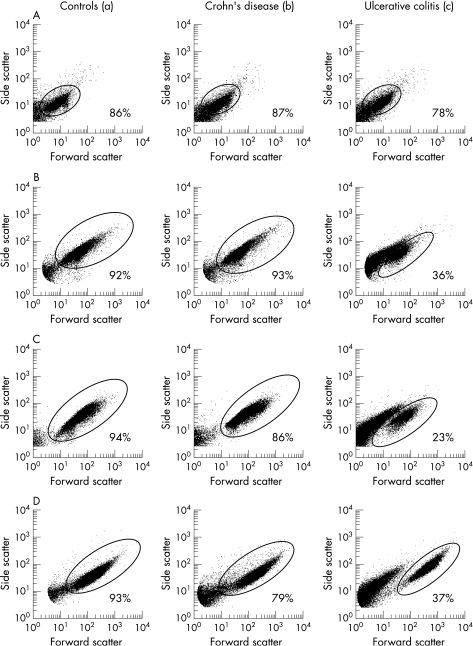
Results: Compared with controls and ulcerative colitis there was a reduced antimicrobial effect in Crohn's disease extracts that was most evident against B. vulgatus. The antimicrobial effect against E. coli and E. faecalis was significantly lower in Crohn's disease compared with ulcerative colitis. Activity against S. aureus disclosed a similar pattern, but was less pronounced. The differences were independent of the inflammation status or concurrent steroid treatment. Bacteria incubated with biopsy extracts from ulcerative colitis patients frequently showed a characteristic change in cell size and granularity, compatible with more extensive membrane disintegration, compared with bacteria incubated with extracts from controls or Crohn's disease.
Conclusion: Crohn's disease of the colon is characterized by a diminished functional antimicrobial activity that is consistent with the reported low antibacterial peptide expression.
Conflict of interest statement
Conflict of interest: None declared.
References
-
- Abreu M T, Fukata M, Arditi M. TLR Signaling in the Gut in Health and Disease. J Immunol 20051744453–4460. - PubMed
-
- Strober W, Murray P J, Kitani A.et al Signalling pathways and molecular interactions of NOD1 and NOD2. Nat Rev Immunol 200669–20. - PubMed
-
- Lehrer R I, Bevins C L. Defensins and other antimicrobial peptides. In: Mestecky J, Bienenstock J, Lammet ME, et al., eds. Mucosal immunology. New York: Academic Press, 200495–110.
-
- Schauber J, Rieger D, Weiler F.et al Heterogeneous expression of human cathelicidin hCAP18/LL‐37 in inflammatory bowel diseases. Eur J Gastroenterol Hepatol 200618615–621. - PubMed
Publication types
MeSH terms
Substances
LinkOut - more resources
Full Text Sources
Molecular Biology Databases
