


Nitric oxide mediates prostaglandins' deleterious effect on lipopolysaccharide-triggered murine fetal resorption
- PMID: 17460035
- PMCID: PMC1863444
- DOI: 10.1073/pnas.0702279104
Nitric oxide mediates prostaglandins' deleterious effect on lipopolysaccharide-triggered murine fetal resorption
Abstract
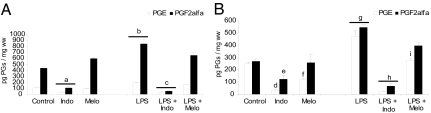
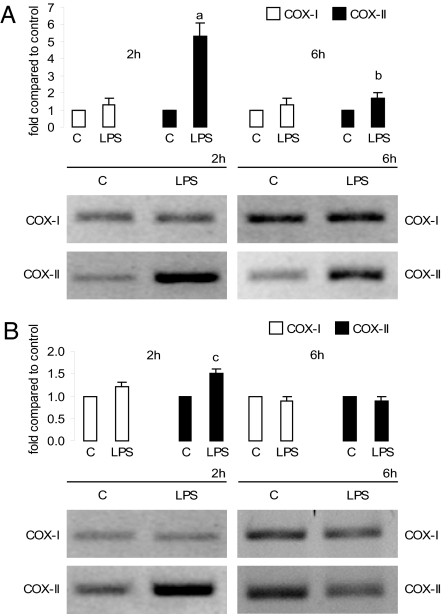
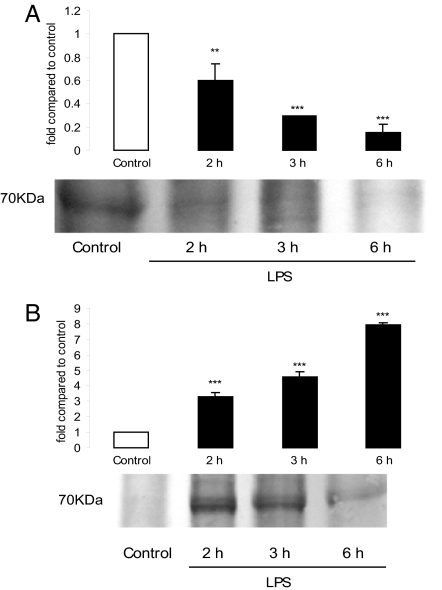
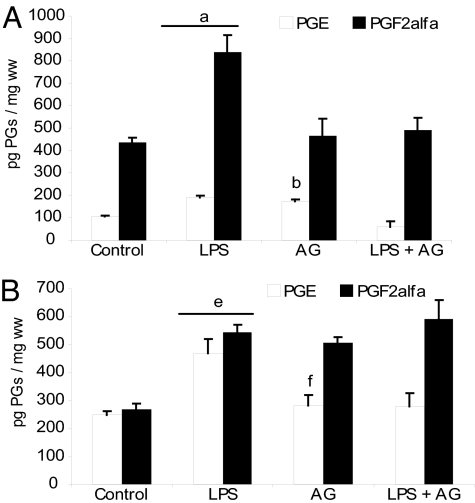
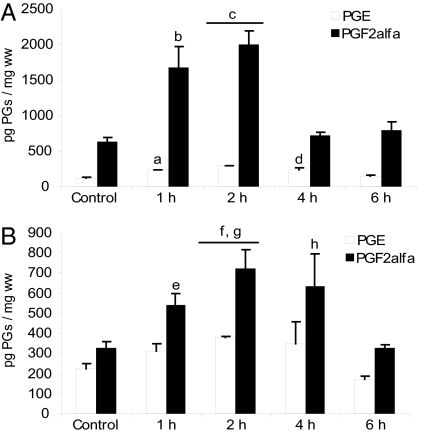
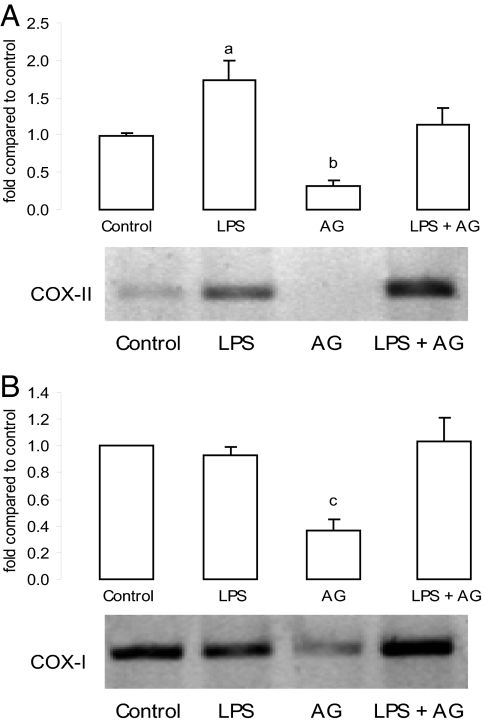
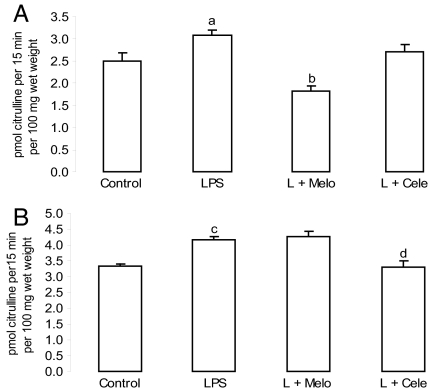
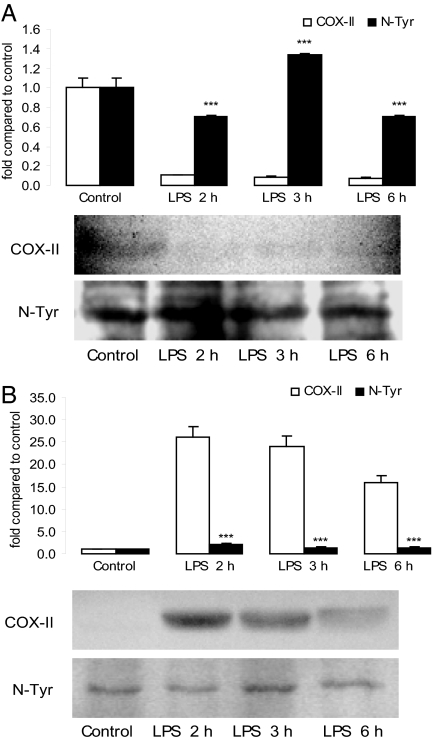
Genital tract bacterial infections could induce abortion and are some of the most common complications of pregnancy; however, the mechanisms remain unclear. We investigated the role of prostaglandins (PGs) in the mechanism of bacterial lipopolysaccharide (LPS)-induced pregnancy loss in a mouse model, and we hypothesized that PGs might play a central role in this action. LPS increased PG production in the uterus and decidua from early pregnant mice and stimulated cyclooxygenase (COX)-II mRNA and protein expression in the decidua but not in the uterus. We also observed that COX inhibitors prevented embryonic resorption (ER). To study the possible interaction between nitric oxide (NO) and PGs, we administered aminoguanidine, an inducible NO synthase inhibitor. NO inhibited basal PGE and PGF(2alpha) production in the decidua but activated their uterine synthesis and COX-II mRNA expression under septic conditions. A NO donor (S-nitroso-N-acetylpenicillamine) produced 100% ER and increased PG levels in the uterus and decidua. LPS-stimulated protein nitration was higher in the uterus than in the decidua. Quercetin, a peroxynitrite scavenger, did not reverse LPS-induced ER. Our results suggest that in a model of septic abortion characterized by increased PG levels, NO might nitrate and thus inhibit COX catalytic activity. ER prevention by COX inhibitors adds a possible clinical application to early pregnancy complications due to infections.
Conflict of interest statement
The authors declare no conflict of interest.
Figures

References
-
- Lamont RF, Sawant SR. Minerva Ginecol. 2005;57:423–433. - PubMed
-
- Penta M, Lukic A, Conte MP, Chiarini F, Fioriti P, Longhi C, Pietropaolo V, Vetrano G, Villaccio B, Deneger AM, et al. New Microbiol. 2003;26(4):329–337. - PubMed
-
- Clark DA, Manuel J, Lee L, Chaoaut G, Gorczynski RM, Levy GA. Am J Reprod Immunol. 2004;52:370–378. - PubMed
-
- Ogando DG, Paz D, Cella M, Franchi AM. Reproduction. 2003;125:95–110. - PubMed
Publication types
MeSH terms
Substances
LinkOut - more resources
Full Text Sources
