Bestrophin gene mutations cause canine multifocal retinopathy: a novel animal model for best disease
- PMID: 17460247
- PMCID: PMC1931491
- DOI: 10.1167/iovs.06-1374
Bestrophin gene mutations cause canine multifocal retinopathy: a novel animal model for best disease
Abstract
Purpose: Canine multifocal retinopathy (cmr) is an autosomal recessive disorder of multiple dog breeds. The disease shares a number of clinical and pathologic similarities with Best macular dystrophy (BMD), and cmr is proposed as a new large animal model for Best disease.
Methods: cmr was characterized by ophthalmoscopy and histopathology and compared with BMD-affected patients. BEST1 (alias VMD2), the bestrophin gene causally associated with BMD, was evaluated in the dog. Canine ortholog cDNA sequence was cloned and verified using RPE/choroid 5'- and 3'-RACE. Expression of the canine gene transcripts and protein was analyzed by Northern and Western blotting and immunocytochemistry. All exons and the flanking splice junctions were screened by direct sequencing.
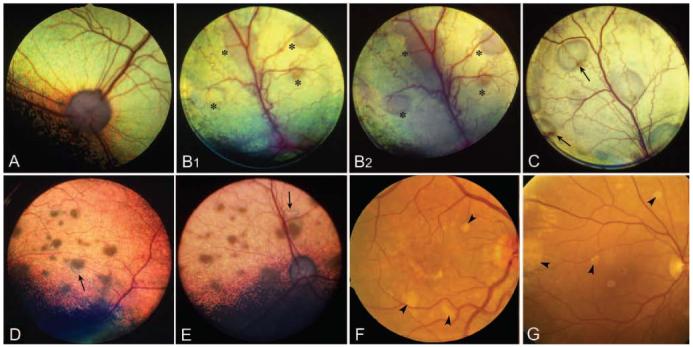
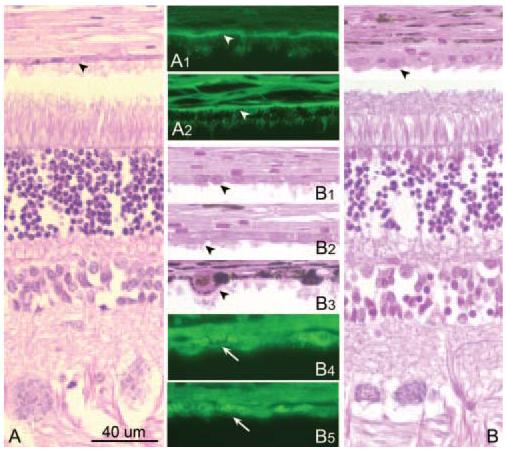
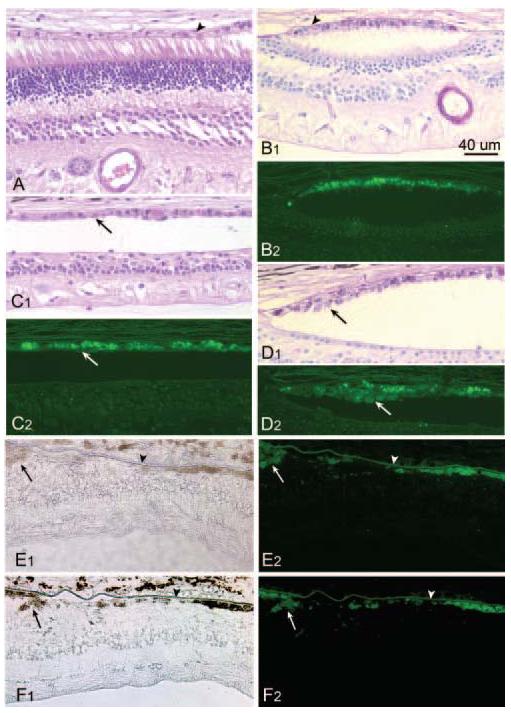
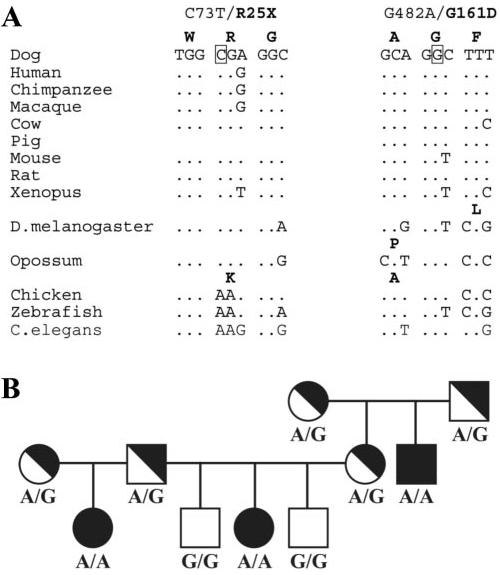
Results: The clinical phenotype and pathology of cmr closely resemble lesions of BMD. Canine VMD2 spans 13.7 kb of genomic DNA on CFA18 and shows a high level of conservation among eukaryotes. The transcript is predominantly expressed in RPE/choroid and encodes bestrophin, a 580-amino acid protein of 66 kDa. Immunocytochemistry of normal canine retina demonstrated specific localization of protein to the RPE basolateral plasma membranes. Two disease-specific sequence alterations were identified in the canine VMD2 gene: a C(73)T stop mutation in cmr1 and a G(482)A missense mutation in cmr2.
Conclusions: The authors propose these two spontaneous mutations in the canine VMD2 gene, which cause cmr, as the first naturally occurring animal model of BMD. Further development of the cmr models will permit elucidation of the complex molecular mechanism of these retinopathies and the development of potential therapies.
Figures


References
-
- D'Cruz PM, Yasumura D, Weir J, et al. Mutation of the receptor tyrosine kinase gene Mertk in the retinal dystrophic RCS rat. Hum Mol Genet. 2000;9:645–651. - PubMed
-
- Aguirre GD, Acland GM. Models, mutants and man: searching for unique phenotypes and genes in the dog model of inherited retinal degeneration. In: Ostrander EA, Giger U, Lindblad-Toh K, editors. The Dog and Its Genome. Cold Spring Harbor Laboratory Press; Cold Spring Harbor, NY: 2006.
Publication types
MeSH terms
Substances
Grants and funding
LinkOut - more resources
Full Text Sources
Other Literature Sources