


DIFFERENTIAL ATTACHMENT RESPONSES OF MALE AND FEMALE INFANTS TO FRIGHTENING MATERNAL BEHAVIOR: TEND OR BEFRIEND VERSUS FIGHT OR FLIGHT?
- PMID: 17464362
- PMCID: PMC1857276
- DOI: 10.1002/imhj.20033
DIFFERENTIAL ATTACHMENT RESPONSES OF MALE AND FEMALE INFANTS TO FRIGHTENING MATERNAL BEHAVIOR: TEND OR BEFRIEND VERSUS FIGHT OR FLIGHT?
Abstract
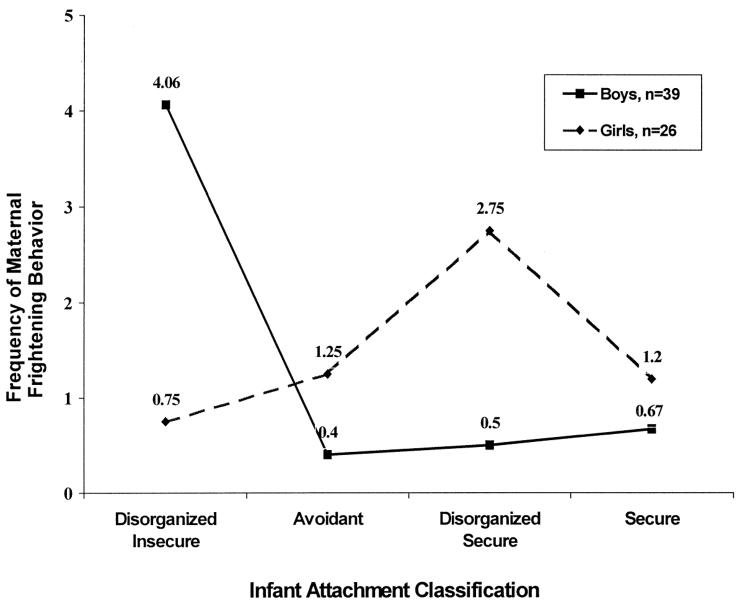
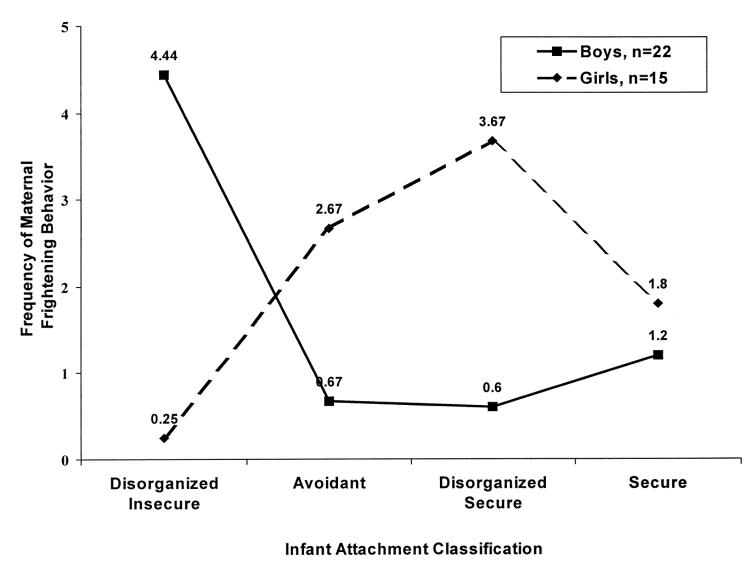
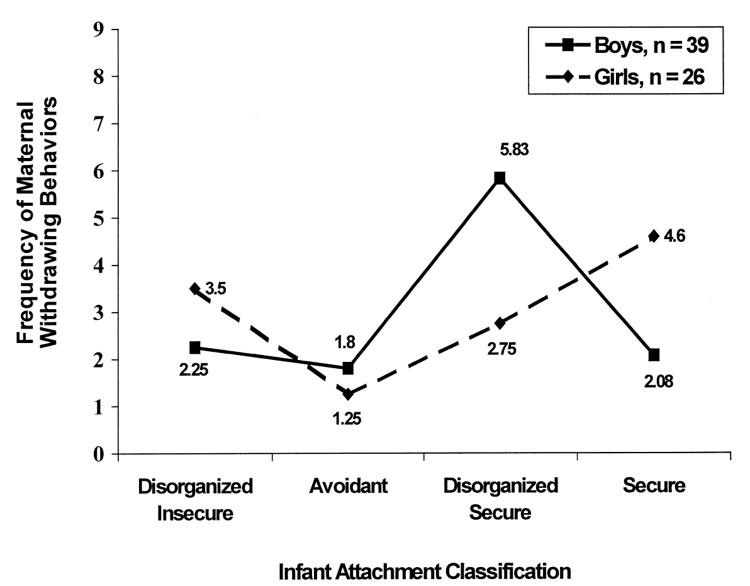
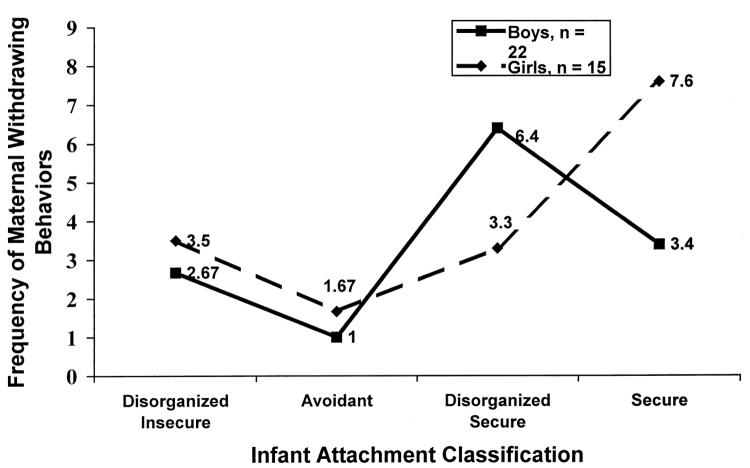
Taylor and colleagues (2000) proposed that males tend to display fight or flight responses to threat while females are more likely to display affiliative "tend or befriend" responses. In light of this hypothesis, gender differences in infant attachment behaviors were examined in a sample of 65 low-income mother-infant dyads, half of whom were referred to a home-based intervention service because of concerns about the quality of caregiving. Attachment behaviors were assessed in the Ainsworth Strange Situation when infants were 18 months old, and maternal behaviors were coded both for frightened or frightening behaviors, using the Main and Hesse (1992) coding inventory, and for disrupted affective communication using the Atypical Maternal Behavior Instrument for Assessment and Classification assessment tool (AMBIANCE; Lyons-Ruth, Bronfman, & Parsons, 1999). Results indicated that as maternal behavior became more frightening, female infants tended to approach their mothers more than male infants. These gender differences in response to maternal frightening behavior also were evident in the clinically referred subsample. The results suggest that gender-based differences in tendencies to show affiliative behaviors to threat may complicate interpretation of attachment behavior in clinical contexts.
Figures
References
-
- Ainsworth MDS, Blehar M, Waters E, Wall S. Patterns of attachment. Erlbaum; Hillsdale, NJ: 1978.
-
- Bronfman E, Parsons E, Lyons-Ruth K. Atypical Maternal Behavior Instrument for Assessment and Classification (AMBIANCE): Manual for coding disrupted affective communication. Department of Psychiatry; Cambridge Hospital, 1493 Cambridge St., Cambridge, MA 02139: 1993. Unpublished. Available from K. Lyons-Ruth.
-
- Carlson V, Cicchetti D, Barnett D, Braunwald K. Disorganized/disoriented attachment relationships in maltreated infants. Developmental Psychology. 1989;25:525–531.
-
- Connell DB. Individual differences in attachment: An investigation into stability, implications, and relationships to structure of early language development. Syracuse University; Syracuse, NY: 1976. Unpublished doctoral dissertation.
-
- Crittenden PM. Attachment and psychopathology. In: Goldberg S, Muir R, Kerr J, editors. Attachment theory: Social, developmental, and clinical perspectives. Analytic Press; Hillsdale, NJ: 1995. pp. 367–406.
Grants and funding
LinkOut - more resources
Full Text Sources
