


Identification of a new hTERT-derived HLA-A*0201 restricted, naturally processed CTL epitope
- PMID: 17464507
- PMCID: PMC11030816
- DOI: 10.1007/s00262-007-0319-y
Identification of a new hTERT-derived HLA-A*0201 restricted, naturally processed CTL epitope
Abstract
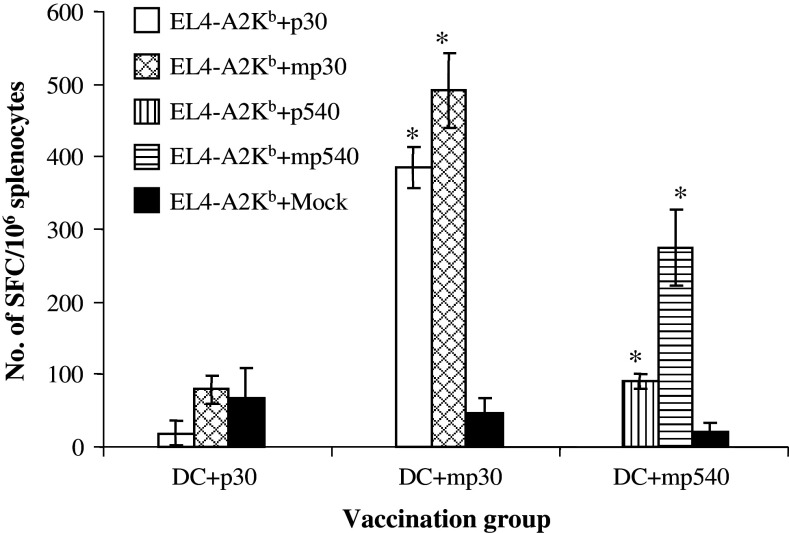
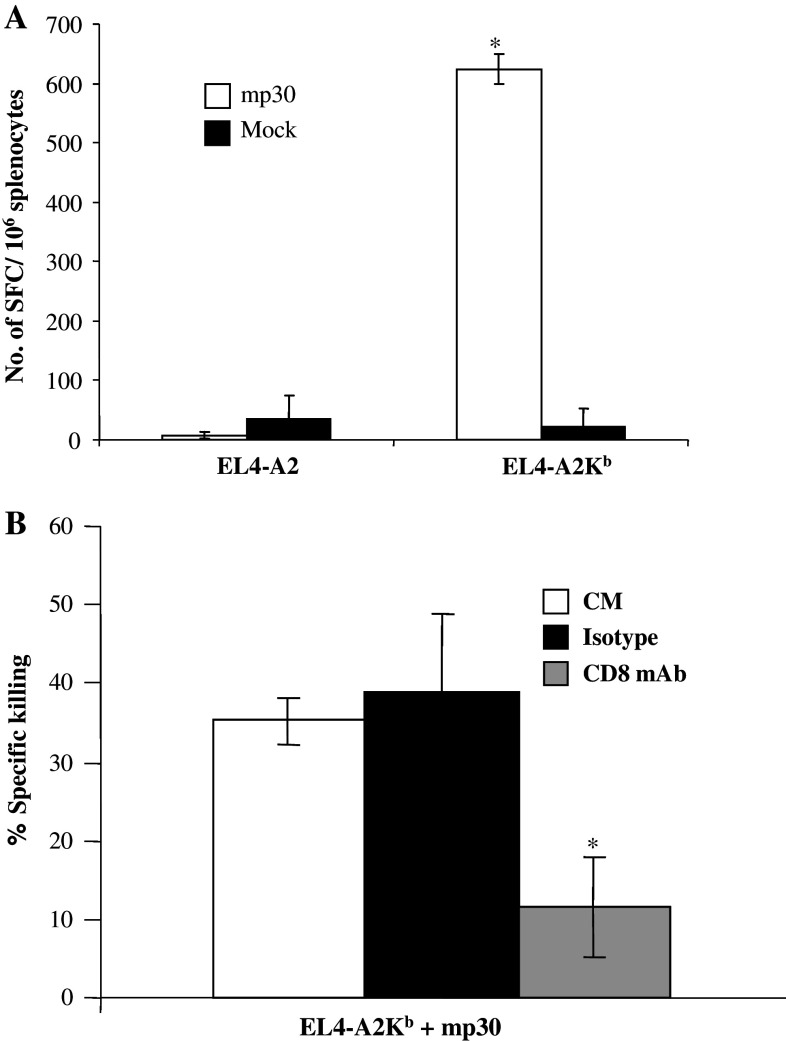
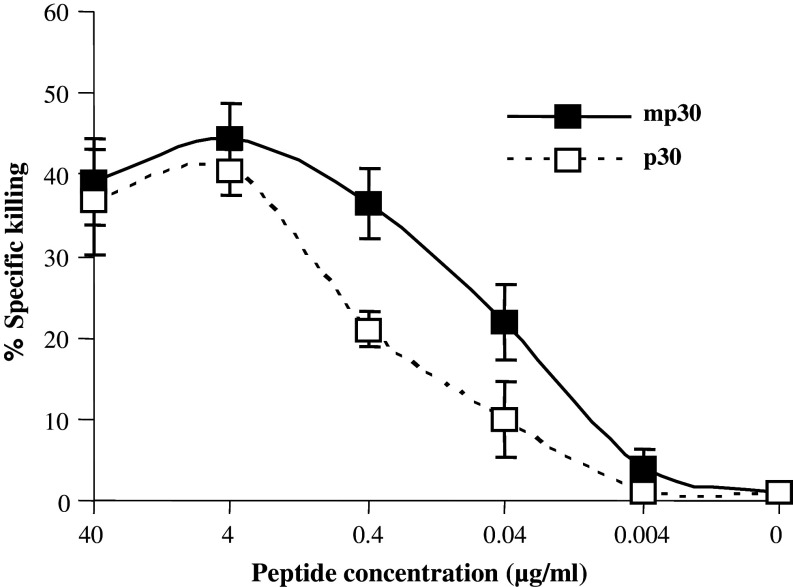
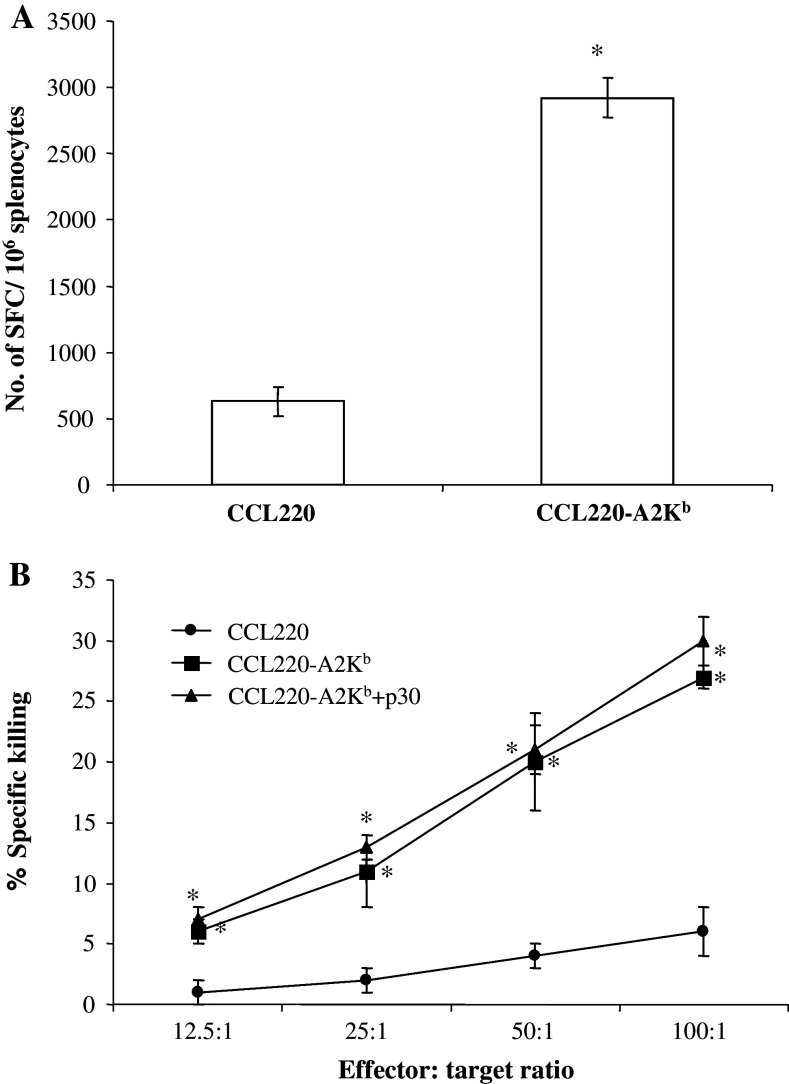
By the use of a neural network capable of performing quantitative predictions of peptides binding to HLA-A*0201 molecules, we identified a number of nonamer peptides derived from the catalytic subunit of telomerase, human telomerase reverse transcriptase (hTERT). Five nonimmunogenic peptides with measured binding affinities for HLA-A*0201 ranging from 155 to 1,298 nM were modified at the P1, P2 and P9 positions, respectively, to achieve stronger HLA-A*0201 binding. One peptide, mp30-38 (mp30), with an L to V substitution at position 9 was subsequently found to be immunogenic in mp30 immunized HLA-A*0201/H2K(b) or HHD transgenic mice. The T cell reactivity obtained was directed against both the mp30 and against the unmodified p30. Anti-mp30 specific T cells generated in HLA-A*0201 transgenic mice were dependent on TCR-CD8/MHC-I alpha3 binding and therefore not capable of recognizing mp30-pulsed human HLA-A*0201(+) cells or murine HLA-A*0201 transfectants. In order to show reactivity against naturally processed peptide in human tumor cells, an hTERT positive HLA-A*0201 negative colon carcinoma cell line (CCL220) was transfected with an HLA-A*0201/H2K(b) cDNA construct and used as target in ELISPOT and cytotoxicity assays. The data show that T cells from mp30 immunized HHD transgenic mice react specifically against the CCL220 transfectant indicating that p30 is naturally processed. In conclusion, we have identified a new CTL HLA-A*0201 restricted hTERT epitope, which is now, included in an ongoing phase 2 vaccine trial of patients with disseminated cancer.
Figures
References
-
- Adotévi O, Mollier K, Neuveut C, Cardinaud S, Boulanger E, Mignen B, et al. Immunogenic HLA-B*0702-restricted epitopes derived from human telomerase reverse transcriptase that elicit antitumor cytotoxic T-cell responses. Clin Cancer Res. 2006;12:3158–3167. doi: 10.1158/1078-0432.CCR-05-2647. - DOI - PubMed
-
- Ayyoub M, Migliaccio M, Guillaume P, Lienard D, Cerottini JC, Romero P, et al. Lack of tumor recognition by hTERT peptide 540–548-specific CD8+ T cells from melanoma patients reveals ineffeicient antigen processing. Eur J Immunol. 2001;31:2642–2651. doi: 10.1002/1521-4141(200109)31:9<2642::AID-IMMU2642>3.0.CO;2-6. - DOI - PubMed
Publication types
MeSH terms
Substances
LinkOut - more resources
Full Text Sources
Other Literature Sources
Research Materials
