


Development and multi-site validation of a new condition-specific quality of life measure for eating disorders
- PMID: 17470290
- PMCID: PMC1878470
- DOI: 10.1186/1477-7525-5-23
Development and multi-site validation of a new condition-specific quality of life measure for eating disorders
Abstract
Background: In eating disorders (EDs) treatment, outcome measurement has traditionally focused on symptom reduction rather than functioning or quality of life (QoL). Generic QoL measures lack sensitivity for some diagnoses and many not be responsive in eating disorder patients. This article describes the development and validation of a condition-specific QoL measure for adolescents and adults with eating disorders--the Eating Disorders Quality of Life Scale (EDQLS).
Methods: Multi-source and multi-stage methods were used to develop the EDQLS, with participation of patients with EDs, their family members and ED treatment providers. Sources for domain and item development included 39 articles, 12 patient and 10 treatment provider interviews, and 31 first person narratives from the internet. Four stages of validation and pre-testing involving 17 patients, 10 family members and 18 providers reduced 233 items to 40 items in 12 domains. These items were pilot tested in 41 ED patients.
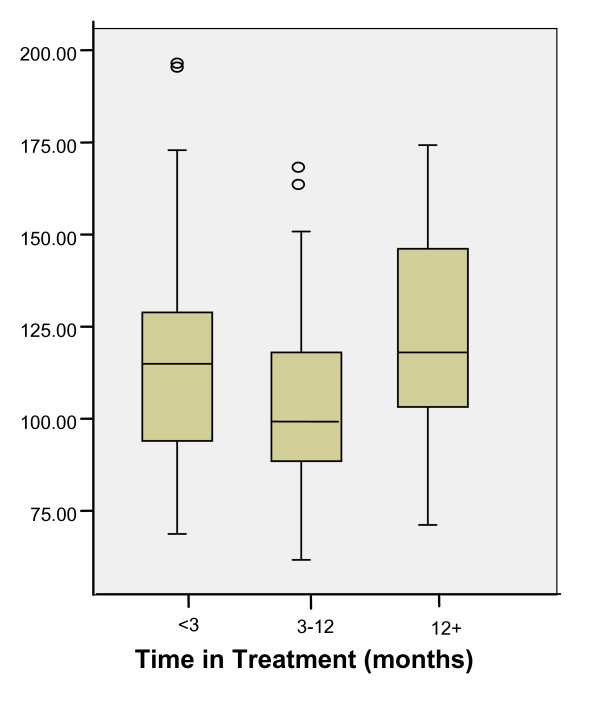
Results: The final instrument was then validated in a 12 site sample of 171 individuals aged 14-60 with EDs. All items showed good dispersion. The total raw mean score was 110 out of 200 (SD 27.6) with higher scores indicating better QoL. Internal consistency was excellent (Cronbach's alpha = .96) and subscale internal consistency ranged from alpha .36 to .79 providing evidence for a strong overall construct and some multi-dimensionality. Validity was supported by significant differences in mean EDQLS according to severity levels on the EDI-2 (F = 95.3, p <.001) and the BSI (F = 86.9, p <.001). EDQLS scores were positively associated with time in treatment (F = 4.65, p = .01) suggesting responsiveness. A strong positive association was also found between EDQLS scores and stage of change (F = 15.1 p <.001). Pearson's correlations between the EDQLS and criterion instrument scores were .71 for the SF-12 mental subscale, .61 for the QoLI and .78 for the 16D, supporting construct validity. Exploratory principal components and item response theory analyses identified only a few poor fitting items.
Conclusion: The EDQLS has promising psychometric characteristics and may be useful for evaluating ED treatment effectiveness.
Figures


References
Publication types
MeSH terms
LinkOut - more resources
Full Text Sources
Medical
