Stroke in patients with human immunodeficiency virus infection
- PMID: 17470469
- PMCID: PMC2095583
- DOI: 10.1136/jnnp.2007.116103
Stroke in patients with human immunodeficiency virus infection
Abstract
Objective: To report the nature of stroke in patients infected with human immunodeficiency virus (HIV) in a region with high HIV seroprevalence and describe HIV associated vasculopathy.
Methods: Patients with first ever stroke, infected with HIV and prospectively included in the stroke register of the Groote Schuur Hospital/University of Cape Town stroke unit were identified and reviewed.
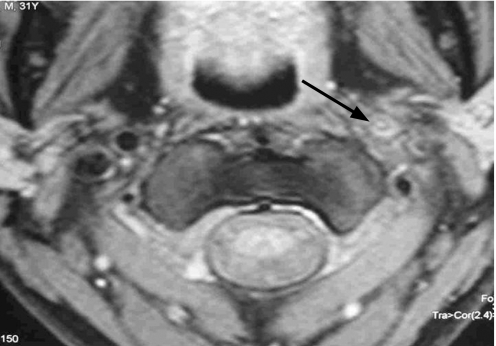
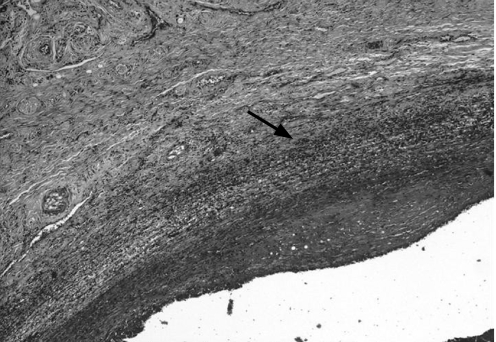
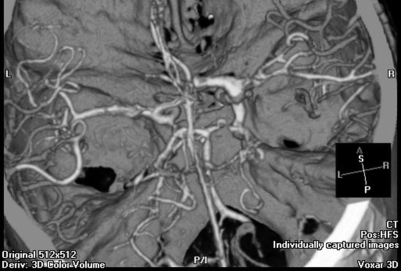
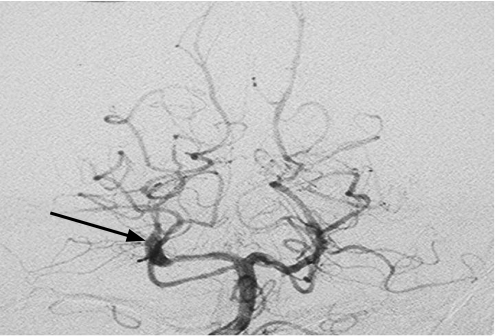
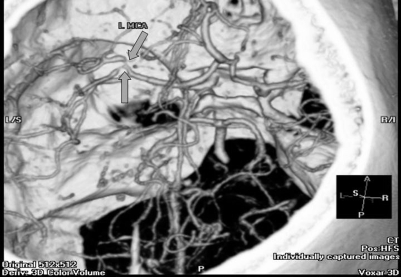
Results: Between 2000 and 2006, 67 of the 1087 (6.1%) stroke patients were HIV infected. Of these, 91% (n = 61) were younger than 46 years. Cerebral infarction occurred in 96% (n = 64) of the HIV positive patients and intracerebral haemorrhage in 4% (n = 3). HIV infected young stroke patients did not demonstrate hypertension, diabetes, hyperlipidaemia or smoking as significant risk factors for ischaemic stroke. Infection as a risk factor for stroke was significantly more common in HIV positive patients (p = 0.018, OR 6.4, CI 3.1 to 13.2). In 52 (81%) patients with ischaemic stroke, an aetiology was determined. Primary aetiologies comprised infectious meningitides/vasculitides in 18 (28%) patients, coagulopathy in 12 (19%) patients and cardioembolism in nine (14%) patients. Multiple aetiologies were present in seven (11%) patients with ischaemic stroke. HIV associated vasculopathy was identified in 13 (20%) patients. The HIV associated vasculopathy manifested either extracranially (seven patients) as total or significant carotid occlusion or intracranially (six patients) as medium vessel occlusion, with or without fusiform aneurysmal dilation, stenosis and vessel calibre variation.
Conclusion: Investigation of HIV infected patients presenting with stroke will determine an aetiology in the majority of patients. In our cohort, 20% of patients demonstrated evidence of an HIV associated vasculopathy.
Conflict of interest statement
Competing interests: None.
Comment in
-
Stroke in patients with human immunodeficiency virus infection.J Neurol Neurosurg Psychiatry. 2007 Dec;78(12):1291. doi: 10.1136/jnnp.2007.122416. J Neurol Neurosurg Psychiatry. 2007. PMID: 18024688 Free PMC article.
References
-
- Cole J W, Pinto A N, Hebel J R.et al Acquired immunodeficiency syndrome and the risk of stroke. Stroke 20043551–56. - PubMed
-
- Evers S, Nabavi D, Rahmann A.et al Ischaemic cerebrovascular events in HIV infection: a cohort study. Cerebrovasc Dis 200315199–205. - PubMed
-
- Hoffman M, Berger J R, Nath A.et al Cerebrovascular disease in young, HIV‐infected, black Africans in the KwaZulu Natal province of South Africa. J Neurovirol 20006229–236. - PubMed
-
- Qureshi A I, Janssen R C, Karon J M.et al Human immunodeficiency virus infection and stroke in young patients. Arch Neurol 1997541150–1153. - PubMed
-
- Dorrington R E, Johnson L F, Bradshaw D.et alThe demographic impact of HIV/AIDS in South Africa. National and provincial indicators for 2006. Cape Town: Centre for Actuarial Research, South African Medical Research Council and Actuarial Society of South Africa, 2006
MeSH terms
LinkOut - more resources
Full Text Sources
Medical