


Further evaluation of methods to identify matched stimulation
- PMID: 17471794
- PMCID: PMC1868809
- DOI: 10.1901/jaba.2007.142-05
Further evaluation of methods to identify matched stimulation
Abstract
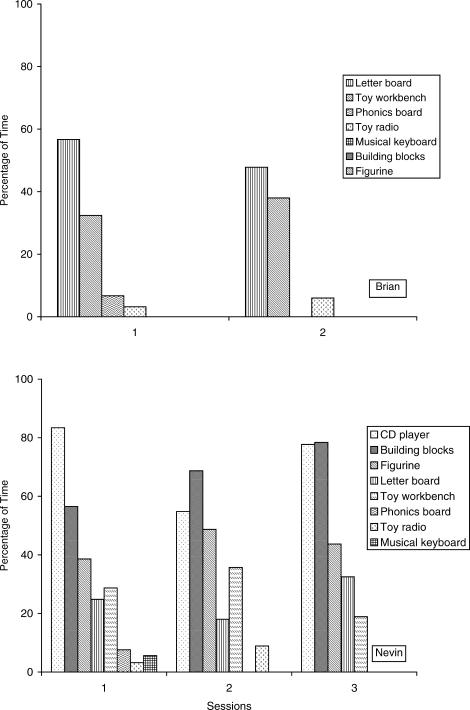
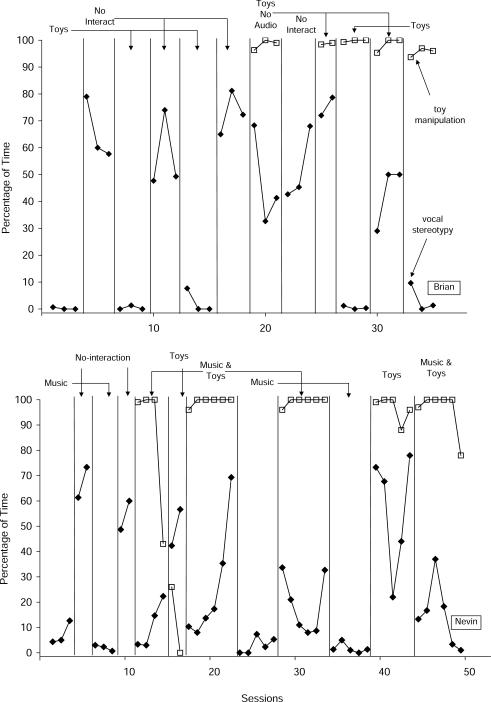
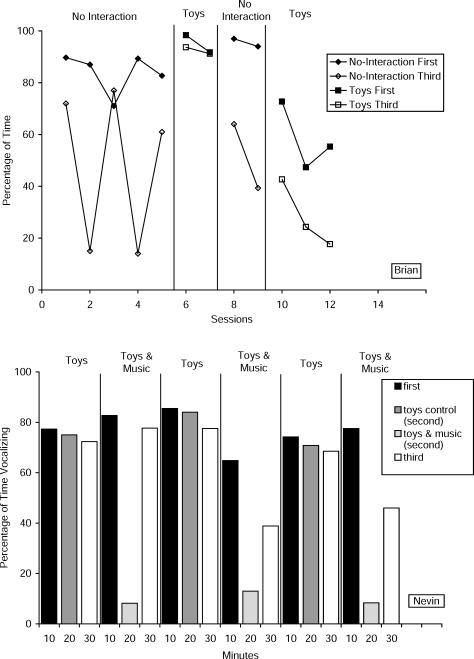
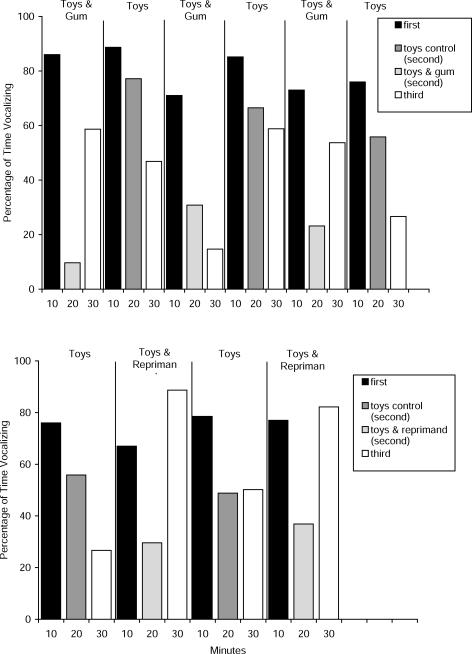
The effects of preferred stimulation on the vocal stereotypy of 2 individuals were evaluated in two experiments. The results of Experiment 1 showed that (a) the vocal stereotypy of both participants persisted in the absence of social consequences, (b) 1 participant manipulated toys that did and did not produce auditory stimulation, but only sound-producing toys decreased his vocal stereotypy, and (c) only noncontingent music decreased vocal stereotypy for the other participant, but sterotypy paradoxically increased when toys were presented with music. Using a three-component multiple schedule, the results of Experiment 2 showed that the vocal stereotypy of both participants remained below preintervention levels following the removal of auditory stimulation and that 1 participant's vocal stereotypy increased following the removal of contingent reprimands. These patterns suggest that auditory stimulation functioned as an abolishing operation for vocal stereotypy and reprimands functioned as an establishing operation for vocal stereotypy. Together, the two experiments provide a method for identifying alternative stimulation that may substitute for automatically reinforced behavior.
Figures
References
-
- Carter S.L, Devlin S.R, Doggett A, Harber M.M, Barr C. Determining the influence of tangible items on screaming and handmouthing following an inconclusive functional analysis. Behavioral Interventions. 2004;19:51–58.
-
- Forehand R, Baumeister A.A. Rate of stereotyped body rocking of severe retardates as a function of frustration of goal-directed behavior. Journal of Abnormal Psychology. 1971;78:34–42. - PubMed
MeSH terms
LinkOut - more resources
Full Text Sources
