


Oral administration of (+/-)3,4-methylenedioxymethamphetamine and (+)methamphetamine alters temperature and activity in rhesus macaques
- PMID: 17475314
- PMCID: PMC1975960
- DOI: 10.1016/j.pbb.2007.03.015
Oral administration of (+/-)3,4-methylenedioxymethamphetamine and (+)methamphetamine alters temperature and activity in rhesus macaques
Abstract
Rationale: Emergency Department visits and fatalities in which (+/-)3,4-methylenedioxymethamphetamine (MDMA) or (+)methamphetamine (METH) are involved frequently feature unregulated hyperthermia. MDMA and METH significantly elevate body temperature in multiple laboratory species and, most importantly, can also produce unregulated and threatening hyperthermia in nonhuman primates. A majority of prior animal studies have administered drugs by injection whereas human consumption of "Ecstasy" is typically oral, an important difference in route of administration which may complicate the translation of animal data to the human condition.
Objective: To determine if MDMA and METH produce hyperthermia in monkeys following oral administration as they do when administered intramuscularly.
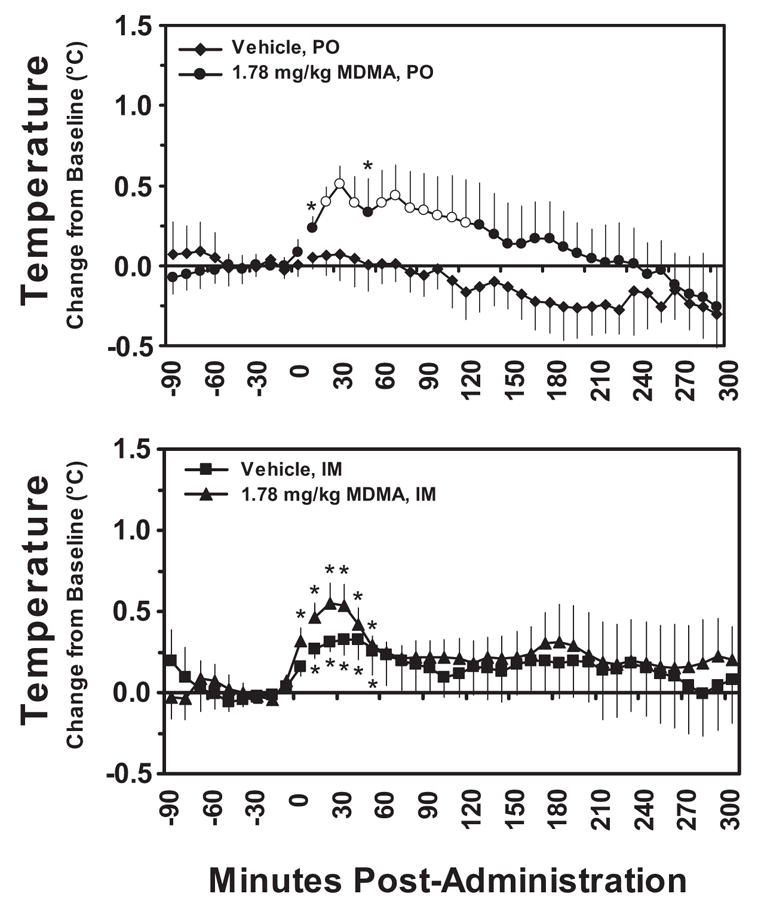
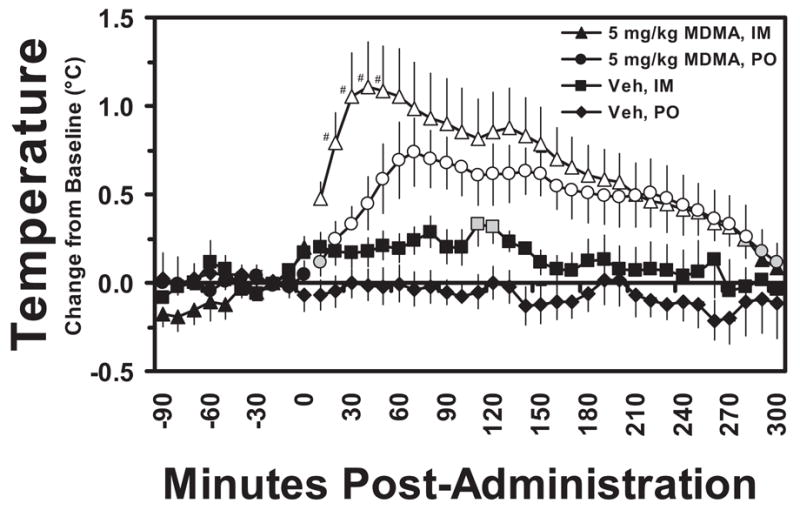
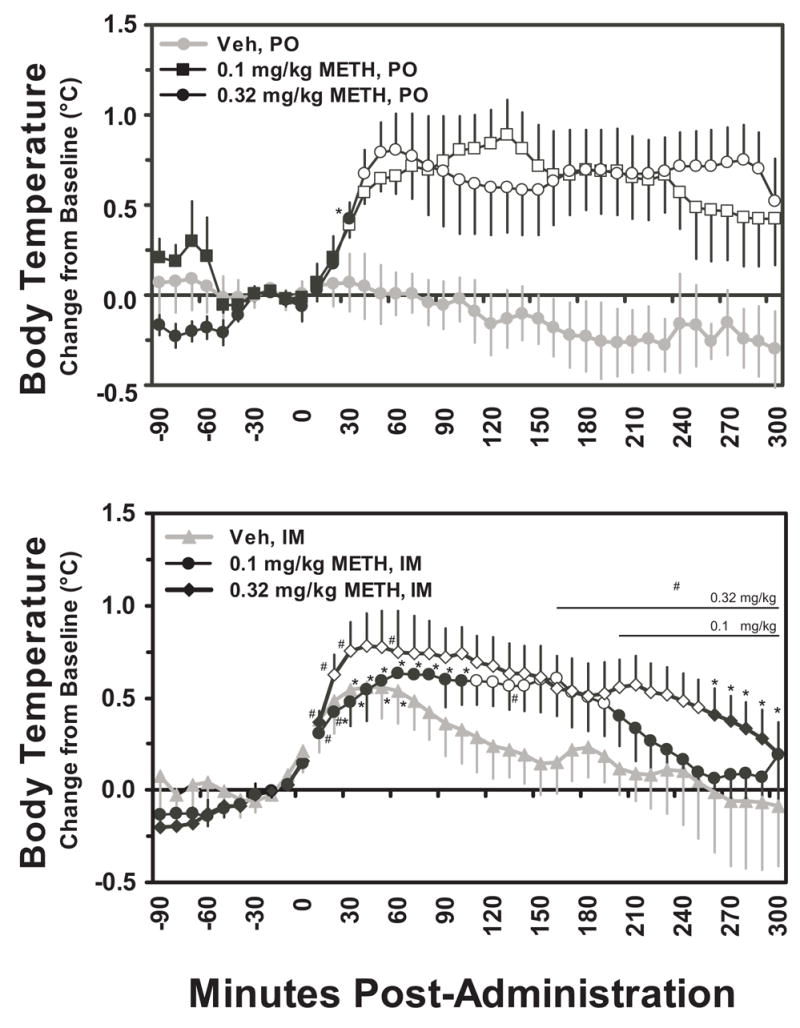
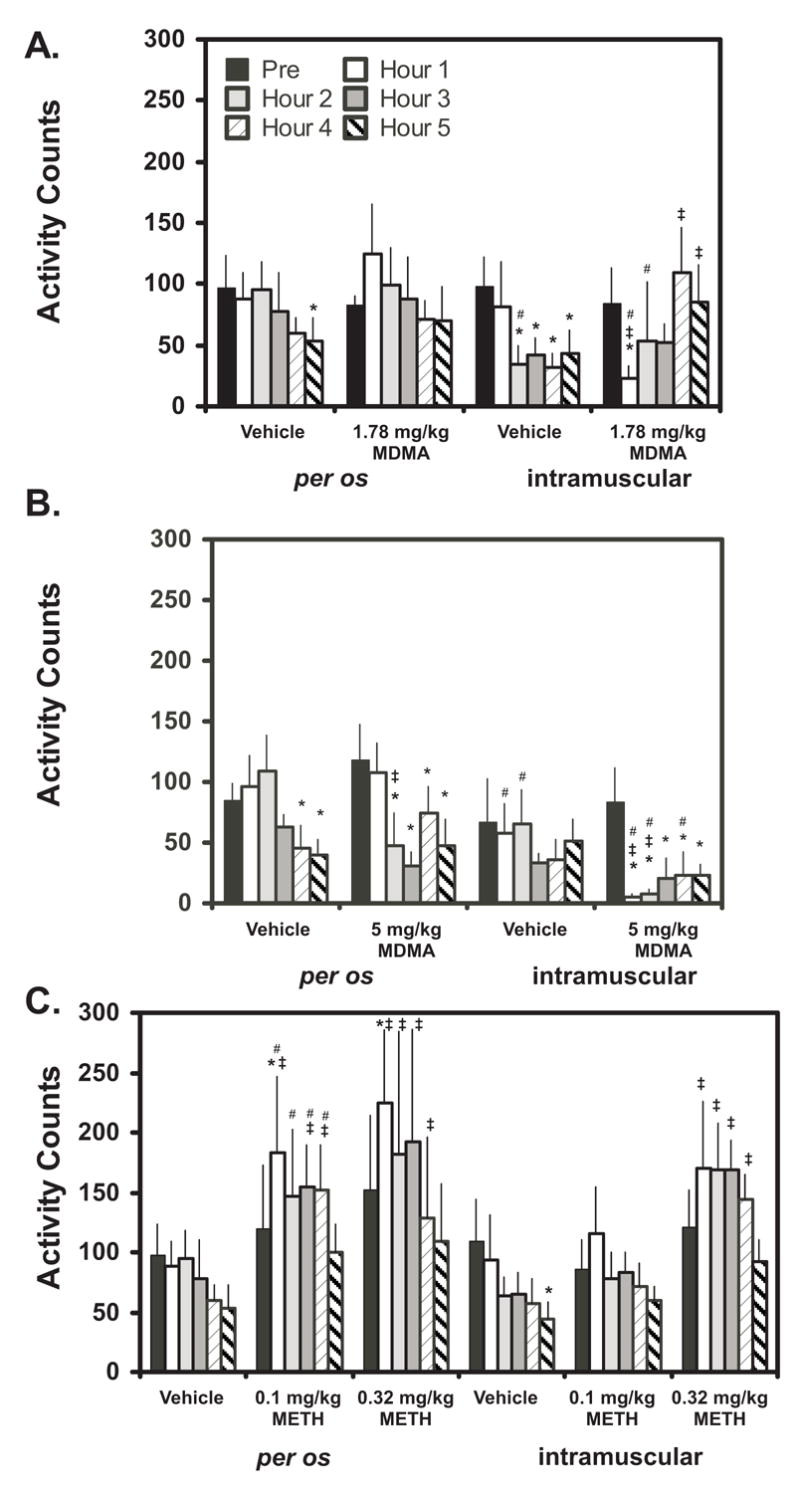
Methods: Adult male rhesus monkeys were challenged intramuscularly (i.m.) and per os (p.o.) with 1.78 or 5 mg/kg (+/-)MDMA and with 0.1 or 0.32 mg/kg (+)METH. Temperature and activity were monitored with a radiotelemetry system.
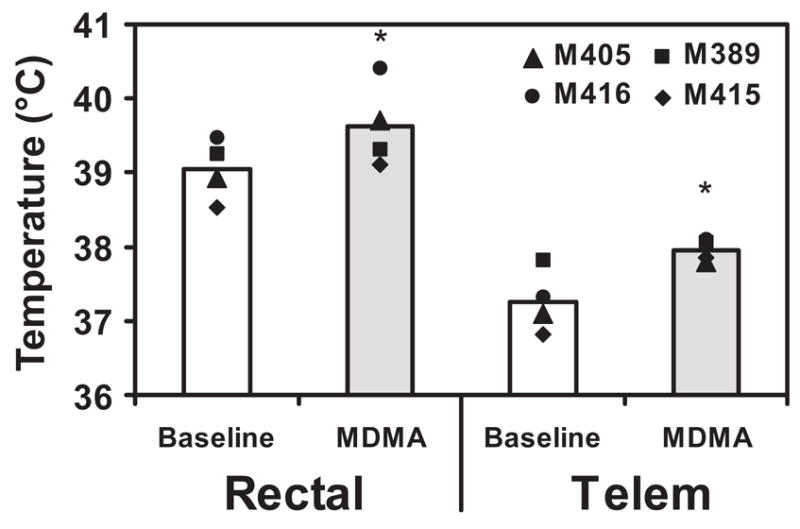
Results: Oral administration of either MDMA or METH produced significant increases in body temperature. Locomotor activity was suppressed by MDMA and increased by METH following either route of administration.
Conclusions: The data show that the oral route of administration is not likely to qualitatively reduce the temperature increase associated with MDMA or METH although oral administration did slow the rate of temperature increase. It is further established that MDMA reduces activity in monkeys even after relatively high doses and oral administration.
Figures
References
-
- Baggott M, Heifets B, Jones RT, Mendelson J, Sferios E, Zehnder J. Chemical analysis of ecstasy pills. JAMA. 2000;284:2190. - PubMed
-
- Ball J, Garfield T, Morin C, Steele D. Emergency Department Trends From the Drug Abuse Warning Network, Final Estimates 1995–2002. DAWN Series D-24, DHHS Publication No. (SMA) 03–3780. Rockville, MD: Substance Abuse and Mental Health Services Administration, Office of Applied Studies; 2003.
-
- Ball J, Morin C, Cover E, Green J, Sonnefeld J, Steele D, Williams T, Mallonee E Drug Abuse Warning Network. Interim National Estimates of Drug-Related Emergency Department Visits. DAWN Series D-26, DHHS Publication No. (SMA) 04–3972. Rockville, MD: Substance Abuse and Mental Health Services Administration, Office of Applied Studies; 2003. 2004.
-
- Bishop C, Taylor JL, Kuhn DM, Eskow KL, Park JY, Walker PD. MDMA and fenfluramine reduce L-DOPA-induced dyskinesia via indirect 5-HT1A receptor stimulation. Eur J Neurosci. 2006;23:2669–2676. - PubMed
Publication types
MeSH terms
Substances
Grants and funding
LinkOut - more resources
Full Text Sources
Other Literature Sources
Medical
