Review
. 2007 May;117(5):1184-94.
doi: 10.1172/JCI31414.

Development of TLR9 agonists for cancer therapy

Affiliations
Review

Development of TLR9 agonists for cancer therapy

Arthur M Krieg. J Clin Invest. 2007 May.

Abstract

In vertebrates, the TLRs are a family of specialized immune receptors that induce protective immune responses when they detect highly conserved pathogen-expressed molecules. Synthetic agonists for several TLRs, including TLR3, TLR4, TLR7, TLR8, and TLR9, have been or are being developed for the treatment of cancer. TLR9 detects the unmethylated CpG dinucleotides prevalent in bacterial and viral DNA but not in vertebrate genomes. As discussed in this Review, short synthetic oligodeoxynucleotides containing these immune stimulatory CpG motifs activate TLR9 in vitro and in vivo, inducing innate and adaptive immunity, and are currently being tested in multiple phase II and phase III human clinical trials as adjuvants to cancer vaccines and in combination with conventional chemotherapy and other therapies.


Figures

Figure 1
Figure 1. Backbones of native and modified DNA.
PS ODN differ from native phosphodiester (PO) DNA ODN only in the substitution of a sulfur for one of the nonbridging oxygen atoms. This change improves the in vivo stability of the ODN from a half-life of a few minutes to about two days for the PS ODN.
Figure 2
Figure 2. Activation of innate and adaptive immunity by TLR9 activation.
Among human immune cells, only B cells and pDCs constitutively express TLR9. These cells endocytose DNA into an endosomal compartment where it binds to TLR9, forming a signaling complex. If the DNA contains unmethylated CpG motifs, TLR9 is stimulated, and the cell becomes activated. In pDCs, this results in type I IFN secretion, which activates NK cells, monocytes, and other APCs, and in the pDC maturation into a more effective APC able to activate naive T cells. Opposing these immune-boosting effects, pDCs activated through TLR9 also mediate immune-suppressive effects through counterregulatory factors such as indoleamine 2,3-dioxygenase (35, 36) and the generation of Tregs (29). In B cells, TLR9 stimulation results in the secretion of proinflammatory cytokines, such as IL-6, and in the release of immune regulatory cytokines that might limit the intensity of the inflammatory response, such as IL-10 (124). TLR9 activation of B cells confers a greatly increased sensitivity to antigen stimulation and enhances their differentiation into antibody-secreting plasma cells. On balance, these immune effects of CpG DNA generally promote strong Th1 CD4+ and CD8+ T cell responses. However, the concurrent activation of counterregulatory pathways such as the induction of Tregs limit TLR9-induced immune activation, offering a potential for enhancing the therapeutic efficacy of TLR9 agonists by coadministration of antagonists of one or more of these inhibitory pathways.
Figure 3
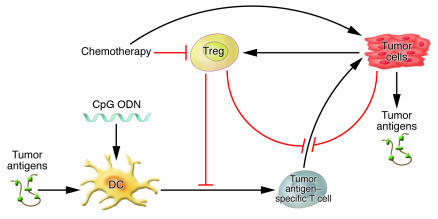
Figure 3. Potential mechanism to explain the observed antitumor synergy of TLR9 with chemotherapy.
Tumor antigens are constitutively present in cancer patients and are taken up by DCs in the tumor and secondary lymphoid organs. In patients with established tumors, the immune system fails to respond to the tumor antigens due to the tumor-induced Tregs and other immune-suppressive effects. Certain chemotherapy regimens effectively deplete Tregs and also disrupt the tumor, releasing additional antigen and interfering with the ability of the tumor and its mesenchymal support structures to suppress the immune system. When such chemotherapy is followed by treatment with a TLR9 agonist (CpG ODN), DCs bearing tumor antigens are stimulated to mature and become effective inducers of a CTL response, which in the postchemotherapy environment is now better able to attack the tumor, leading to improved survival.

References

    1. Creagh E.M., O’Neill L.A. TLRs, NLRs and RLRs: a trinity of pathogen sensors that co-operate in innate immunity. Trends Immunol. 2006;27:352–357. - PubMed
    1. Iwasaki A., Medzhitov R. Toll-like receptor control of the adaptive immune responses. Nat. Immunol. 2004;5:987–995. - PubMed
    1. Takeda K., Kaisho T., Akira S. Toll-like receptors. Annu. Rev. Immunol. 2003;21:335–376. - PubMed
    1. Baldridge J.R., et al. Taking a Toll on human disease: Toll-like receptor 4 agonists as vaccine adjuvants and monotherapeutic agents. Expert Opin. Biol. Ther. 2004;4:1129–1138. - PubMed
    1. Burns C.A., Brown M.D. Imiquimod for the treatment of skin cancer. Dermatol. Clin. 2005;23:151–64, vii. - PubMed