


Using internet and mobile phone technology to deliver an automated physical activity program: randomized controlled trial
- PMID: 17478409
- PMCID: PMC1874722
- DOI: 10.2196/jmir.9.2.e7
Using internet and mobile phone technology to deliver an automated physical activity program: randomized controlled trial
Abstract
Background: The Internet has potential as a medium for health behavior change programs, but no controlled studies have yet evaluated the impact of a fully automated physical activity intervention over several months with real-time objective feedback from a monitor.
Objective: The aim was to evaluate the impact of a physical activity program based on the Internet and mobile phone technology provided to individuals for 9 weeks.
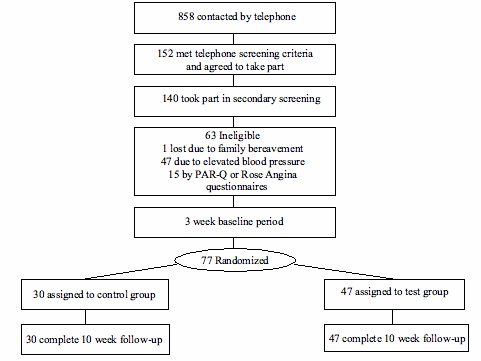
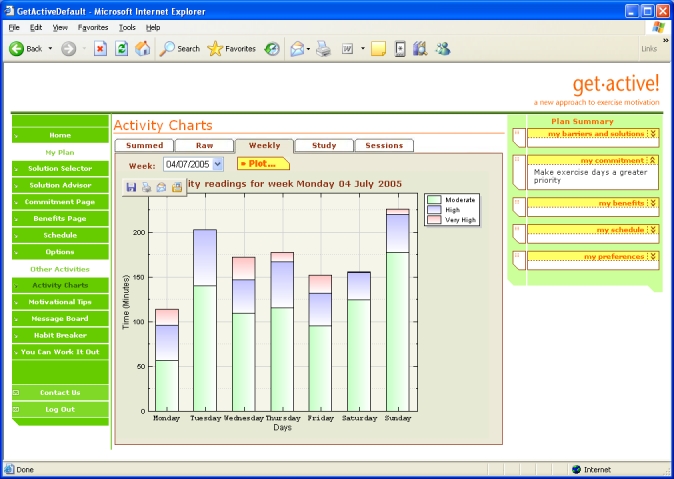
Methods: A single-center, randomized, stratified controlled trial was conducted from September to December 2005 in Bedfordshire, United Kingdom, with 77 healthy adults whose mean age was 40.4 years (SD = 7.6) and mean body mass index was 26.3 (SD = 3.4). Participants were randomized to a test group that had access to an Internet and mobile phone-based physical activity program (n = 47) or to a control group (n = 30) that received no support. The test group received tailored solutions for perceived barriers, a schedule to plan weekly exercise sessions with mobile phone and email reminders, a message board to share their experiences with others, and feedback on their level of physical activity. Both groups were issued a wrist-worn accelerometer to monitor their level of physical activity; only the test group received real-time feedback via the Internet. The main outcome measures were accelerometer data and self-report of physical activity.
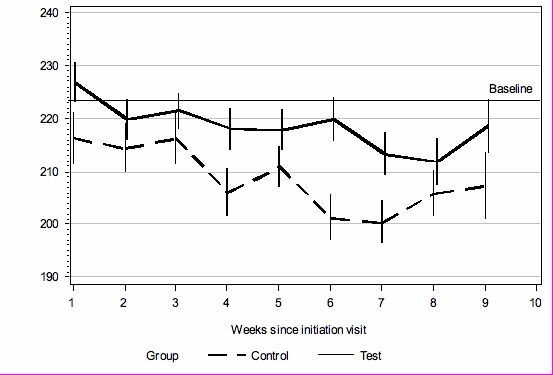
Results: At the end of the study period, the test group reported a significantly greater increase over baseline than did the control group for perceived control (P < .001) and intention/expectation to exercise (P < .001). Intent-to-treat analyses of both the accelerometer data (P = .02) and leisure time self-report data (P = .03) found a higher level of moderate physical activity in the test group. The average increase (over the control group) in accelerometer-measured moderate physical activity was 2 h 18 min per week. The test group also lost more percent body fat than the control group (test group: -2.18, SD = 0.59; control group: -0.17, SD = 0.81; P = .04).
Conclusions: A fully automated Internet and mobile phone-based motivation and action support system can significantly increase and maintain the level of physical activity in healthy adults.
Conflict of interest statement
None declared.
Figures

References
-
- Kristensen T, Kornitzer M, Alfredsson L. Social factors, work, stress and cardiovascular disease prevention in the European Union. Brussels, Belgium: European Heart Network; 1998.
-
- Dytell RS, Trent LK, Conway TL. A causal analysis of interrelationships among exercise, physical fitness, and well-being in the U.S. Navy personnel. Report No. 91-27. San Diego, CA: US Naval Health Research Center; 1991.
-
- National Center for Health Statistics, authors. Health, 2005, United States, with chart book on trends in the health of Americans. Hyattsville, MD: National Center for Health Statistics; 2006.
Publication types
MeSH terms
LinkOut - more resources
Full Text Sources
Other Literature Sources
Medical
