


Occurrence of antibiotic-resistant uropathogenic Escherichia coli clonal group A in wastewater effluents
- PMID: 17483270
- PMCID: PMC1932775
- DOI: 10.1128/AEM.02225-06
Occurrence of antibiotic-resistant uropathogenic Escherichia coli clonal group A in wastewater effluents
Abstract
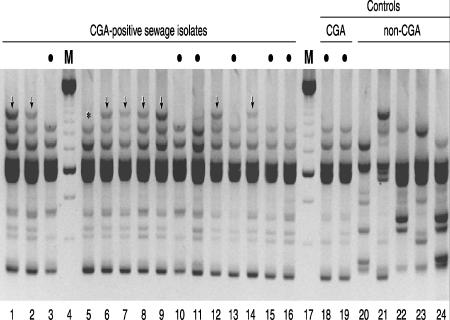
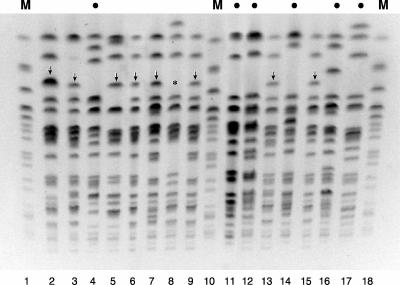
Isolates of Escherichia coli belonging to clonal group A (CGA), a recently described disseminated cause of drug-resistant urinary tract infections in humans, were present in four of seven sewage effluents collected from geographically dispersed areas of the United States. All 15 CGA isolates (1% of the 1,484 isolates analyzed) exhibited resistance to trimethoprim-sulfamethoxazole (TMP-SMZ), accounting for 19.5% of the 77 TMP-SMZ-resistant isolates. Antimicrobial resistance patterns, virulence traits, O:H serotypes, and phylogenetic groupings were compared for CGA and selected non-CGA isolates. The CGA isolates exhibited a wider diversity of resistance profiles and somatic antigens than that found in most previous characterizations of this clonal group. This is the first report of recovery from outside a human host of E. coli CGA isolates with virulence factor and antibiotic resistance profiles typical of CGA isolates from a human source. The occurrence of "human-type" CGA in wastewater effluents demonstrates a potential mode for the dissemination of this clonal group in the environment, with possible secondary transmission to new human or animal hosts.
Figures
References
-
- Burman, W. J., P. E. Breese, B. E. Murray, K. V. Singh, H. A. Batal, T. D. MacKenzie, J. W. Ogle, M. L. Wilson, R. R. Reves, and P. S. Mehler. 2003. Conventional and molecular epidemiology of trimethoprim-sulfamethoxazole resistance among urinary Escherichia coli isolates. Am. J. Med. 115:358-364. - PubMed
-
- Clesceri, L. S., A. E. Greenberg, and A. D. Eaton (ed.). 1998. Standard methods for the examination of water and wastewater, 20th ed. American Public Health Association, Washington, DC.
-
- France, A. M., K. M. Kugeler, A. Freeman, C. A. Zalewski, M. Blahna, L. Zhang, C. F. Marrs, and B. Foxman. 2005. Clonal group and the spread of resistance to trimethoprim-sulfamethoxazole in uropathogenic Escherichia coli. Clin. Infect. Dis. 40:1101-1107. - PubMed
-
- Gupta, K., T. M. Hooton, and W. E. Stamm. 2001. Increasing antimicrobial resistance and the management of uncomplicated community-acquired urinary tract infections. Ann. Intern. Med. 135:41-50. - PubMed
Publication types
MeSH terms
Substances
LinkOut - more resources
Full Text Sources
Research Materials
