


Heritability of blood pressure responses to dietary sodium and potassium intake in a Chinese population
- PMID: 17485599
- PMCID: PMC2258208
- DOI: 10.1161/HYPERTENSIONAHA.107.088310
Heritability of blood pressure responses to dietary sodium and potassium intake in a Chinese population
Abstract
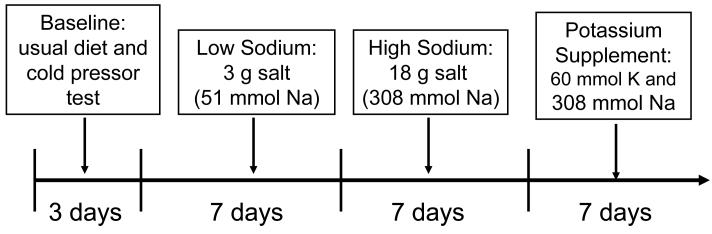
The heritability of blood pressure responses to dietary intervention has not been well studied. We examined the heritability of blood pressure responses to dietary sodium and potassium intake in a family feeding study among 1906 study participants living in rural North China. The dietary intervention included a 7-day low-sodium feeding (51.3 mmol per day), a 7-day high-sodium feeding (307.8 mmol per day), and a 7-day high-sodium plus potassium supplementation (60 mmol per day). Blood pressure was measured 9 times during the 3-day baseline period preceding the intervention and also during the last 3 days of each intervention phase using a random-zero sphygmomanometer. Heritability was computed using maximum likelihood methods under a variance components model as implemented in the computer program SOLAR. The heritabilities of baseline blood pressure were 0.31 for systolic, 0.32 for diastolic, and 0.34 for mean arterial pressure. The heritabilities increased significantly under dietary intervention and were 0.49, 0.49, and 0.51 during low sodium; 0.47, 0.49, and 0.51 during high sodium; and 0.51, 0.52, and 0.53 during potassium supplementation for systolic, diastolic, and mean arterial pressure, respectively. The heritabilities for percentage of blood pressure responses to low sodium were 0.20, 0.21, and 0.23; to high-sodium were 0.22, 0.33, and 0.33; and to potassium supplementation were 0.24, 0.21, and 0.25 for systolic, diastolic, and mean arterial pressure, respectively. Our study indicated that the heritabilities of blood pressure under controlled dietary sodium and potassium intake were significantly higher than those under a usual diet. In addition, the heritabilities of blood pressure responses to dietary sodium and potassium intake were moderate in this study population.
Figures
References
-
- He J, Tell GS, Tang YC, Mo PS, He GQ. Relation of electrolytes to blood pressure in men. Hypertension. 1991;17:378–385. - PubMed
-
- Chobanian AV, Hill M. National Heart, Lung, and Blood Institute Workshop on Sodium and Blood Pressure. A critical review of current scientific evidence. Hypertension. 2000;35:858–863. - PubMed
-
- Cutler JA, Follmann D, Allender PS. Randomized trials of sodium reduction: an overview. Am J Clin Nutr. 1997;65(suppl):643S–651S. - PubMed
-
- Midgley JP, Matthew AG, Greenwood CM, Logan AG. Effect of reduced dietary sodium on blood pressure: a meta-analysis of randomized controlled trials. JAMA. 1996;275:1590–1597. - PubMed
Publication types
MeSH terms
Substances
Grants and funding
LinkOut - more resources
Full Text Sources
Medical
Molecular Biology Databases
