


E2F1 death pathways as targets for cancer therapy
- PMID: 17488475
- PMCID: PMC3822825
- DOI: 10.1111/j.1582-4934.2007.00030.x
E2F1 death pathways as targets for cancer therapy
Abstract
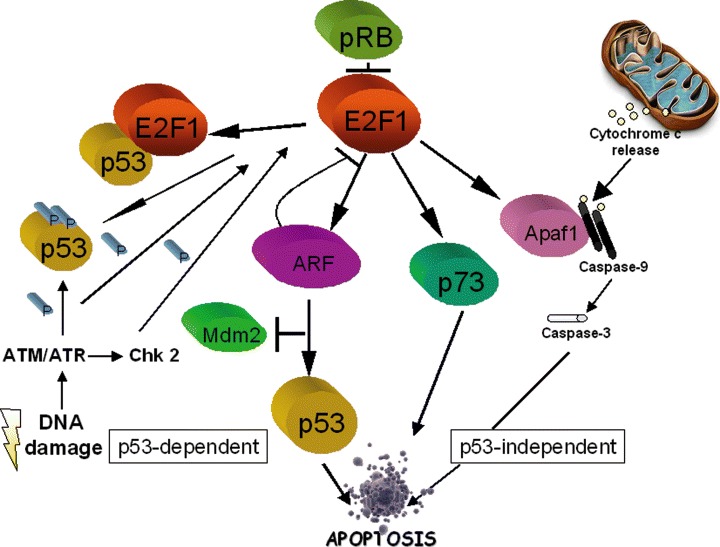
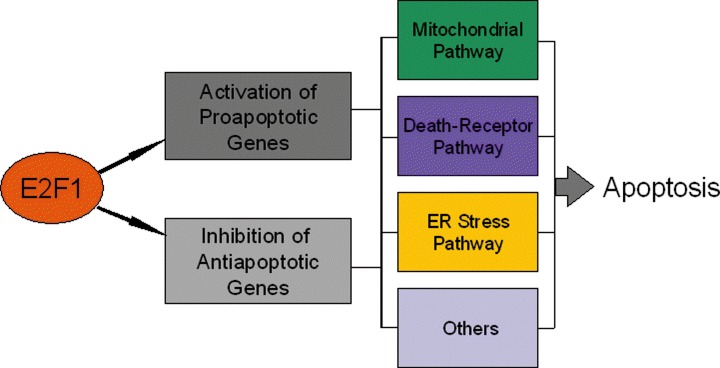
Defects in apoptotic programs contribute to a number of human diseases, ranging from neurodegenerative disorders to malignancy, and treatment failure. The genetic basis for apoptosis implies that cell death can be disrupted by mutations, raising the intriguing possibility that cell numbers can be regulated by factors that influence cell survival. It is well documented that the E2F1 transcription factor is a key regulator of apoptotic programs. E2F1-induced cell death occurs via multiple pathways, some of which involve the tumour suppressor p53, and autonomous of p53. This has led to the opinion that E2F1 functions as a tumour surveillance factor, detecting aberrant proliferation and engaging apoptotic pathways to protect the organism from developing tumours. Frequently, novel players are discovered that expand the interpretation of apoptosis control by E2F1. This information will help to produce new strategies to exploit E2F1-induced apoptosis for therapeutic benefit.
Figures
References
-
- Johnson DG, Schwarz JK, Cress WD, Nevins JR. Expression of transcription factor E2F1 induces quiescent cells to enter S phase. Nature. 1993;365:349–52. - PubMed
-
- Dyson N. The regulation of E2F by pRB-family proteins. Genes Dev. 1998;12:2245–62. - PubMed
-
- Müller H, Helin K. The E2F transcription factors: key regulators of cell proliferration. Biochim Biophys Acta. 2000;1470:M1–2. - PubMed
-
- Weinberg RA. The retinoblastoma protein and cell cycle control. Cell. 1995;81:323–30. - PubMed
Publication types
MeSH terms
Substances
LinkOut - more resources
Full Text Sources
Research Materials
Miscellaneous
