


Importance of polymorphisms in NF-kappaB1 and NF-kappaBIalpha genes for melanoma risk, clinicopathological features and tumor progression in Swedish melanoma patients
- PMID: 17492467
- PMCID: PMC12160809
- DOI: 10.1007/s00432-007-0228-7
Importance of polymorphisms in NF-kappaB1 and NF-kappaBIalpha genes for melanoma risk, clinicopathological features and tumor progression in Swedish melanoma patients
Abstract
Purpose: Importance of polymorphisms in NF-kappaB1 and NF-kappaBIalpha genes for melanoma risk, clinicopathological features and tumor progression is analyzed in Swedish melanoma patients.
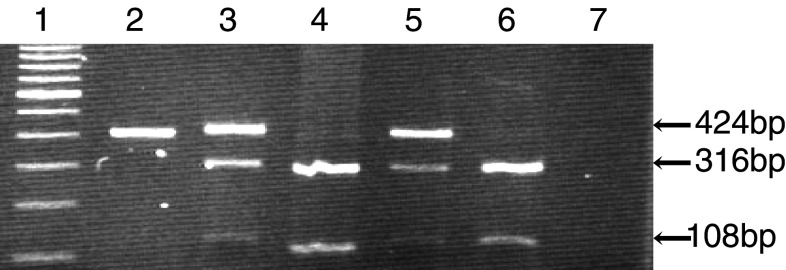
Patients and methods: Functional polymorphisms of NF-kappaB1 and NF-kappaBIalpha genes were examined in 185 melanoma patients and 438 tumor-free individuals. Associations of the polymorphisms with melanoma risk, age and pigment phenotypes of the patients and clinicopathological tumor characteristics were analyzed. DNAs were isolated from mononuclear cells of venous blood. Polymorphisms of the genes were genotyped by a PCR-RFLP technique, and transcription level of NF-kappaBIalpha was examined by a quantitative real-time reverse transcription PCR.
Results: Both ATTG insertion polymorphism of NF-kappaB1 and A to G polymorphism of NF-kappaBIalpha genes were correlated with melanoma risk, especially, in a combination of ATTG( 2 )/ATTGT(2) and GG. NF-kappaB1 ATTG(2)/ATTG(2) and NF-kappaBIalpha GG genotypes were associated with male gender and age >65 years (at diagnosis). Patients with ATTG(1)/ATTG(1 )genotype had thinner tumors and lower Clark levels at diagnosis. Frequency of ATTG(1)/ATTG(1) genotype was higher in patients with melanomas on intermittently sun-exposed pattern of the body and NF-kappaBIalpha GG was more frequent in the patients with melanomas at rarely exposed sites. There were no differences in the gene transcription level between patients with different NF-kappaBIalpha genotypes.
Conclusion: NF-kappaB1 and NF-kappaBIalpha genes might be susceptible genes for melanoma risk and functional polymorphisms of these genes might be biological predictors for melanoma progression.
Figures


References
-
- Balch CM, Soong SJ et al (2001) Prognostic factors analysis of 17,600 melanoma patients: validation of the American Joint Committee on Cancer melanoma staging system. J Clin Oncol 19(16):3622–3634 - PubMed
-
- Baldwin AS Jr (1996) The NF-kappa B and I kappa B proteins: new discoveries and insights. Annu Rev Immunol 14:649–683 - PubMed
-
- Bartkova J, Lukas J et al (1996) The p16-cyclin D/Cdk4-pRb pathway as a functional unit frequently altered in melanoma pathogenesis. Cancer Res 56(23):5475–5483 - PubMed
-
- Becker TM, Rizos H et al (2005) Impaired inhibition of NF-kappaB activity by melanoma-associated p16INK4a mutations. Biochem Biophys Res Commun 332(3):873–879 - PubMed
Publication types
MeSH terms
Substances
LinkOut - more resources
Full Text Sources
Medical
Miscellaneous
