


Semantic transparency and masked morphological priming: an ERP investigation
- PMID: 17498223
- PMCID: PMC2750868
- DOI: 10.1111/j.1469-8986.2007.00538.x
Semantic transparency and masked morphological priming: an ERP investigation
Abstract
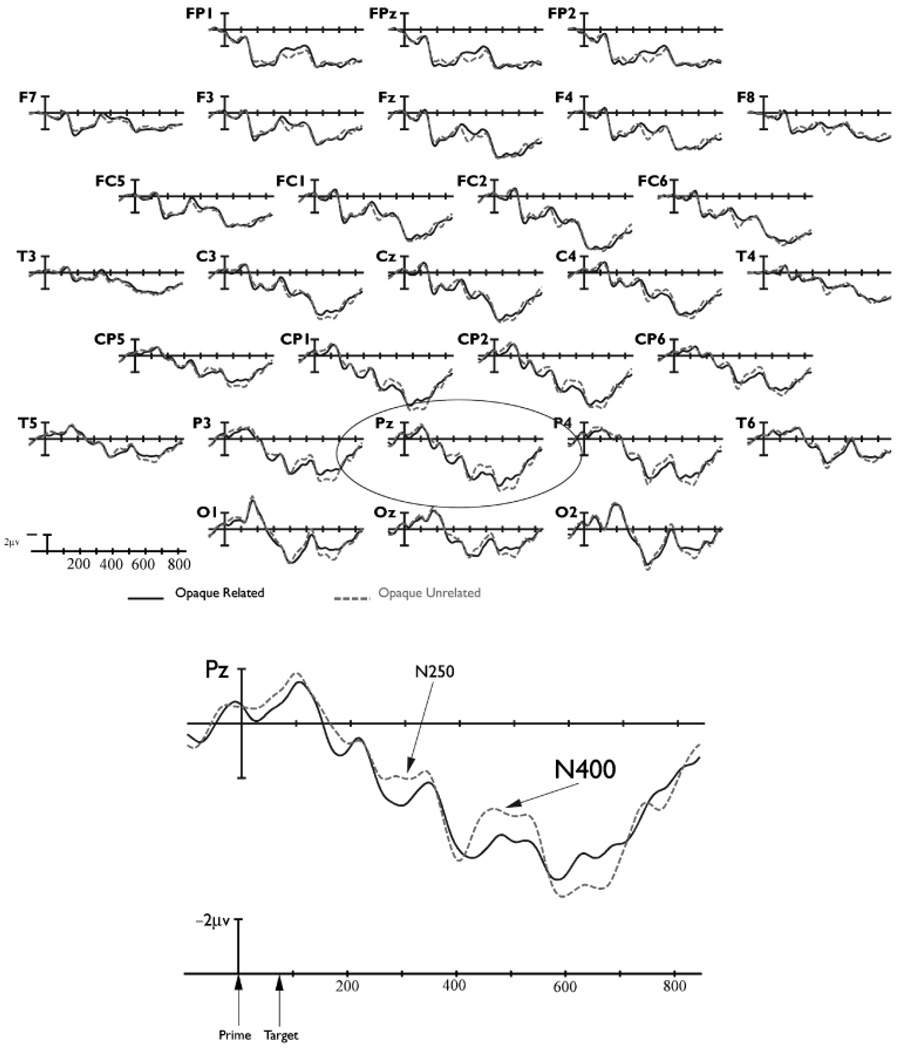
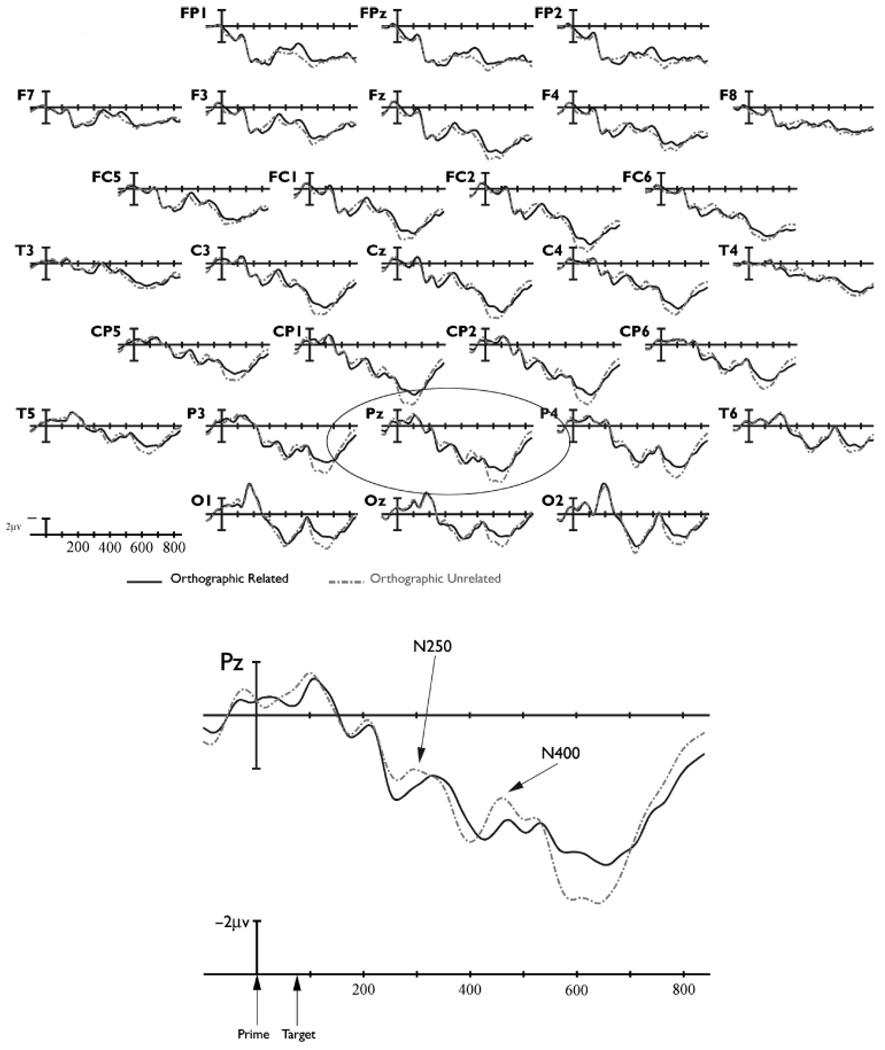
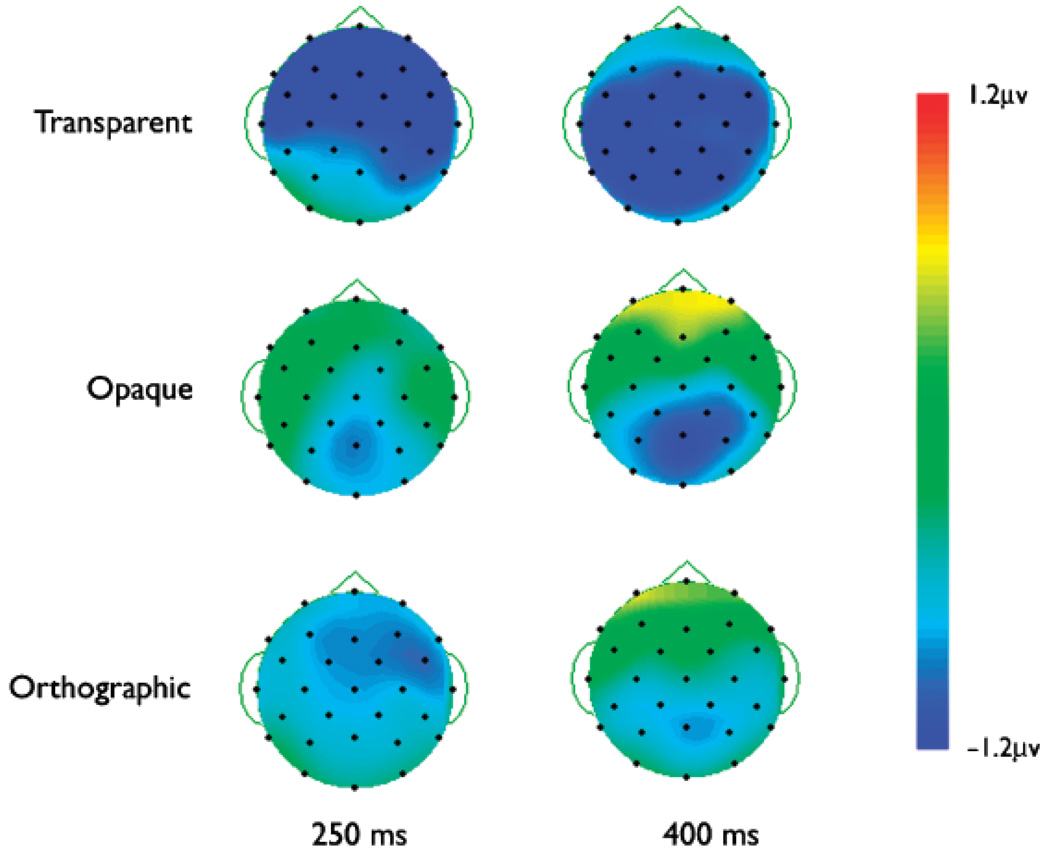
The role of semantics in the segmentation of morphologically complex words was examined using event-related potentials (ERPs) recorded to target words primed by semantically transparent (hunter-hunt,) opaque (corner-corn), and orthographically related (scandal-scan) masked primes. Behavioral data showed that only transparent items gave rise to priming. The ERP data showed both N250 and the N400 effects with transparent items generating greater priming than orthographic or opaque. Furthermore, priming effects across conditions revealed the existence of a significant linear trend, with transparent items showing the greatest effects and orthographic items the smallest, suggesting that these priming effects vary as a function of morphological structure and semantic transparency. The results are discussed in terms of a model of morphological processing.
Figures

References
-
- Diependaele K, Sandra D, Grainger J. Masked cross-modal morphological priming: Unravelling morpho-orthographic and morpho-semantic influences in early word recognition. Language and Cognitive Processes. 2005;20:75–114.
-
- Dominguez A, de Vega M, Barber H. Event-related brain potentials elicited by morphological, homographic, orthographic, and semantic priming. Journal of Cognitive Neuroscience. 2004;16:598–608. - PubMed
-
- Dominguez A, Segui J, Cuetos F. The time-course of inflexional morphological priming. Linguistics. 2002;40:235–259.
-
- Drews E, Zwitserlood P. Morphological and orthographic similarity in visual word recognition. Journal of Experimental Psychology: Human Perception & Performance. 1995;21:1098–1116. - PubMed
Publication types
MeSH terms
Grants and funding
LinkOut - more resources
Full Text Sources
