. 2007 Jul 20;282(29):21005-14.
doi: 10.1074/jbc.M702871200. Epub 2007 May 14.

Sequential regulation of diacylglycerol acyltransferase 2 expression by CAAT/enhancer-binding protein beta (C/EBPbeta) and C/EBPalpha during adipogenesis

Affiliations

Sequential regulation of diacylglycerol acyltransferase 2 expression by CAAT/enhancer-binding protein beta (C/EBPbeta) and C/EBPalpha during adipogenesis

Victoria A Payne et al. J Biol Chem. .

Abstract

Diacylglycerol acyltransferase 2 (DGAT2) catalyzes the final step of triacylglycerol (TG) synthesis. Despite the existence of an alternative acyltransferase (DGAT1), mice lacking DGAT2 have a severe deficiency of TG in adipose tissue, indicating a nonredundant role for this enzyme in adipocyte TG synthesis. We have studied the regulation of DGAT2 expression during adipogenesis. In both isolated murine preadipocytes and 3T3-L1 cells the temporal pattern of DGAT2 expression closely mimicked that of genes whose expression is regulated by CAAT/enhancer-binding protein beta (C/EBPbeta). Inhibition of C/EBPbeta expression in differentiating preadipocytes reduced DGAT2 expression, and electrophoretic mobility shift assay and chromatin immunoprecipitation experiments identified a promoter element in the DGAT2 gene that is likely to mediate this effect. The importance of C/EBPbeta in adipocyte expression of DGAT2 was confirmed by the finding of reduced DGAT2 expression in the adipose tissue of C/EBPbeta-null animals. However, DGAT2 expression is maintained at high levels during the later stages of adipogenesis, when C/EBPbeta levels decline. We show that, at these later stages of differentiation, C/EBPalpha is capable of substituting for C/EBPbeta at the same promoter element. These observations provide novel insight into the transcriptional regulation of DGAT2 expression. Moreover, they further refine the complex and serial roles of the C/EBP family of transcription factors in inducing and maintaining the metabolic properties of mature adipocytes.


Figures
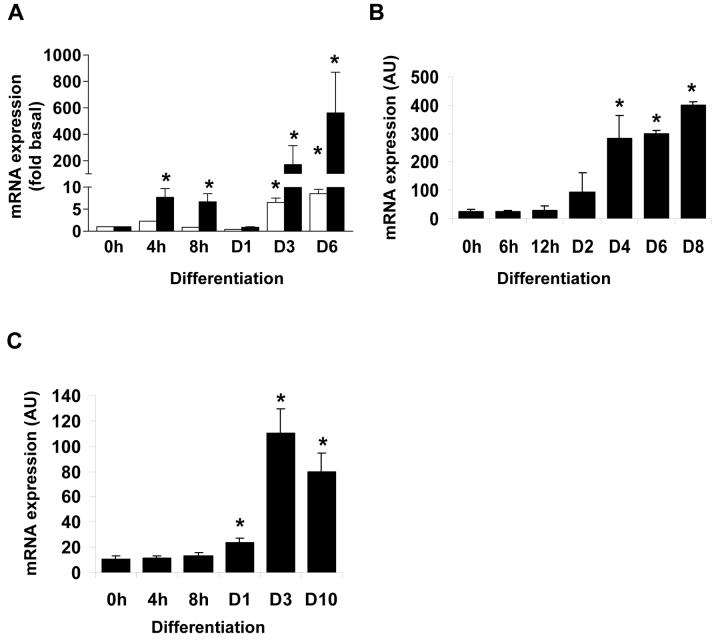
Figure 1
Figure 1. DGAT2 expression is strongly induced during adipocyte differentiation
A, 3T3-L1 preadipocytes were induced to differentiate for various times up to 6 days (D6), RNA was isolated and DGAT1 (white bars) or DGAT2 (black bars) expression was determined by real-time PCR. Data shown are normalised to cyclophilin +/− SEM, n=4. B, DGAT2 expression was determined in RNA isolated from confluent isolated murine preadipocytes before or after induction of differentiation for various times between 4 hours (4h) and 8 days (D8). Data shown are normalised to cyclophilin +/− SD from 2 independent experiments performed with cells isolated and pooled from the adipose tissue of 4 mice in each case. C, confluent cultures of human isolated preadipocytes were induced to differentiate for various times, RNA isolated, reverse transcribed and DGAT2 expression determined by real-time PCR. Data shown are normalised to cyclophilin +/− SEM, n=5. In all cases * indicates statistically significant difference from expression at day 0 (p<0.05).
Figure 2
Figure 2. Inhibtion of C/EBPβ activity by LIP expression inhibits the induction of DGAT2 during adipogenesis
A, the inhibitory LIP isoform of C/EBPβ contains the DNA binding (DBD) and leucine zipper (LZ) domains but lacks the transcativation domain (TAD) present in the activating LAP isoform, and acts as a dominant negative. B, 3T3-L1 preadipocytes were stably transfected with LIP or empty vector (mock) and confluent cells were induced to differentiate for the times shown. Protein lysates were analysed for C/EBPβ expression by western blotting. C, lipid accumulation was assessed in mock or LIP transfected cells following differentiation for 8 days in the absence (MDI) or presence (MDI-BRL) of the PPARγ agonist BRL49653. Mock (black bars) or LIP (white bars) transfected cells were also differentiated for various times, RNA isolated and assayed for the expression of PPARγ1 (D), PPARγ2 (E) C/EBPα (F), 11-βHSD1 (G) or DGAT2 (H) by real-time PCR. Data shown are normalised to cyclophilin +/− SEM, n=4. * indicates statistically significant difference in expression compared with mock-transfected cells at the same time-point (p<0.05).
Figure 3
Figure 3. Inhibtion of C/EBPβ activity by ETO expression inhibits the induction of DGAT2 during adipogenesis
3T3-L1 preadipocytes were stably transfected with empty vector (mock) or ETO and confluent cells were induced to differentiate for the times shown. A, lipid accumulation was assessed in mock or ETO transfected cells following differentiation for 8 days. B, Mock transfected (m) or ETO expressing cells (E) were differentiated for various times and protein lysates analysed for C/EBPβ expression by western blotting. Mock (black bars) or ETO (white bars) transfected cells were also differentiated for various times, RNA isolated and assayed for the expression of C/EBPα (C), 11-βHSD1 (D) or DGAT2 (E) by real-time PCR. Data shown are normalised to cyclophilin +/− SEM, n=4. * indicates statistically significant difference in expression compared with mock-transfected cells at the same time-point (p<0.05).
Figure 4
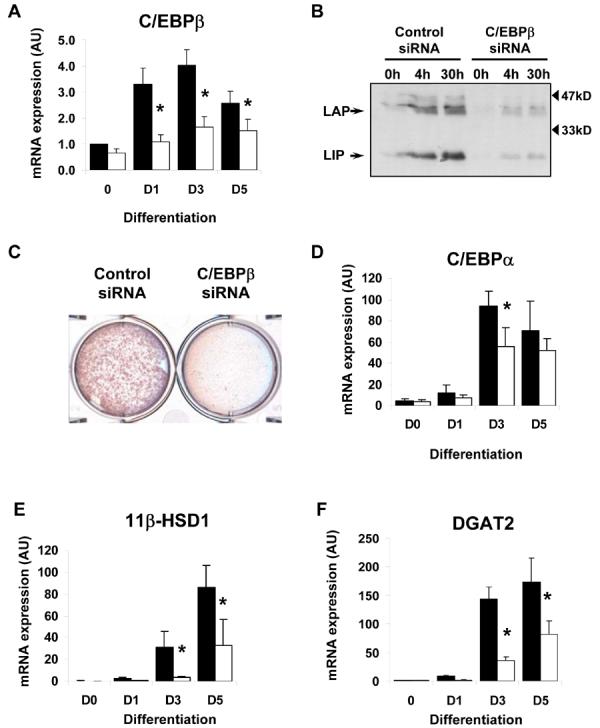
Figure 4. siRNA knockdown of C/EBPβ activity inhibits DGAT2 induction during adipogenesis
A, 3T3-L1 preadipocytes were transfected with control siRNA (black bars) or siRNA targeting C/EBPβ (white bars) and subsequently induced to differentiate for various times. C/EBPβ mRNA expression was assayed by real-time PCR. B, control or C/EBPβ siRNA transfected cells were also assayed for C/EBPβ protein expression by western blotting. C, lipid accumulation was assessed by oil-red O staining in control or C/EBPβ siRNA transfected cells following differentiation for 8 days. Control siRNA (black bars) or C/EBPβ siRNA (white bars) transfected cells were also differentiated for various times, RNA isolated and assayed for the expression of C/EBPα (D), 11-βHSD1 (E) DGAT2 (F), AGPAT2 (G), Lipin-α (H) or lipin-β (I) by real-time PCR. Data shown are normalised to cyclophilin +/− SEM, n=4. * indicates statistically significant difference in expression compared with control siRNA transfected cells at the same time-point (p<0.05).
Figure 4
Figure 4. siRNA knockdown of C/EBPβ activity inhibits DGAT2 induction during adipogenesis
A, 3T3-L1 preadipocytes were transfected with control siRNA (black bars) or siRNA targeting C/EBPβ (white bars) and subsequently induced to differentiate for various times. C/EBPβ mRNA expression was assayed by real-time PCR. B, control or C/EBPβ siRNA transfected cells were also assayed for C/EBPβ protein expression by western blotting. C, lipid accumulation was assessed by oil-red O staining in control or C/EBPβ siRNA transfected cells following differentiation for 8 days. Control siRNA (black bars) or C/EBPβ siRNA (white bars) transfected cells were also differentiated for various times, RNA isolated and assayed for the expression of C/EBPα (D), 11-βHSD1 (E) DGAT2 (F), AGPAT2 (G), Lipin-α (H) or lipin-β (I) by real-time PCR. Data shown are normalised to cyclophilin +/− SEM, n=4. * indicates statistically significant difference in expression compared with control siRNA transfected cells at the same time-point (p<0.05).
Figure 5
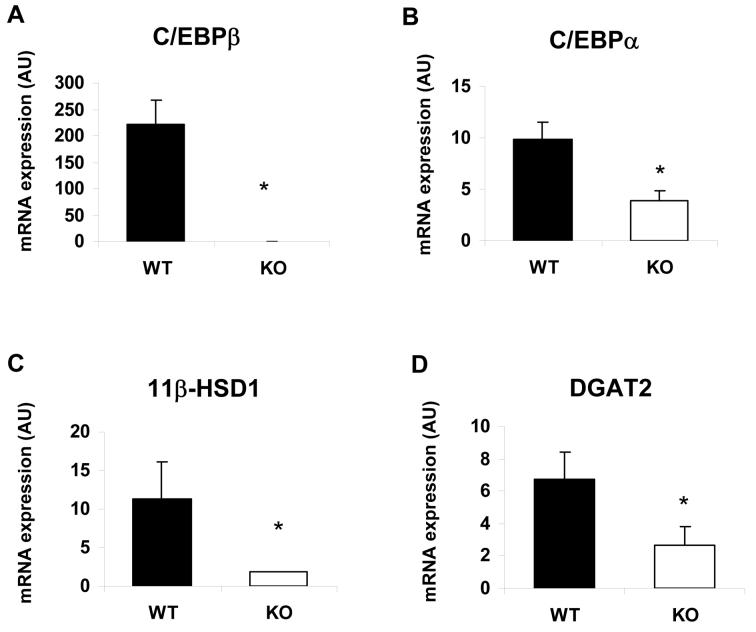
Figure 5. Gene expression analysis in adipose tissue of mice lacking C/EBPβ
RNA was isolated from white adipose tissue of wild-type (WT) or C/EBPβ knockout (KO) mice, reverse transcribed and the expression of C/EBPβ (A), C/EBPα (B), 11βHSD1, (C) and DGAT2 (D), was assayed by real-time PCR. Results are the mean of 3 independent samples normalised to 18S +/− SEM, * indicates statistically significant expression compared with wild-type mice (p<0.05).
Figure 6
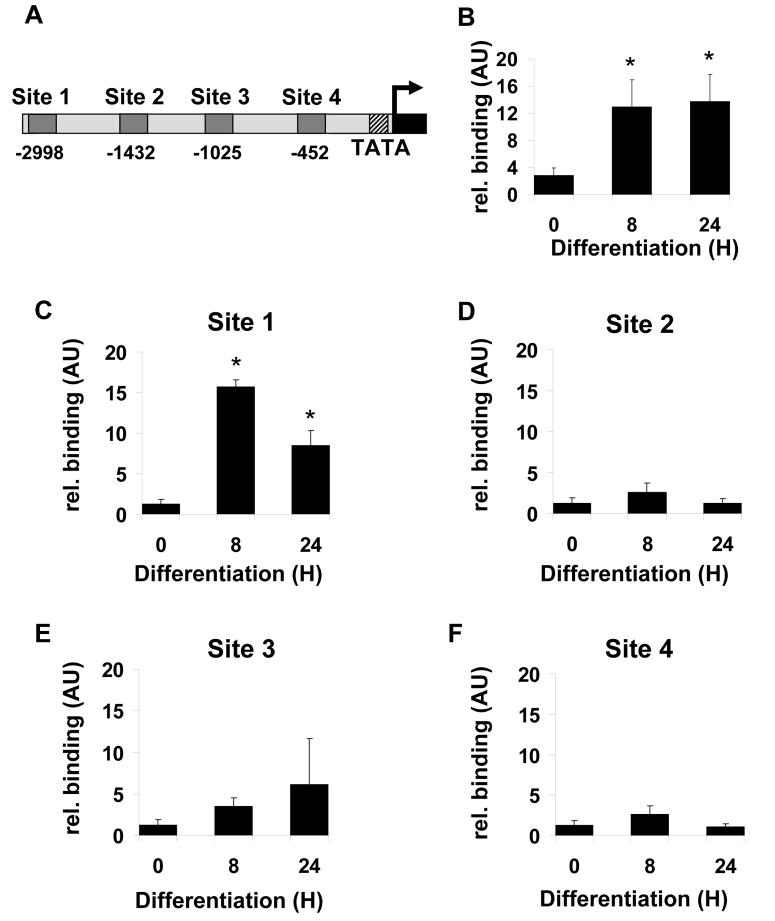
Figure 6. Identification of C/EBPβ binding sites in the DGAT2 promoter
A, analysis of 3kb upstream of the first exon of DGAT2 by TESS revealed four potential C/EBPβ binding sites, denoted site 1 to site 4. 3T3-L1 preadiocytes were induced to differentiate for various times and subjectd to ChIP analysis to assess binding of C/EBPβ to the well characterised site in the C/EBPα promoter (B) or the putative site 1 (C), site 2 (D), site 3 (E) or site 4 (F) in the DGAT2 promoter. C/EBPβ bound DNA in immunoprecipitates was quantified by real-time PCR. Values in each sample were normalised to total genomic DNA of the same sequence in the “input” starting sample prior to immunoprecipitation. Data are the average of 6 independent experiments +/− SEM, * indicates statistically significant difference from binding at time 0 (p<0.05).
Figure 7
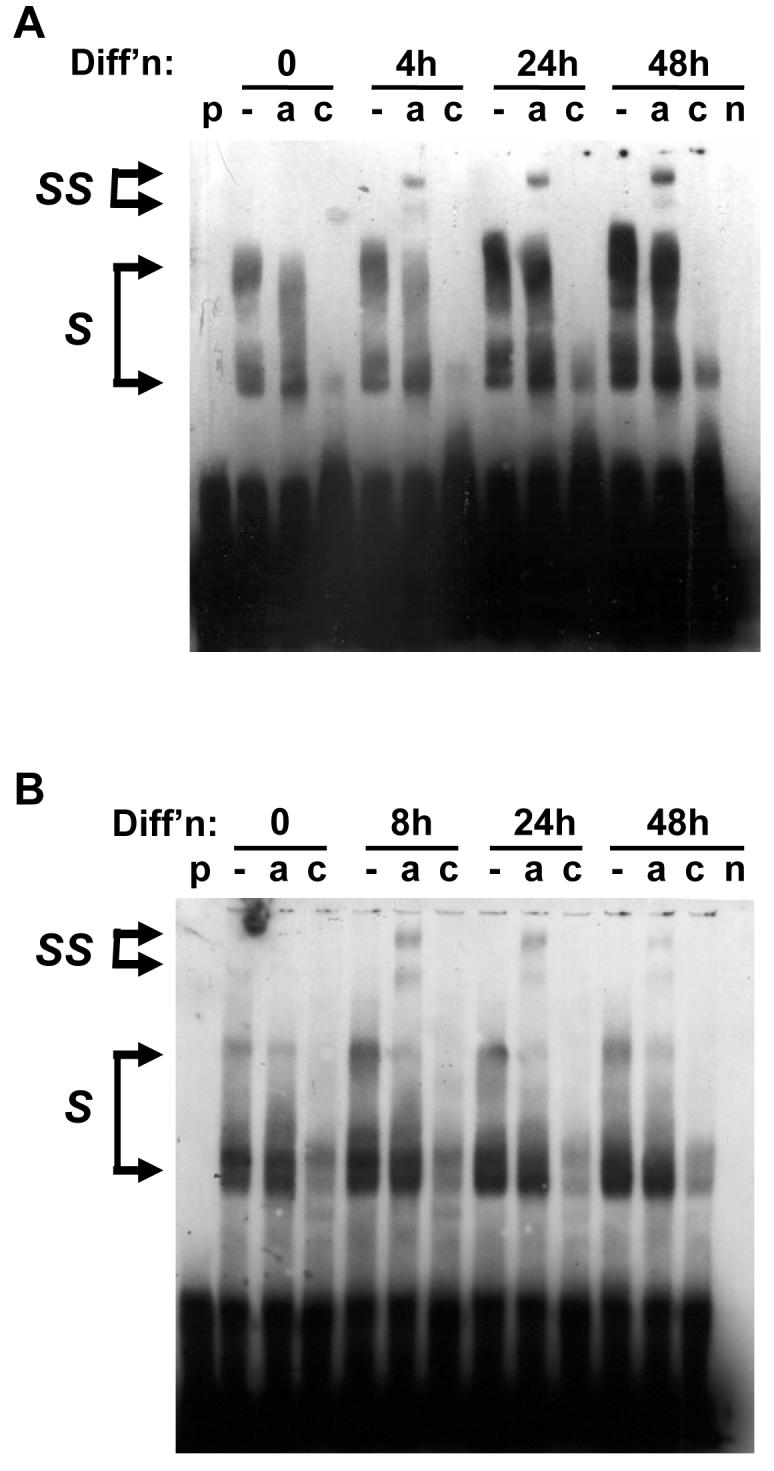
Figure 7. Gel shift analysis of C/EBPβ DNA binding activity in nuclear extracts
Nuclear extracts were prepared from 3T3-L1 preadiopocytes before or after differentiation for various times as indicated. These were incubated with biotinylated DNA probes corresponding to the well characterised C/EBPβ binding site in the C/EBPα promoter (A) or the site 1 identified in the DGAT2 promoter (B). Nuclear extracts were incubated with probe alone (−), or with probe in the presence of either anti-C/EBPβ antibody (a), or antibody and a 100-fold excess of unlabelled DNA probe (c). As controls, lanes were also run with probe alone (p) or 24h nuclear extract in the absence of probe (n). S indicates nuclear protein complexes binding probe, and SS indicates antibody-supershifted complexes containing C/EBPβ. Data are representative of 4 independent experiments.
Figure 8
Figure 8. Analysis DGAT2 regulation by C/EBPα during adipogenesis
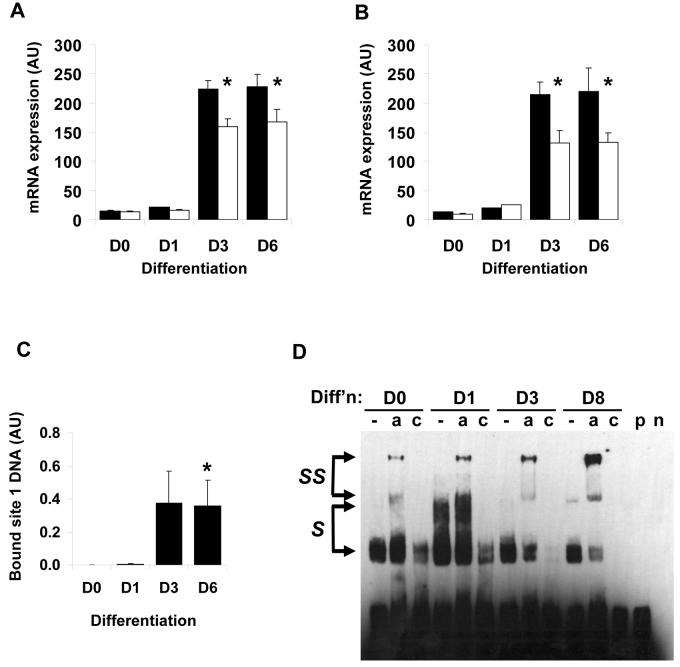
A, 3T3-L1 preadipocytes were transfected with control siRNA (black bars) or siRNA targeting C/EBPα (white bars) and subsequently induced to differentiate for various times. C/EBPα mRNA expression was assayed by real-time PCR. Data are +/− SEM, normalised to cyclophilin, n=4. B, cells transfected with control (black bars) or C/EBPα (white bars) siRNA were also assayed for DGAT2 mRNA expression by real time PCR. Data are +/− SEM normalised to cyclophilin, n=4. * indicates statistically significant difference in expression compared with control siRNA transfected cells at the same time-point (p<0.05). C, 3T3-L1 preadiocytes were induced to differentiate for various times and subjected to ChIP analysis to assess binding of C/EBPα to the putative site 1 in the DGAT2 promoter. C/EBPα bound DNA in immunoprecipitates was quantified by real-time PCR. Data are the average of 4 independent experiments +/− SEM, * indicates statistically significant difference from binding at time 0 (p<0.05). D, Nuclear extracts were prepared from 3T3-L1 preadiopocytes before or after differentiation for various times as indicated and incubated with biotinylated DNA probe corresponding to site 1 identified in the DGAT2 promoter. Nuclear extracts were incubated with probe alone (−) or with probe in the presence of either anti-C/EBPα antibody (a), or antibody and a 100-fold excess of unlabelled DNA probe (c). Control lanes were included containing probe alone (p) or 24h nuclear extract in the absence of probe (n). S indicates nuclear protein complexes binding probe, and SS indicates antibody-supershifted complexes containing C/EBPα. Data are representative of 3 independent experiments.

References

    1. Camp HS, Ren D, Leff T. Trends Mol Med. 2002;8(9):442–447. - PubMed
    1. Agarwal AK, Arioglu E, De Almeida S, Akkoc N, Taylor SI, Bowcock AM, Barnes RI, Garg A. Nat Genet. 2002;31(1):21–23. - PubMed
    1. Magre J, Delepine M, Van Maldergem L, Robert JJ, Maassen JA, Meier M, Panz VR, Kim CA, Tubiana-Rufi N, Czernichow P, Seemanova E, Buchanan CR, Lacombe D, Vigouroux C, Lascols O, Kahn CR, Capeau J, Lathrop M. Diabetes. 2003;52(6):1573–1578. - PubMed
    1. Smith SJ, Cases S, Jensen DR, Chen HC, Sande E, Tow B, Sanan DA, Raber J, Eckel RH, Farese RV., Jr. Nat Genet. 2000;25(1):87–90. - PubMed
    1. Buhman KK, Smith SJ, Stone SJ, Repa JJ, Wong JS, Knapp FF, Jr., Burri BJ, Hamilton RL, Abumrad NA, Farese RV., Jr. J Biol Chem. 2002;277(28):25474–25479. - PubMed

Publication types

Substances

LinkOut - more resources