


VTVH-MCD and DFT studies of thiolate bonding to [FeNO]7/[FeO2]8 complexes of isopenicillin N synthase: substrate determination of oxidase versus oxygenase activity in nonheme Fe enzymes
- PMID: 17506560
- PMCID: PMC2536647
- DOI: 10.1021/ja071364v
VTVH-MCD and DFT studies of thiolate bonding to [FeNO]7/[FeO2]8 complexes of isopenicillin N synthase: substrate determination of oxidase versus oxygenase activity in nonheme Fe enzymes
Abstract
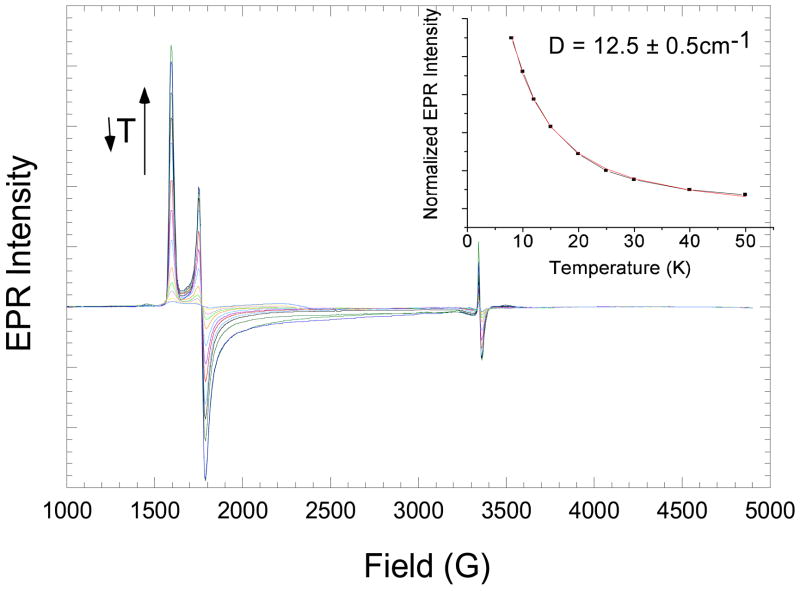
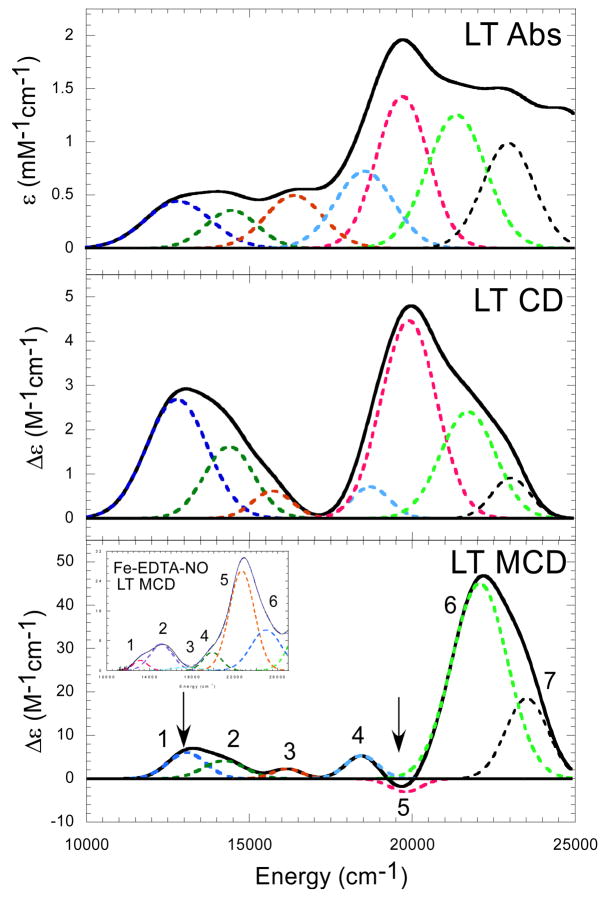
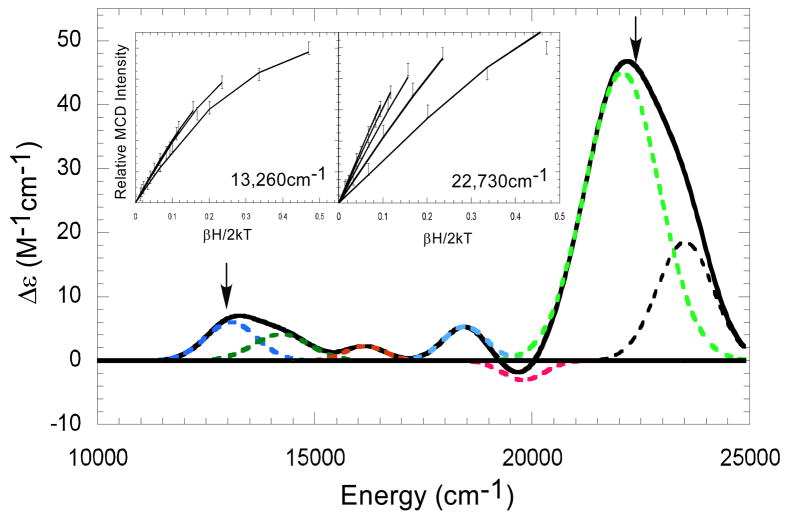
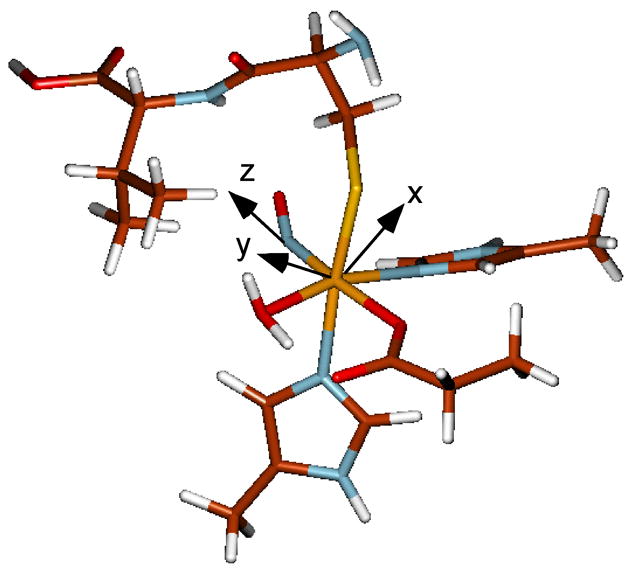
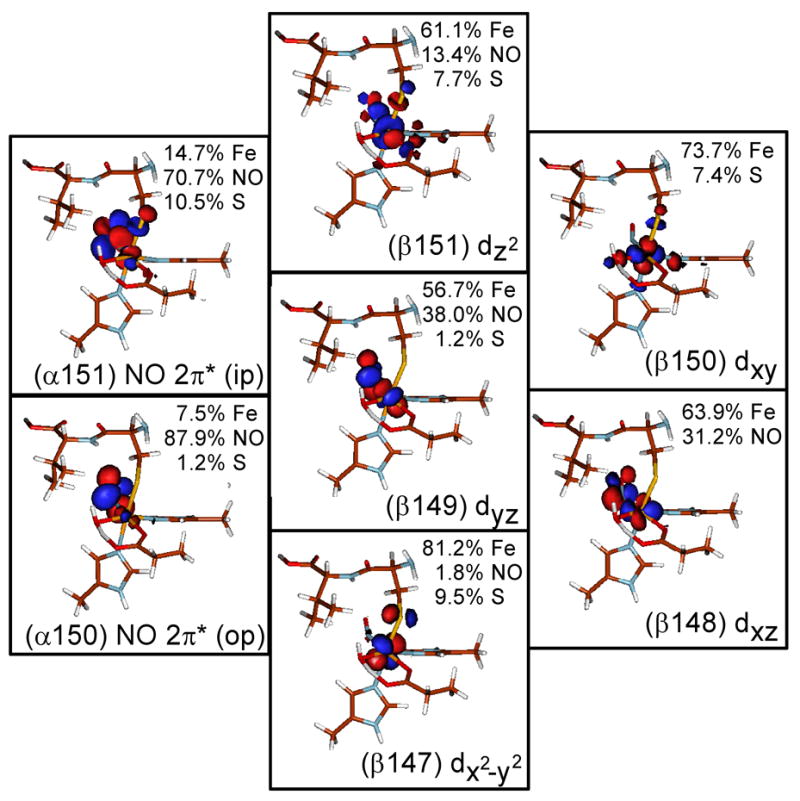
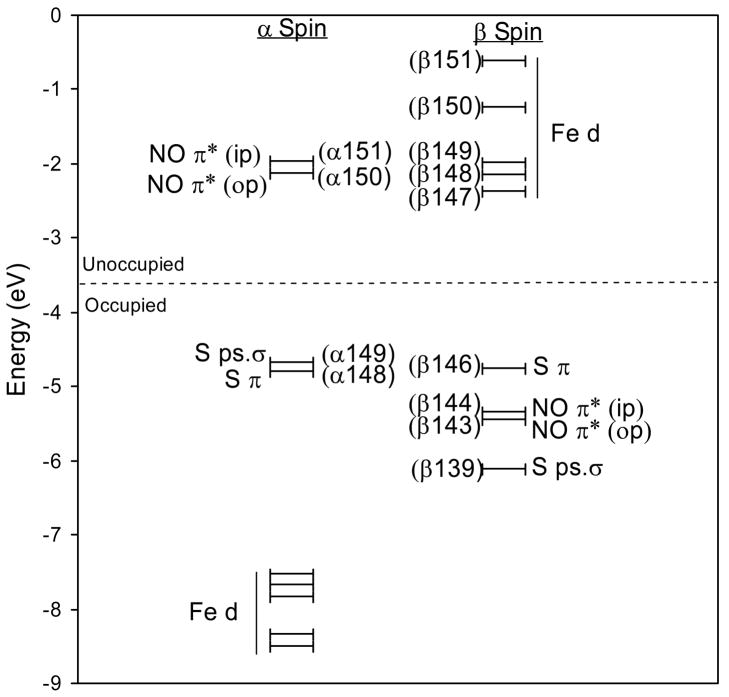
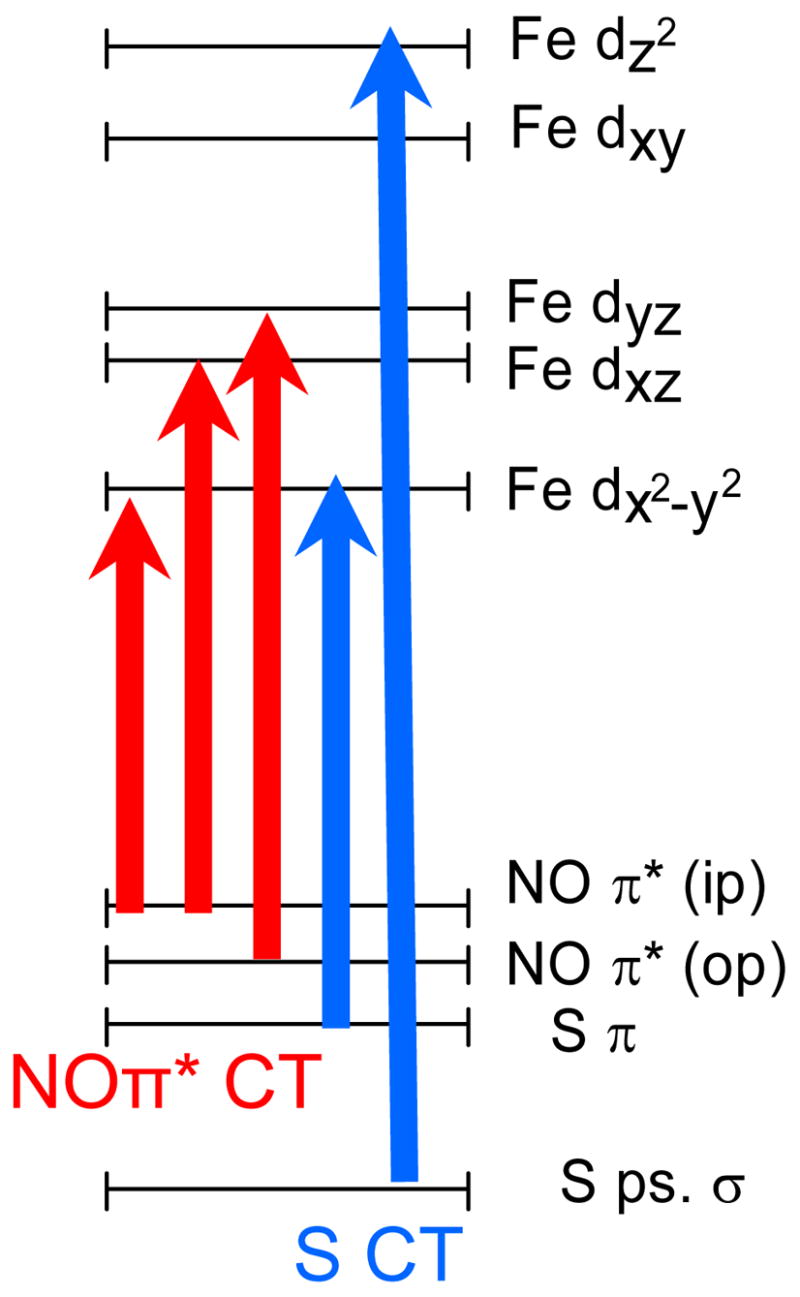
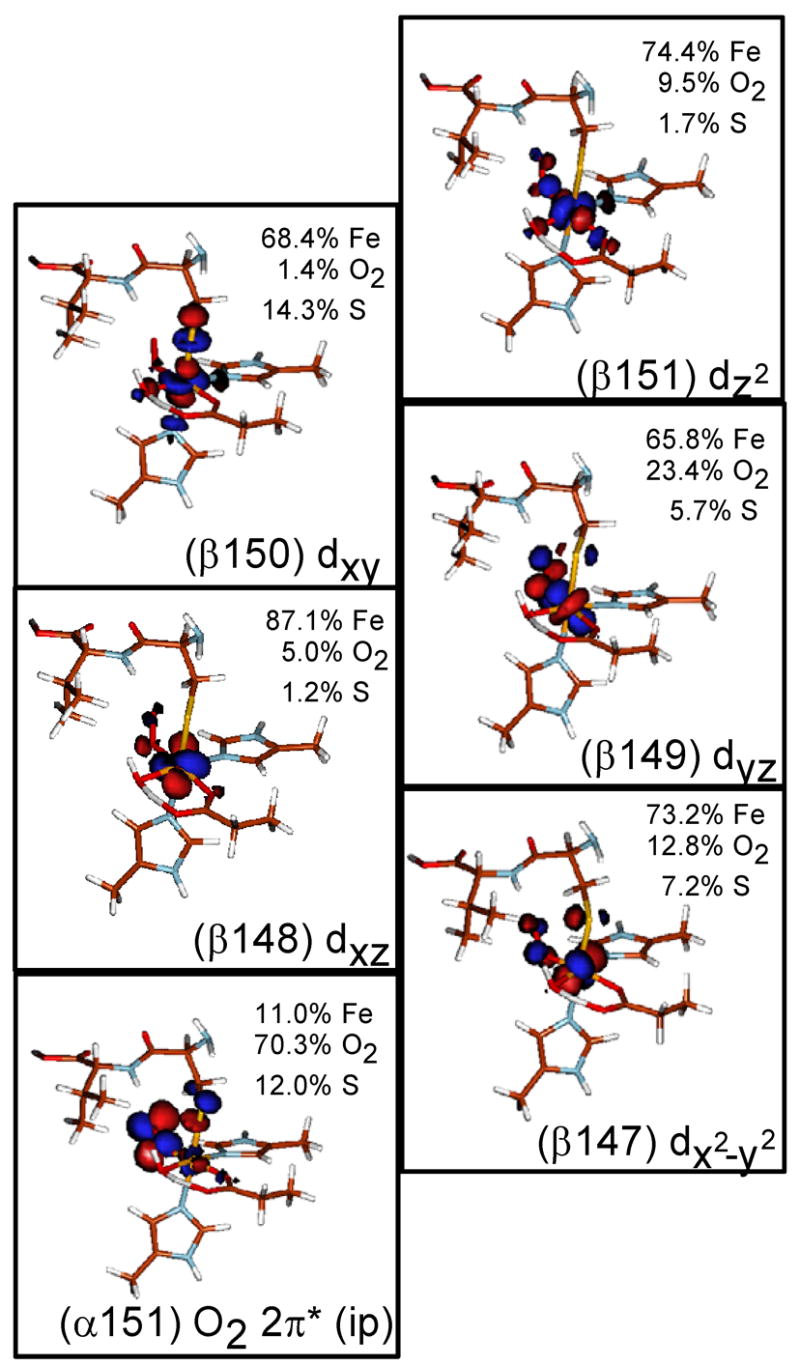
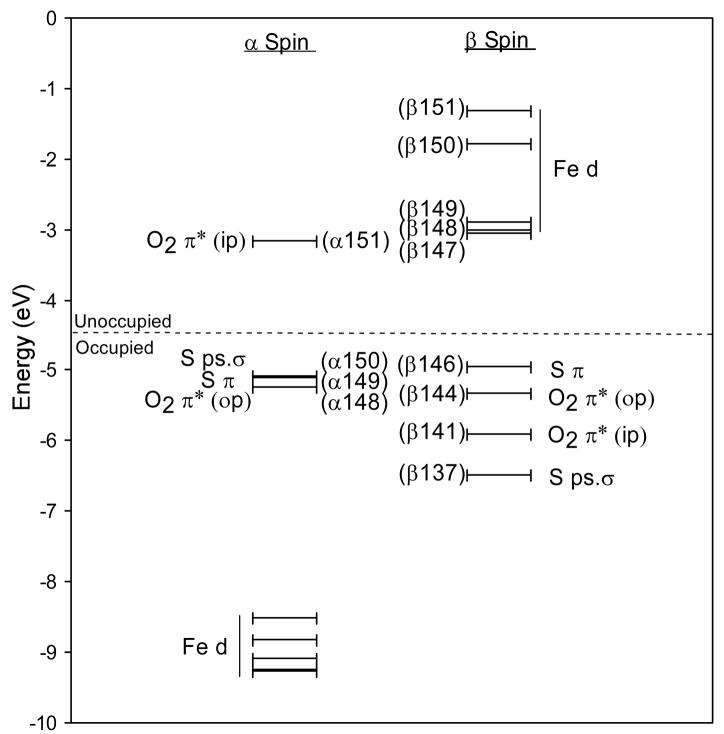
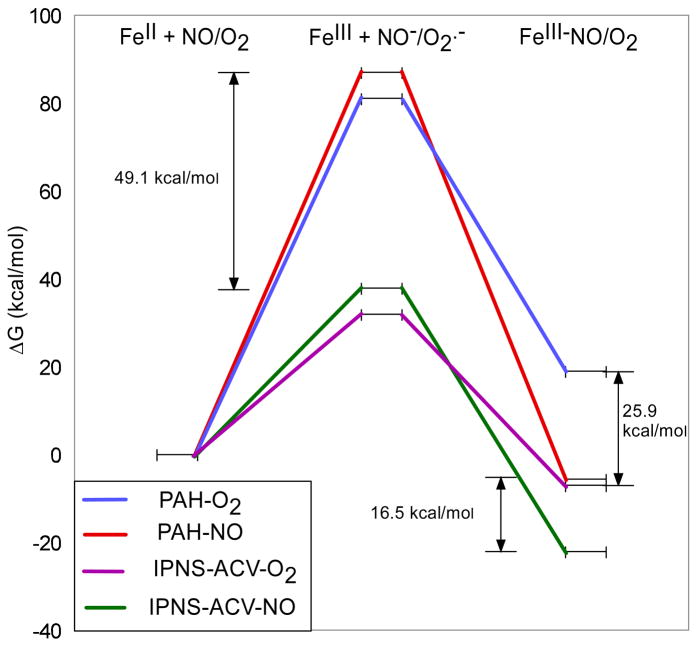
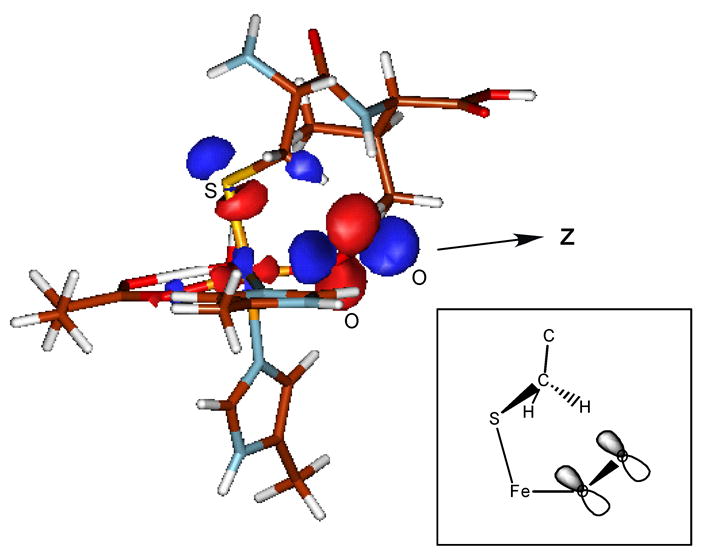
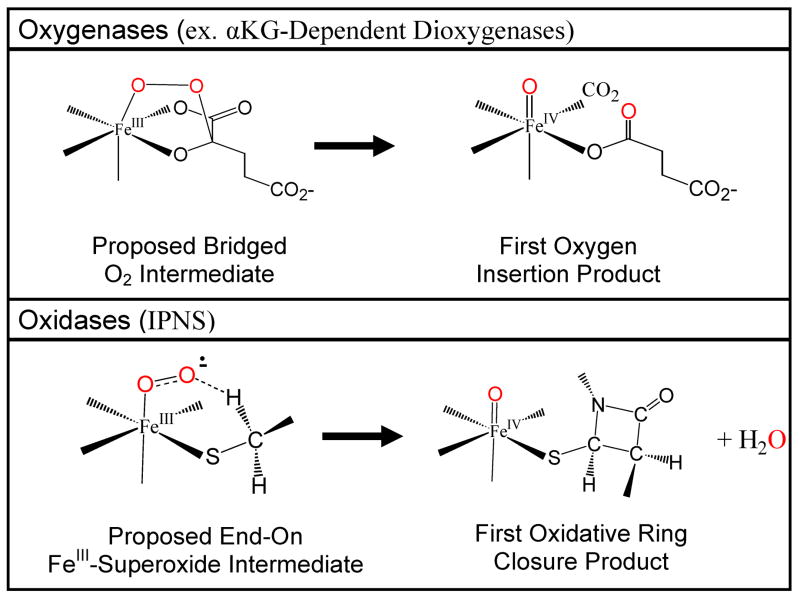
Isopenicillin N synthase (IPNS) is a unique mononuclear nonheme Fe enzyme that catalyzes the four-electron oxidative double ring closure of its substrate ACV. A combination of spectroscopic techniques including EPR, absorbance, circular dichroism (CD), magnetic CD, and variable-temperature, variable-field MCD (VTVH-MCD) were used to evaluate the geometric and electronic structure of the [FeNO]7 complex of IPNS coordinated with the ACV thiolate ligand. Density Function Theory (DFT) calculations correlated to the spectroscopic data were used to generate an experimentally calibrated bonding description of the Fe-IPNS-ACV-NO complex. New spectroscopic features introduced by the binding of the ACV thiolate at 13 100 and 19 800 cm-1 are assigned as the NO pi*(ip) --> Fe dx2-y2 and S pi--> Fe dx2-y2 charge transfer (CT) transitions, respectively. Configuration interaction mixes S CT character into the NO pi*(ip) --> Fe dx2-y2 CT transition, which is observed experimentally from the VTVH-MCD data from this transition. Calculations on the hypothetical {FeO2}8 complex of Fe-IPNS-ACV reveal that the configuration interaction present in the [FeNO]7 complex results in an unoccupied frontier molecular orbital (FMO) with correct orientation and distal O character for H-atom abstraction from the ACV substrate. The energetics of NO/O2 binding to Fe-IPNS-ACV were evaluated and demonstrate that charge donation from the ACV thiolate ligand renders the formation of the FeIII-superoxide complex energetically favorable, driving the reaction at the Fe center. This single center reaction allows IPNS to avoid the O2 bridged binding generally invoked in other nonheme Fe enzymes that leads to oxygen insertion (i.e., oxygenase function) and determines the oxidase activity of IPNS.
Figures

References
-
- Feig AL, Lippard SJ. Chem Rev. 1994;94:759–805.
-
- Que L, Ho RYN. Chem Rev. 1996;96:2607–2624. - PubMed
-
- Solomon EI, Brunold TC, Davis MI, Kemsley JN, Lee SK, Lehnert N, Neese F, Skulan AJ, Yang YS, Zhou J. Chem Rev. 2000;100:235–349. - PubMed
-
- Hegg EL, Que L., Jr Eur J Biochem. 1997;250:625–629. - PubMed
-
- Baldwin JE, Adlington RM, Moroney SE, Field LD, Ting HH. J Chem Soc, Chem Commun. 1984:984–986.
Publication types
MeSH terms
Substances
Grants and funding
LinkOut - more resources
Full Text Sources
Research Materials
Miscellaneous
