Genetic and environmental bases of childhood antisocial behavior: a multi-informant twin study
- PMID: 17516756
- PMCID: PMC1913189
- DOI: 10.1037/0021-843X.116.2.219
Genetic and environmental bases of childhood antisocial behavior: a multi-informant twin study
Abstract
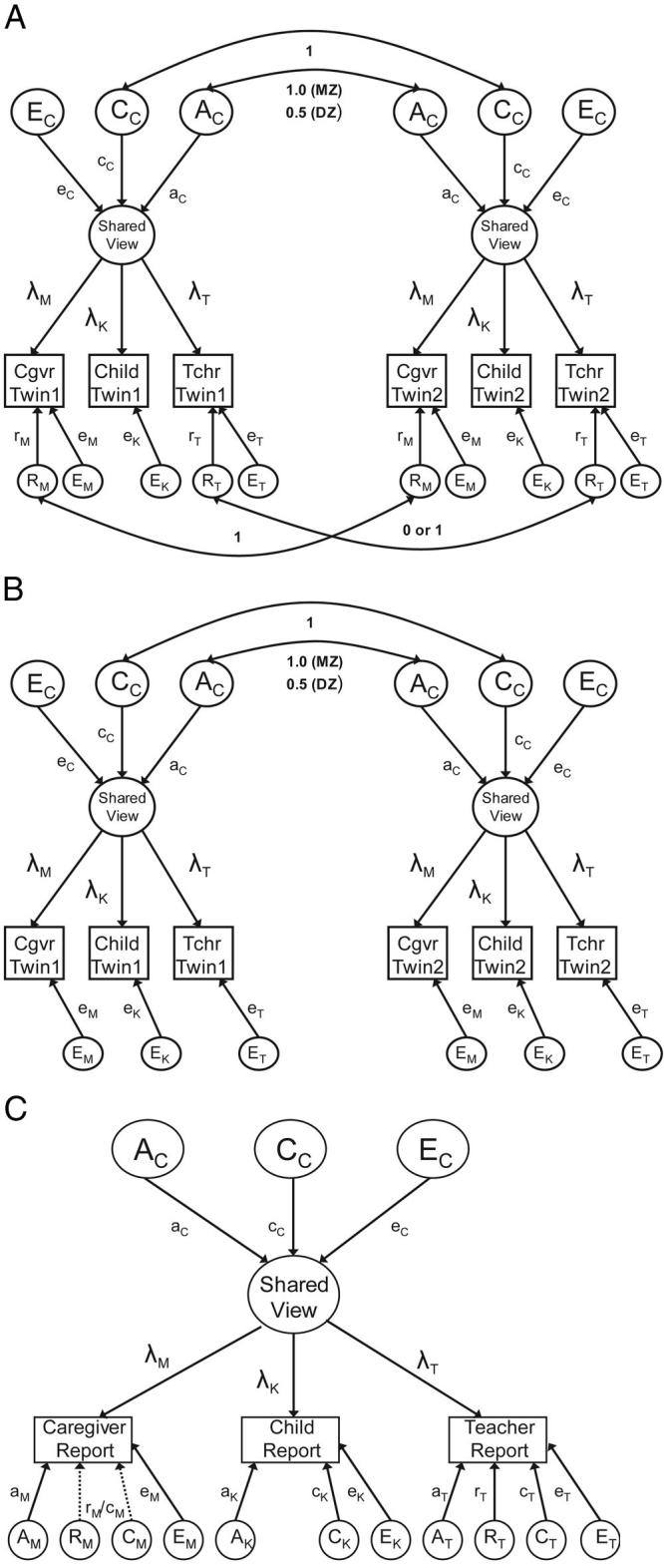
Genetic and environmental influences on childhood antisocial and aggressive behavior (ASB) during childhood were examined in 9- to 10-year-old twins, using a multi-informant approach. The sample (605 families of twins or triplets) was socioeconomically and ethnically diverse, representative of the culturally diverse urban population in Southern California. Measures of ASB included symptom counts for conduct disorder, ratings of aggression, delinquency, and psychopathic traits obtained through child self-reports, teacher, and caregiver ratings. Multivariate analysis revealed a common ASB factor across informants that was strongly heritable (heritability was .96), highlighting the importance of a broad, general measure obtained from multiple sources as a plausible construct for future investigations of specific genetic mechanisms in ASB. The best fitting multivariate model required informant-specific genetic, environmental, and rater effects for variation in observed ASB measures. The results suggest that parents, children, and teachers have only a partly "shared view" and that the additional factors that influence the "rater-specific" view of the child's antisocial behavior vary for different informants. This is the first study to demonstrate strong heritable effects on ASB in ethnically and economically diverse samples.
Figures

References
-
- Achenbach TM. Integrative guide for the 1991 CBCL/4–18, YSR, and TRF profiles. University of Vermont, Department of Psychiatry; Burlington: 1991.
-
- Achenbach TM, Edelbrock CS. Behavioral problems and competencies reported by parents of normal and disturbed children aged four through sixteen. Monographs of the Society for Research in Child Development. 1981;46:82. - PubMed
-
- Achenbach TM, McConaughy SH, Howell CT. Child/adolescent behavioral and emotional problems: Implications of cross informant correlations for situational specificity. Psychological Bulletin. 1987;101:213–232. - PubMed
-
- Akaike AC. Factor analysis and AIC. Psychometrika. 1987;52:317–332.
-
- American Psychiatric Association . Diagnostic and statistical manual of mental disorders. 4th ed. Author; Washington, DC: 1994.