


Transmission of Leishmania metacyclic promastigotes by phlebotomine sand flies
- PMID: 17517415
- PMCID: PMC2675784
- DOI: 10.1016/j.ijpara.2007.04.003
Transmission of Leishmania metacyclic promastigotes by phlebotomine sand flies
Abstract
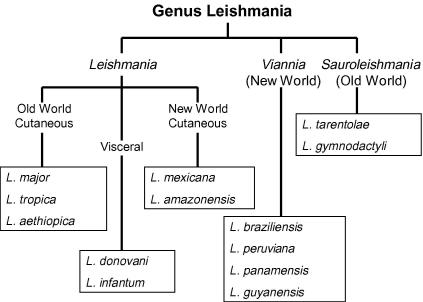
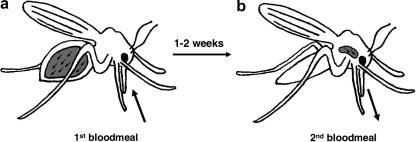
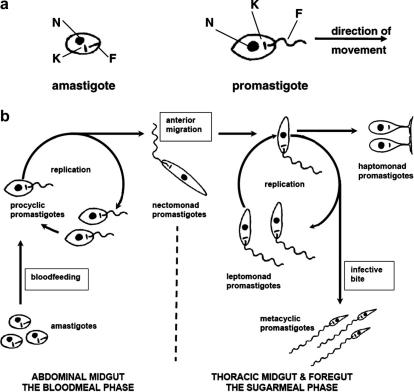
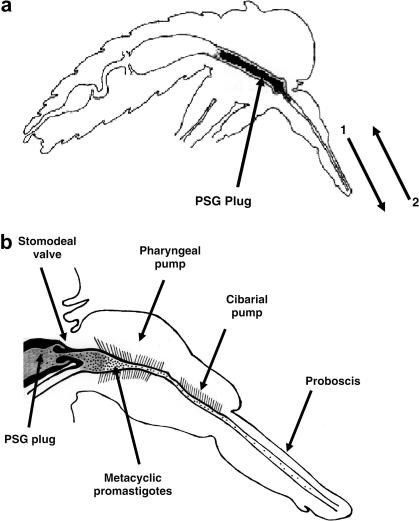
A thorough understanding of the transmission mechanism of any infectious agent is crucial to implementing an effective intervention strategy. Here, our current understanding of the mechanisms that Leishmania parasites use to ensure their transmission from sand fly vectors by bite is reviewed. The most important mechanism is the creation of a "blocked fly" resulting from the secretion of promastigote secretory gel (PSG) by the parasites in the anterior midgut. This forces the sand fly to regurgitate PSG before it can bloodfeed, thereby depositing both PSG and infective metacyclic promastigotes in the skin of a mammalian host. Other possible factors in transmission are considered: damage to the stomodeal valve; occurrence of parasites in the salivary glands; and excretion of parasites from the anus of infected sand flies. Differences in the transmission mechanisms employed by parasites in the three subgenera, Leishmania, Viannia and Sauroleishmania are also addressed.
Figures
References
-
- Bates P.A., Ashford R.W. Old World leishmaniasis. In: Cox F.E.G., Wakelin D., Gillespie S.H., Despommier D.D., editors. Topley & Wilson’s Microbiology & Microbial Infections. tenth ed. Parasitology, Hodder Arnold; London: 2006. pp. 283–312.
-
- Bates P.A., Rogers M.E. New insights into the developmental biology and transmission mechanisms of Leishmania. Curr. Mol. Med. 2004;4:601–609. - PubMed
-
- Beach R., Kiilu G., Hendricks L., Oster C., Leeuwenberg J. Cutaneous leishmaniasis in Kenya: transmission of Leishmania major to man by the bite of a naturally infected Phlebotomus duboscqi. Trans. Roy. Soc. Trop. Med. Hyg. 1984;78:747–751. - PubMed
-
- Beach R., Kiilu G., Leeuwenburg J. Modification of sand fly biting behaviour by Leishmania leads to increased parasite transmission. Am. J. Trop. Med. Hyg. 1985;34:278–282. - PubMed
Publication types
MeSH terms
Grants and funding
LinkOut - more resources
Full Text Sources
Other Literature Sources
Medical
