


CAG-encoded polyglutamine length polymorphism in the human genome
- PMID: 17519034
- PMCID: PMC1896166
- DOI: 10.1186/1471-2164-8-126
CAG-encoded polyglutamine length polymorphism in the human genome
Abstract
Background: Expansion of polyglutamine-encoding CAG trinucleotide repeats has been identified as the pathogenic mutation in nine different genes associated with neurodegenerative disorders. The majority of individuals clinically diagnosed with spinocerebellar ataxia do not have mutations within known disease genes, and it is likely that additional ataxias or Huntington disease-like disorders will be found to be caused by this common mutational mechanism. We set out to determine the length distributions of CAG-polyglutamine tracts for the entire human genome in a set of healthy individuals in order to characterize the nature of polyglutamine repeat length variation across the human genome, to establish the background against which pathogenic repeat expansions can be detected, and to prioritize candidate genes for repeat expansion disorders.
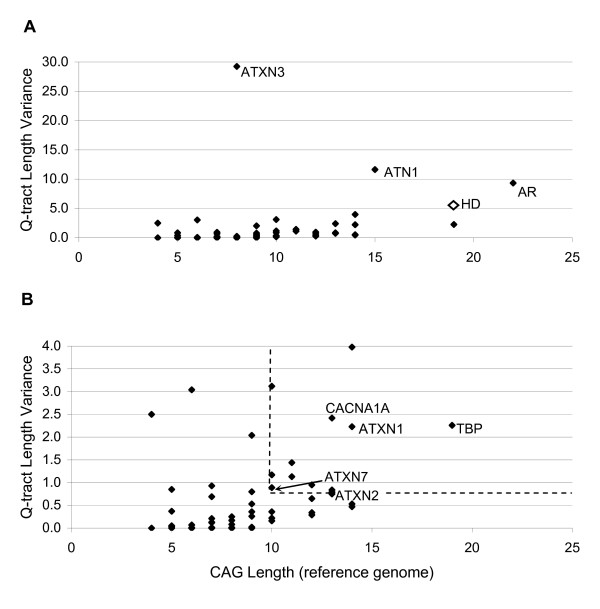
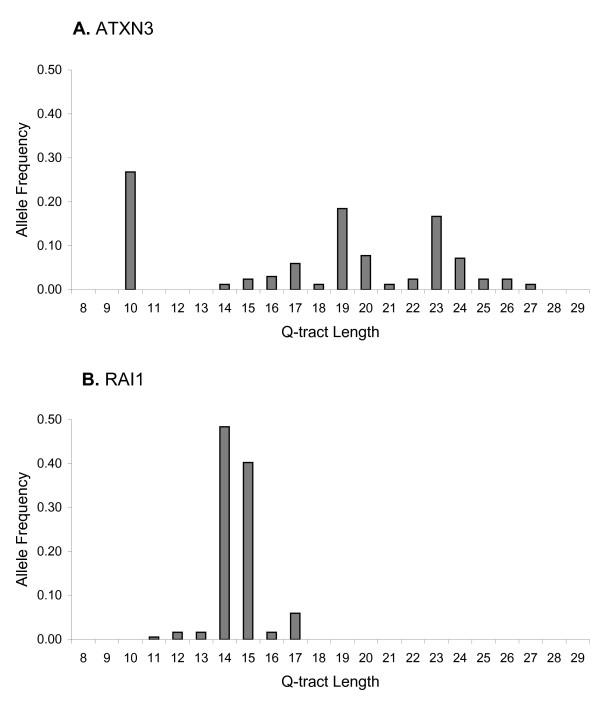
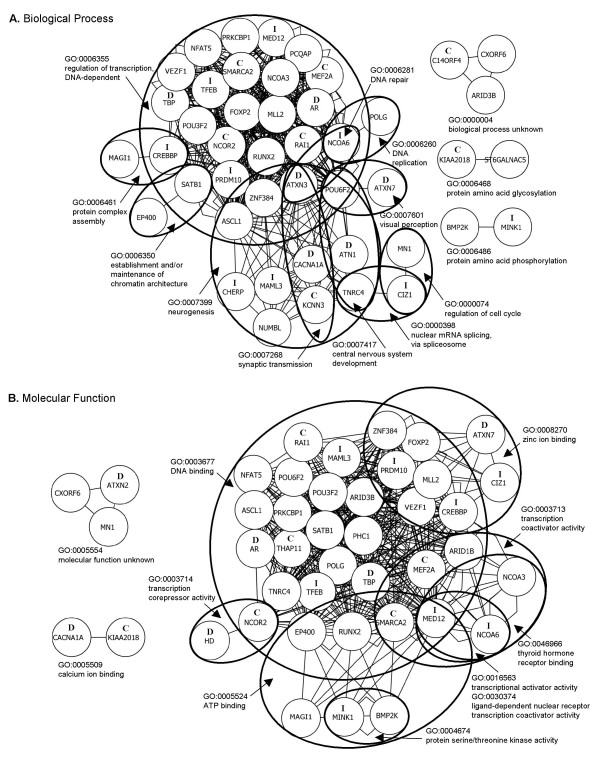
Results: We found that repeats, including those in known disease genes, have unique distributions of glutamine tract lengths, as measured by fragment analysis of PCR-amplified repeat regions. This emphasizes the need to characterize each distribution and avoid making generalizations between loci. The best predictors of known disease genes were occurrence of a long CAG-tract uninterrupted by CAA codons in their reference genome sequence, and high glutamine tract length variance in the normal population. We used these parameters to identify eight priority candidate genes for polyglutamine expansion disorders. Twelve CAG-polyglutamine repeats were invariant and these can likely be excluded as candidates. We outline some confusion in the literature about this type of data, difficulties in comparing such data between publications, and its application to studies of disease prevalence in different populations. Analysis of Gene Ontology-based functions of CAG-polyglutamine-containing genes provided a visual framework for interpretation of these genes' functions. All nine known disease genes were involved in DNA-dependent regulation of transcription or in neurogenesis, as were all of the well-characterized priority candidate genes.
Conclusion: This publication makes freely available the normal distributions of CAG-polyglutamine repeats in the human genome. Using these background distributions, against which pathogenic expansions can be identified, we have begun screening for mutations in individuals clinically diagnosed with novel forms of spinocerebellar ataxia or Huntington disease-like disorders who do not have identified mutations within the known disease-associated genes.
Figures
References
-
- Zhuchenko O, Bailey J, Bonnen P, Ashizawa T, Stockton DW, Amos C, Dobyns WB, Subramony SH, Zoghbi HY, Lee CC. Autosomal dominant cerebellar ataxia (SCA6) associated with small polyglutamine expansions in the alpha 1A-voltage-dependent calcium channel. Nat Genet. 1997;15:62–69. doi: 10.1038/ng0197-62. - DOI - PubMed
Publication types
MeSH terms
Substances
LinkOut - more resources
Full Text Sources
Other Literature Sources
