


Lifestyle and socio-demographic factors associated with high-risk HPV infection in UK women
- PMID: 17519896
- PMCID: PMC2359671
- DOI: 10.1038/sj.bjc.6603822
Lifestyle and socio-demographic factors associated with high-risk HPV infection in UK women
Abstract
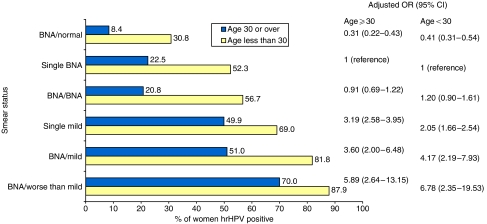
The world age-standardised prevalence of high-risk HPV (hrHPV) infection among 5038 UK women aged 20-59 years, with a low-grade smear during 1999-2002, assessed for eligibility for TOMBOLA (Trial Of Management of Borderline and Other Low-grade Abnormal smears) was 34.2%. High-risk HPV prevalence decreased with increasing age, from 61% at ages 20-24 years to 14-15% in those over 50 years. The age-standardised prevalence was 15.1, 30.7 and 52.7%, respectively, in women with a current normal, borderline nuclear abnormalities (BNA) and mild smear. In overall multivariate analyses, tertiary education, previous pregnancy and childbirth were associated with reduced hrHPV infection risk. Risk of infection was increased in non-white women, women not married/cohabiting, hormonal contraceptives users and current smokers. In stratified analyses, current smear status and age remained associated with hrHPV infection. Data of this type are relevant to the debate on human papillomavirus (HPV) testing in screening and development of HPV vaccination programmes.
Figures
References
-
- ALTS Group (2003) Results of a randomized trial on the management of cytology interpretations of atypical squamous cells of undetermined significance. Am J Obstet Gynecol 188: 1392 - PubMed
-
- Anh PTH, Hieu NT, Herrero R, Vaccrella S, Smith JS, Thuy NY, Nga NH, Duc NB, Ashley R, Snijders PJF, Meijer CJLM, Munoz N, Parkin DM, Franceschi S (2003) Human papillomavirus infection among women in South and North Vietnam. Int J Cancer 104: 213–220 - PubMed
-
- Bosch ZF, Iftner T (2005) The aetiology of cervical cancer. NHS CSP Publication No 22
Publication types
MeSH terms
Substances
Grants and funding
LinkOut - more resources
Full Text Sources
Medical
