


Risk factors for development of non-specific musculoskeletal pain in preteens and early adolescents: a prospective 1-year follow-up study
- PMID: 17521435
- PMCID: PMC1891107
- DOI: 10.1186/1471-2474-8-46
Risk factors for development of non-specific musculoskeletal pain in preteens and early adolescents: a prospective 1-year follow-up study
Abstract
Background: Musculoskeletal pain symptoms are common in children and adolescents. These symptoms have a negative impact on children's physical and emotional well-being, but their underlying aetiology and risk factors are still poorly understood. Most of the previous cohort studies were conducted among mid and/or late adolescents and were mainly focused on a specific pain location (e.g. low back pain or neck pain). The purpose of this study is to estimate occurrence of new-onset pain symptoms, in all musculoskeletal locations, in preteens and early adolescents and investigate risk factors for development of these symptoms.
Methods: 1756 schoolchildren (mean age 10.8) were recruited from schools in southern Finland. Information was extracted as to whether they experienced musculoskeletal pain and a total of 1192 children were identified as free of musculoskeletal pain symptoms. Information was collected on factors which could potentially predict the development of musculoskeletal pain: headache, abdominal pain, sadness/feeling down, day-time tiredness, difficulty in falling asleep, waking up during nights, level of physical activity and hypermobility. These children were followed-up 1-year later and those with new episodes of non-traumatic and traumatic musculoskeletal pain symptoms were identified.
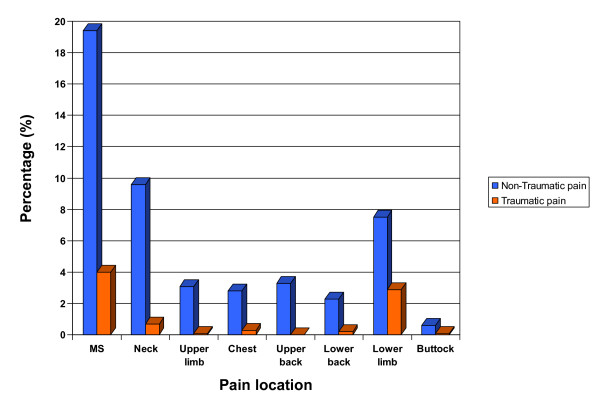
Results: A total of 1113 schoolchildren (93% of baseline pain-free children) were found at one-year follow-up. New episodes of musculoskeletal pain were reported by 21.5% of these children. Of them 19.4% reported non-traumatic pain and 4.0% reported traumatic pain. The neck was the most commonly reported site with non-traumatic pain, while the lower limb was the most common site for traumatic pain. The independent risk factors for non-traumatic musculoskeletal pain were headache (OR = 1.68, [95% CI 1.16-2.44]) and day-time tiredness (OR = 1.53, [95% CI 1.03-2.26]). The risk factors for traumatic musculoskeletal pain were vigorous exercise (OR = 3.40 [95% CI 1.39-8.31]) and day-time tiredness (OR = 2.97 [95% CI 1.41-6.26]).
Conclusion: This study highlights that there may be two types of pain entities with both distinct and common aspects of aetiology. For primary prevention purposes, school healthcare professionals should pay attention to preteens and early adolescents practicing vigorous exercise (predictor of traumatic pain), reporting headache (predictor of non-traumatic pain) and reporting day-time tiredness (predictor of both types of pain).
Figures
References
-
- Flatø B, Aasland A, Vandvik IH, Førre Ø. Outcome and predictive factors in children with chronic idiopathic musculoskeletal pain. Clin Exp Rheumatol. 1997;15:569–77. - PubMed
Publication types
MeSH terms
LinkOut - more resources
Full Text Sources
Medical
