


CDH1 truncating mutations in the E-cadherin gene: an indication for total gastrectomy to treat hereditary diffuse gastric cancer
- PMID: 17522512
- PMCID: PMC1876967
- DOI: 10.1097/01.sla.0000254370.29893.e4
CDH1 truncating mutations in the E-cadherin gene: an indication for total gastrectomy to treat hereditary diffuse gastric cancer
Abstract
Background: Approximately 1% to 3% of all gastric cancers are associated with families exhibiting an autosomal dominant pattern of susceptibility. E-cadherin (CDH1) truncating mutations have been shown to be present in approximately 30% of families with hereditary diffuse gastric cancer (HDGC) and are associated with a significantly increased risk of gastric cancer and lobular breast cancer.
Methods: Individuals from a large kindred with HDGC who were identified to have a CDH1 mutation prospectively underwent comprehensive screening with stool occult blood testing, standard upper gastrointestinal endoscopy with random gastric biopsies, high-magnification endoscopy with random gastric biopsies, endoscopic ultrasonography, CT, and PET scans to evaluate the stomach for occult cancer. Subsequently, they each underwent total gastrectomy with D-2 node dissection and Roux-en-Y esophagojejunostomy. The stomach and resected lymph nodes were evaluated pathologically.
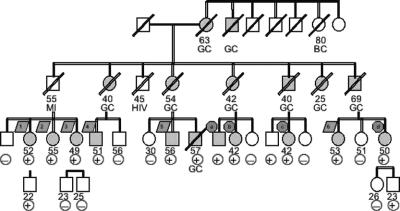
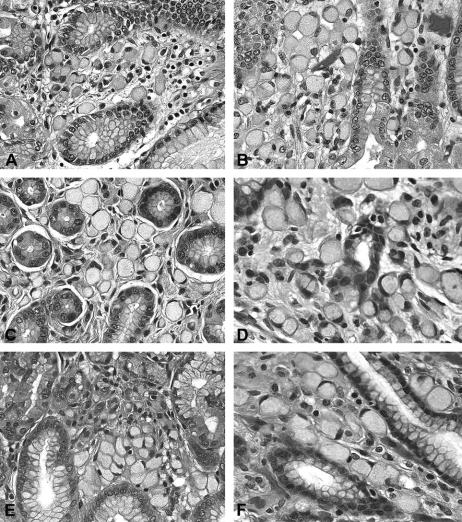
Results: Six patients were identified as CDH1 carriers from a single family. There were 2 men and 4 women. The mean age was 54 years (range, 51-57 years). No patient had any signs or symptoms of gastric cancer. Exhaustive preoperative stomach evaluation was normal in each case, and the stomach and adjacent lymph nodes appeared normal at surgery. However, each patient (6 of 6, 100%) was found to have multiple foci of T1 invasive diffuse gastric adenocarcinoma (pure signet-ring cell type). No patient had lymph node or distant metastases. Each was staged as T1N0M0. Each patient recovered uneventfully without morbidity or mortality.
Conclusions: CDH1 mutations in individuals from families with HDGC are associated with gastric cancer in a highly penetrant fashion. CDH1 mutations are an indication for total gastrectomy in these patients. This mutation will identify patients with cancer before other detectable symptoms or signs of the disease.
Figures

Comment in
-
Identifying and preventing high-risk gastric cancer individuals with CDH1 mutations.Ann Surg. 2008 Apr;247(4):714-5; author reply 715-6. doi: 10.1097/SLA.0b013e31816a5072. Ann Surg. 2008. PMID: 18362641 No abstract available.
References
-
- Suriano G, Yew S, Ferreira P, et al. Characterization of a recurrent germ line mutation of the E-cadherin gene: implications for genetic testing and clinical management. Clin Cancer Res. 2005;11:5401–5409. - PubMed
-
- Ford JM. Inherited susceptibility to gastric cancer: advances in genetics and guidelines for clinical management. J Natl Comprehensive Cancer Network. In press.
-
- Grady WM, Peek RM Jr. Hereditary diffuse gastric cancer: more answers or more questions? Gastroenterology. 2002;122:830–831; discussion 831–832. - PubMed
-
- Giarelli E. Prophylactic gastrectomy for CDH1 mutation carriers. Clin J Oncol Nurs. 2002;6:161–162. - PubMed
-
- Becker KF, Atkinson MJ, Reich U, et al. E-cadherin gene mutations provide clues to diffuse type gastric carcinomas. Cancer Res. 1994;54:3845–3852. - PubMed
MeSH terms
Substances
LinkOut - more resources
Full Text Sources
Medical
Research Materials
Miscellaneous
