


CEACAM6 acts as a receptor for adherent-invasive E. coli, supporting ileal mucosa colonization in Crohn disease
- PMID: 17525800
- PMCID: PMC1868786
- DOI: 10.1172/JCI30504
CEACAM6 acts as a receptor for adherent-invasive E. coli, supporting ileal mucosa colonization in Crohn disease
Abstract
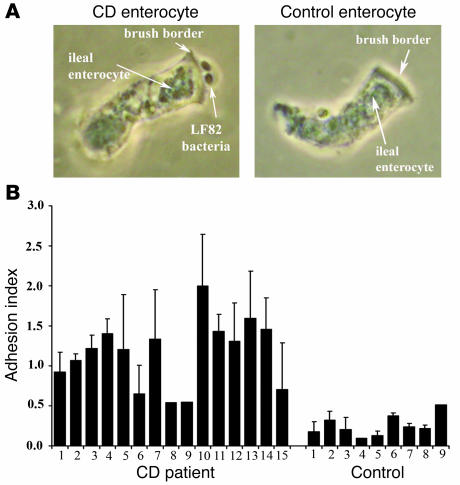
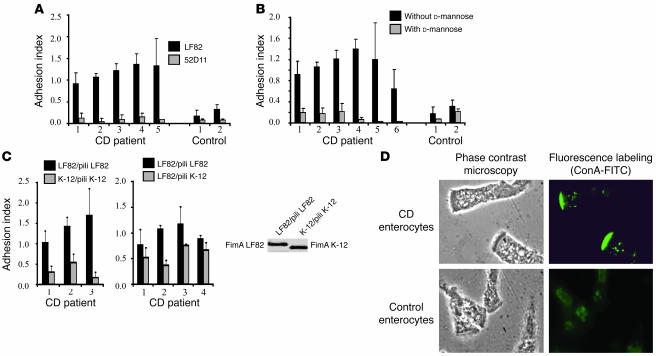
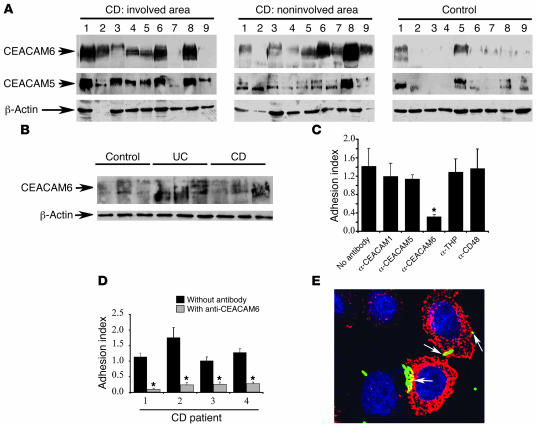
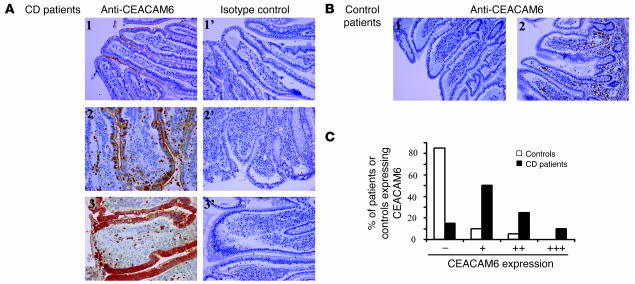
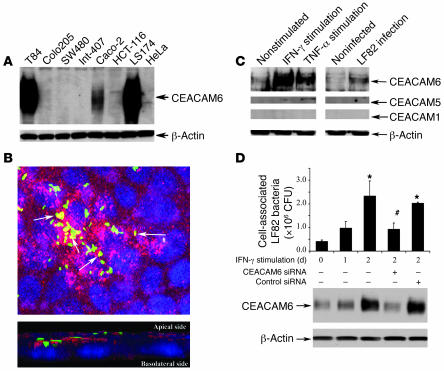
The ileal mucosa of Crohn disease (CD) patients is abnormally colonized by adherent-invasive E. coli (AIEC) that are able to adhere to and invade intestinal epithelial cells. Here, we show that CD-associated AIEC strains adhere to the brush border of primary ileal enterocytes isolated from CD patients but not controls without inflammatory bowel disease. AIEC adhesion is dependent on type 1 pili expression on the bacterial surface and on carcinoembryonic antigen-related cell adhesion molecule 6 (CEACAM6) expression on the apical surface of ileal epithelial cells. We report also that CEACAM6 acts as a receptor for AIEC adhesion and is abnormally expressed by ileal epithelial cells in CD patients. In addition, our in vitro studies show that there is increased CEACAM6 expression in cultured intestinal epithelial cells after IFN-gamma or TNF-alpha stimulation and after infection with AIEC bacteria, indicating that AIEC can promote its own colonization in CD patients.
Figures
References
-
- Loftus E.V., Jr., et al. Crohn’s disease in Olmsted County, Minnesota, 1940-1993: incidence, prevalence, and survival. Gastroenterology. 1998;114:1161–1168. - PubMed
-
- Elson C.O. Commensal bacteria as targets in Crohn’s disease. Gastroenterology. 2000;119:254–257. - PubMed
-
- Podolsky D.K. Inflammatory bowel disease. N. Engl. J. Med. 2002;347:417–429. - PubMed
-
- Shanahan F. Crohn’s disease. Lancet. 2002;359:62–69. - PubMed
-
- Hugot J.P., et al. Association of NOD2 leucine-rich repeat variants with susceptibility to Crohn’s disease. Nature. 2001;411:599–603. - PubMed
Publication types
MeSH terms
Substances
LinkOut - more resources
Full Text Sources
Other Literature Sources
Medical
