Zip4/Spo22 is required for class I CO formation but not for synapsis completion in Arabidopsis thaliana
- PMID: 17530928
- PMCID: PMC1877879
- DOI: 10.1371/journal.pgen.0030083
Zip4/Spo22 is required for class I CO formation but not for synapsis completion in Arabidopsis thaliana
Abstract
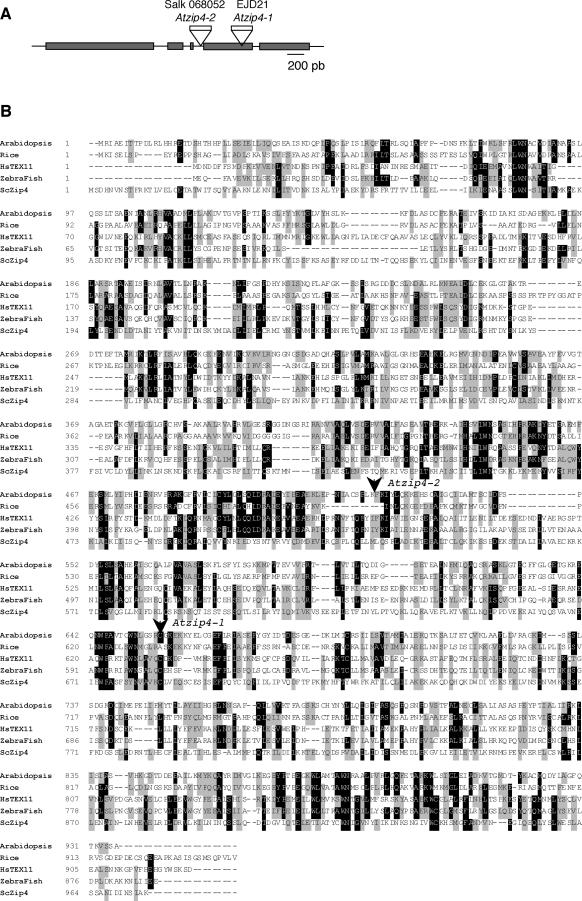
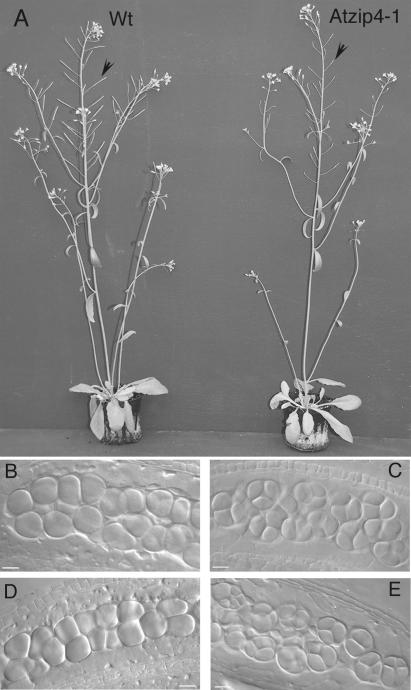
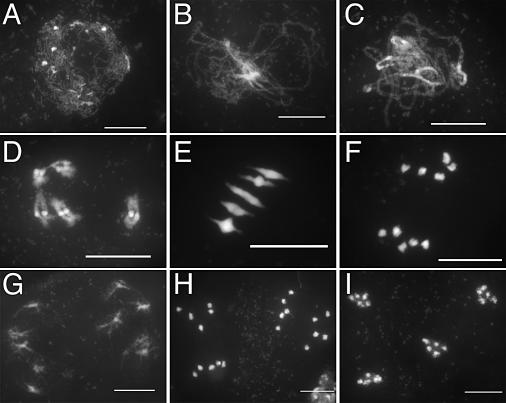
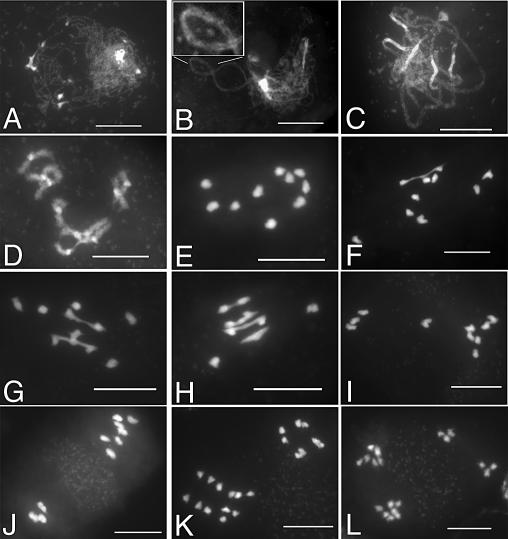
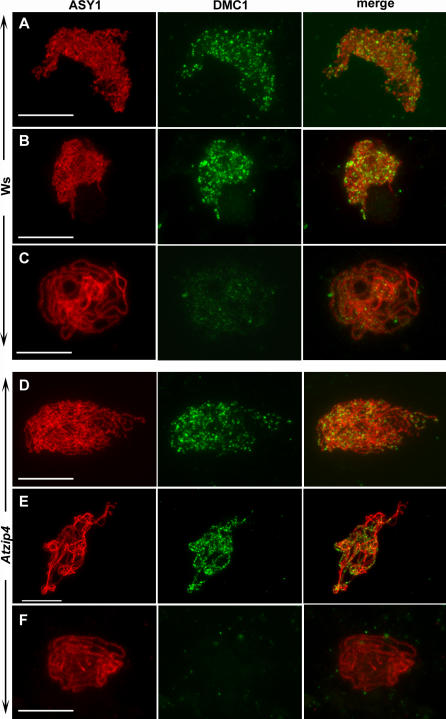
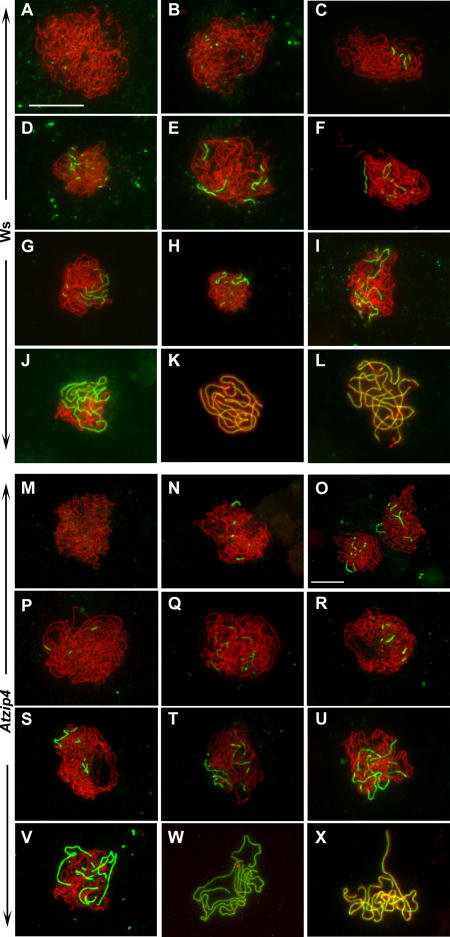
In budding yeast meiosis, the formation of class I interference-sensitive crossovers requires the ZMM proteins. These ZMM proteins are essential in forming a mature synaptonemal complex, and a subset of these (Zip2, Zip3, and Zip4) has been proposed to compose the core of synapsis initiation complexes (SICs). Zip4/Spo22 functions with Zip2 to promote polymerization of Zip1 along chromosomes, making it a crucial SIC component. In higher eukaryotes, synapsis and recombination have often been correlated, but it is totally unknown how these two processes are linked. In this study, we present the characterization of a higher eukaryote SIC component homologue: Arabidopsis AtZIP4. We show that mutations in AtZIP4 belong to the same epistasis group as Atmsh4 and eliminate approximately 85% of crossovers (COs). Furthermore, genetic analyses on two adjacent intervals of Chromosome I established that the remaining COs in Atzip4 do not show interference. Lastly, immunolocalization studies showed that polymerization of the central element of the synaptonemal complex is not affected in Atzip4 background, even if it may proceed from fewer sites compared to wild type. These results reveal that Zip4 function in class I CO formation is conserved from budding yeast to Arabidopsis. On the other hand, and contrary to the situation in yeast, mutation in AtZIP4 does not prevent synapsis, showing that both aspects of the Zip4 function (i.e., class I CO maturation and synapsis) can be uncoupled.
Conflict of interest statement
Competing interests. The authors have declared that no competing interests exist.
Figures
References
-
- Bishop DK, Zickler D. Early decision: Meiotic crossover interference prior to stable-strand exchange and synapsis. Cell. 2004;117:9–15. - PubMed
-
- Muller HJ. The mechanisms of crossing-over. Am Nat. 1916;50:193–221.
-
- Whitby MC. Making crossovers during meiosis. Biochem Soc Trans. 2005;33:1451–1455. - PubMed
-
- Borner GV, Kleckner N, Hunter N. Crossover/noncrossover differentiation, synaptonemal complex formation, and regulatory surveillance at the leptotene/zygotene transition of meiosis. Cell. 2004;117:29–45. - PubMed
MeSH terms
Substances
Associated data
- Actions
- Actions
- Actions
- Actions
- Actions
LinkOut - more resources
Full Text Sources
Other Literature Sources
Molecular Biology Databases