


Review
doi: 10.1053/j.semperi.2007.03.009.
After shoulder dystocia: managing the subsequent pregnancy and delivery
Affiliations
- PMID: 17531900
- PMCID: PMC9059257
- DOI: 10.1053/j.semperi.2007.03.009
Item in Clipboard
Review
After shoulder dystocia: managing the subsequent pregnancy and delivery
Semin Perinatol.
2007 Jun.
Abstract
Among risk factors for shoulder dystocia, a prior history of delivery complicated by shoulder dystocia is the single greatest risk factor for shoulder dystocia occurrence, with odds ratios 7 to 10 times that of the general population. Recurrence rates have been reported to be as high as 16%. Whereas prevention of shoulder dystocia in the general population is neither feasible nor cost-effective, intervention efforts directed at the particular subgroup of women with a prior history of shoulder dystocia can concentrate on potentially modifiable risk factors and individualized management strategies that can minimize recurrence and the associated significant morbidities and mortality.
Figures
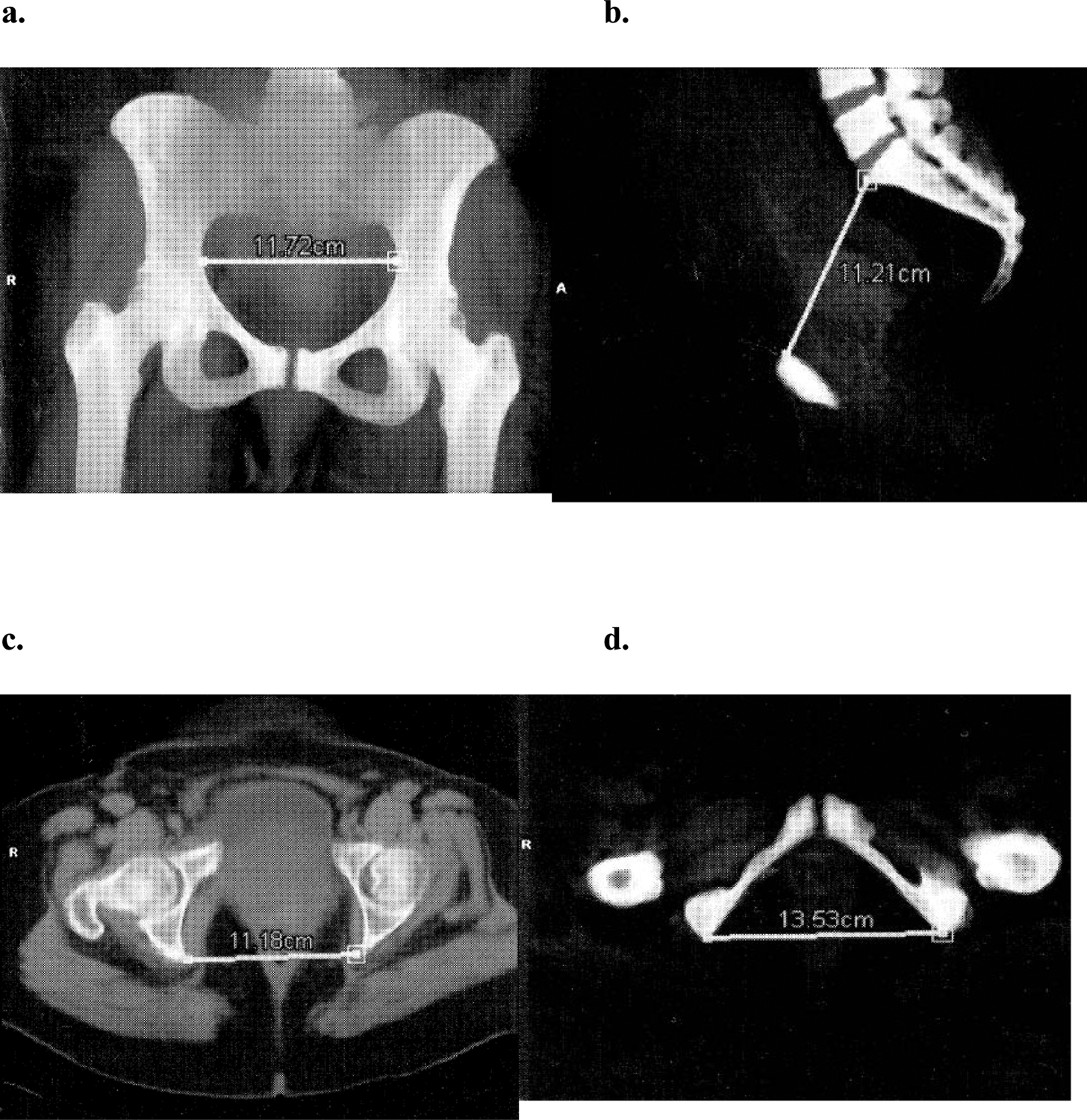
CT images were obtained from a grand grand multiparous (para 9) woman immediately following delivery, which was complicated by shoulder dystocia. a) largest transverse diameter; b) anteroposterior diameter (sacral promontory to top of pubic symphysis); image shows marked angulation of sacrococcygeal joint consistent with healed fracture; c) interspinous diameter; d) intertuberous diameter. Acquired pelvic deformity, likely sustained during earlier delivery, probably contributed to “high-riding” anterior shoulder resulting in shoulder dystocia.
References
-
- Acker DB, Sachs BP, Friedman EA. Risk factors for shoulder dystocia. Obstet Gynecol 1985;66:762–8. - PubMed
-
- Benedetti TJ, Gabbe SG. Shoulder dystocia- A complication of fetal macrosomia and prolonged second stage of labor with midpelvic delivery. Obstet Gynecol 1978;52:526–9. - PubMed
-
- Berard J, Dufour P, Vinatier D, Subtil D, Vanderstichele S, Monnier JC et al. Fetal macrosomia:risk factors and outcome; a study of the outcome concerning 100 cases >4500 g. Eur J Obstet Gynecol Reprod Bio 1998;77:51–9. - PubMed
-
- Hassan AA. Shoulder dystocia: Risk factors and prevention. Aust NZ J Obstet Gyn 1988;28:107–9. - PubMed
-
- Nesbitt T, Gilbert W, Herrchen B. Shoulder dystocia and associated risk factors with macrosomic infants born in California. Am J Obstet Gynecol 1998;179:476–80. - PubMed
Publication types
MeSH terms
Grants and funding
LinkOut - more resources
Full Text Sources
Medical
