Review
. 2007 Jul;42(3):278-88.
doi: 10.1016/j.ymeth.2007.02.005.

Generation of inhibitor-sensitive protein tyrosine phosphatases via active-site mutations

Affiliations
Review

Generation of inhibitor-sensitive protein tyrosine phosphatases via active-site mutations

Anthony C Bishop et al. Methods. 2007 Jul.

Abstract

Protein tyrosine phosphatases (PTPs) catalyze the dephosphorylation of phosphotyrosine, a central control element in mammalian signal transduction. Small-molecule inhibitors that are specific for each cellular PTP would be valuable tools in dissecting phosphorylation networks and for validating PTPs as therapeutic targets. However, the common architecture of PTP active sites impedes the discovery of selective PTP inhibitors. Our laboratory has recently used enzyme/inhibitor-interface engineering to generate selective PTP inhibitors. The crux of the strategy resides in the design of "inhibitor-sensitized" PTPs through protein engineering of a novel binding pocket in the target PTP. "Allele-specific" inhibitors that selectively target the sensitized PTP can be synthesized by modifying broad-specificity inhibitors with bulky chemical groups that are incompatible with wild-type PTP active sites; alternatively, specific inhibitors that serendipitously recognize the sensitized PTP's non-natural pocket may be discovered from panels of "non-rationally" designed compounds. In this review, we describe the current state of the PTP-sensitization strategy, with emphases on the methodology of identifying PTP-sensitizing mutations and synthesizing the compounds that have been found to target PTPs in an allele-specific manner. Moreover, we discuss the scope of PTP sensitization in regard to the potential application of the approach across the family of classical PTPs.


Figures
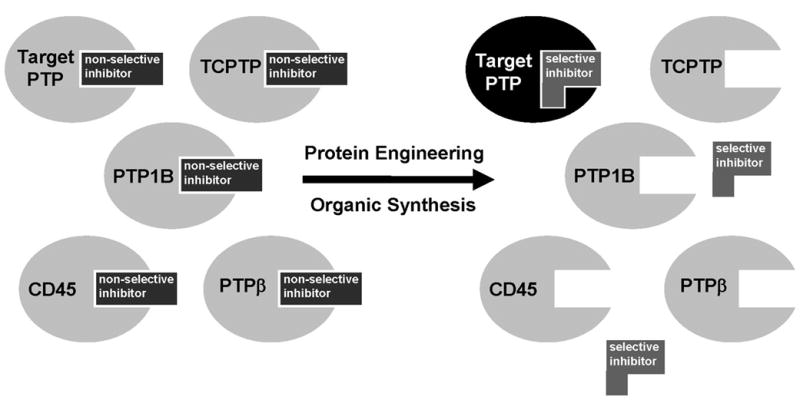
Fig. 1
Fig. 1
Schematic representation of an active-site-directed inhibitor-sensitization approach for PTPs. The problem of structural redundancy in PTP active sites is alleviated by artificially introducing diversity in the target PTP with a functionally silent mutation. The conversion of a large amino acid to a small amino acid creates a novel binding pocket that is not present in wild-type PTPs. A specific inhibitor of the engineered PTP is synthesized by modifying a known PTP inhibitor with a chemical group designed to fit the novel active-site pocket.
Fig. 2
Fig. 2
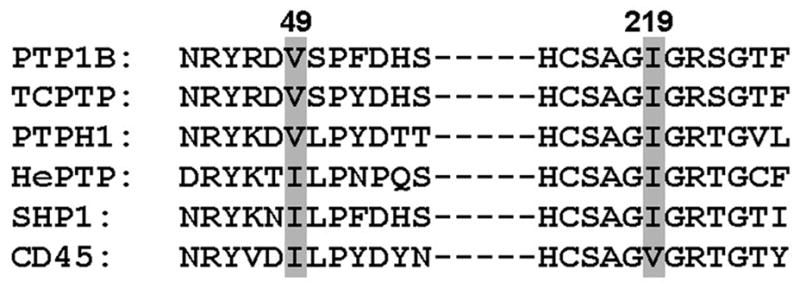
Partial sequence alignment of PTPs discussed in this review, in addition to two further examples (SHP1 and CD45). Numbering is according to human PTP1B.
Fig. 3
Fig. 3
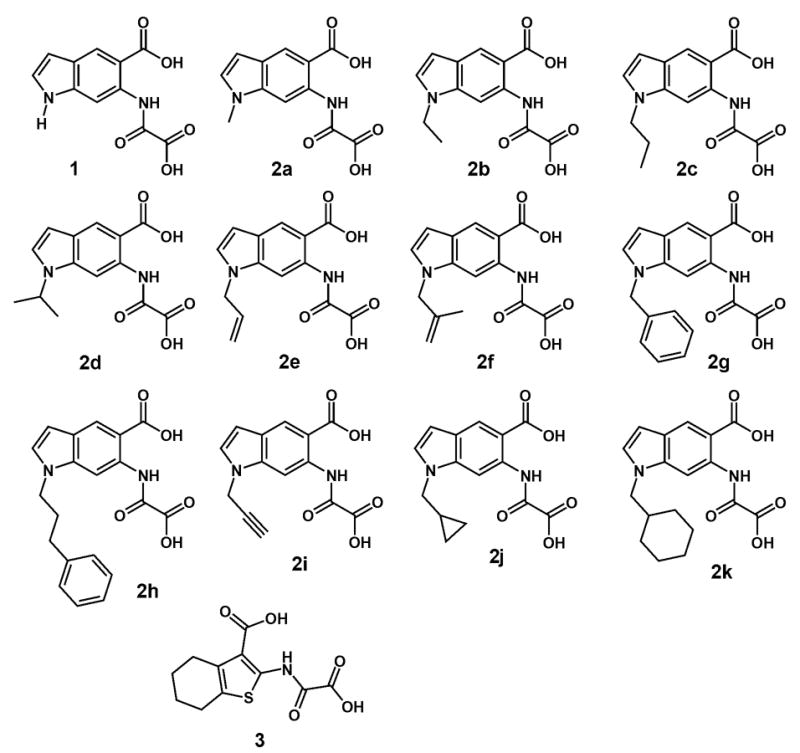
Chemical structures of compounds 1, 2a2k, and 3.
Fig. 4
Fig. 4
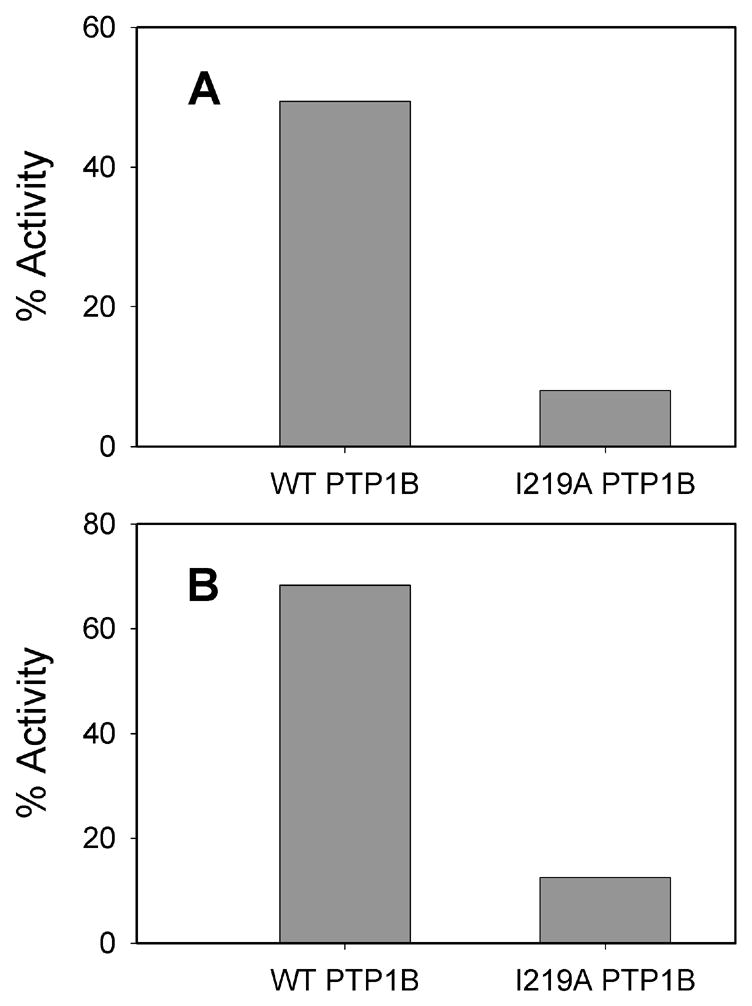
(A) Selective inhibition of I219A PTP1B by compound 2a. Compound 2a (25 μM) was incubated at 22 °C with 100 mM NaOAc pH 5.2; 50 mM NaCl; pNPP (concentration corresponding to the Km value for the particular enzyme); and the indicated PTP. Percent PTP1B activities in the presence of 2a (normalized to a no-inhibitor control) are shown as bars. (B) Selective inhibition of I219A PTP1B by compound 3.Compound 3 (20 μM) was incubated at 22 °C with 50 mM 3,3-dimethylglutarate pH 7.0; 1 mM EDTA; 50 mM NaCl; pNPP (concentration corresponding to the KM for the particular enzyme); and the indicated PTP. Percent PTP1B activities in the presence of 3 (normalized to a no-inhibitor control) are shown as bars.
Fig. 5
Fig. 5
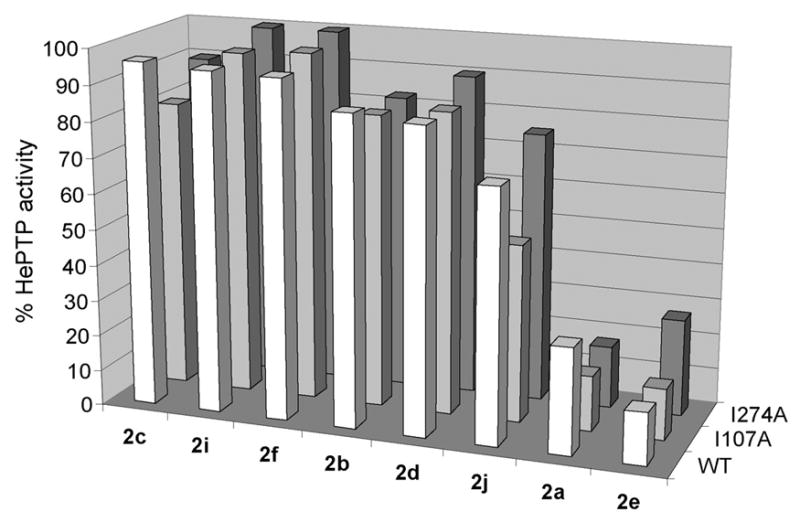
Screen of compound panel 2 for selective inhibition of engineered HePTP mutants. The indicated compounds (100 μM) were incubated at 22 °C with 50 mM 3,3-dimethylglutarate pH 7.0; 1 mM EDTA; 50 mM NaCl; pNPP (concentration corresponding to the KM for the particular enzyme); and wild-type (foreground), I107A (middle), or I274A (background) HePTP. Percent HePTP activities in the presence of the inhibitors (normalized to a no-inhibitor control) are shown as bars, which represent the mean values from at least three experiments.
Fig. 6
Fig. 6
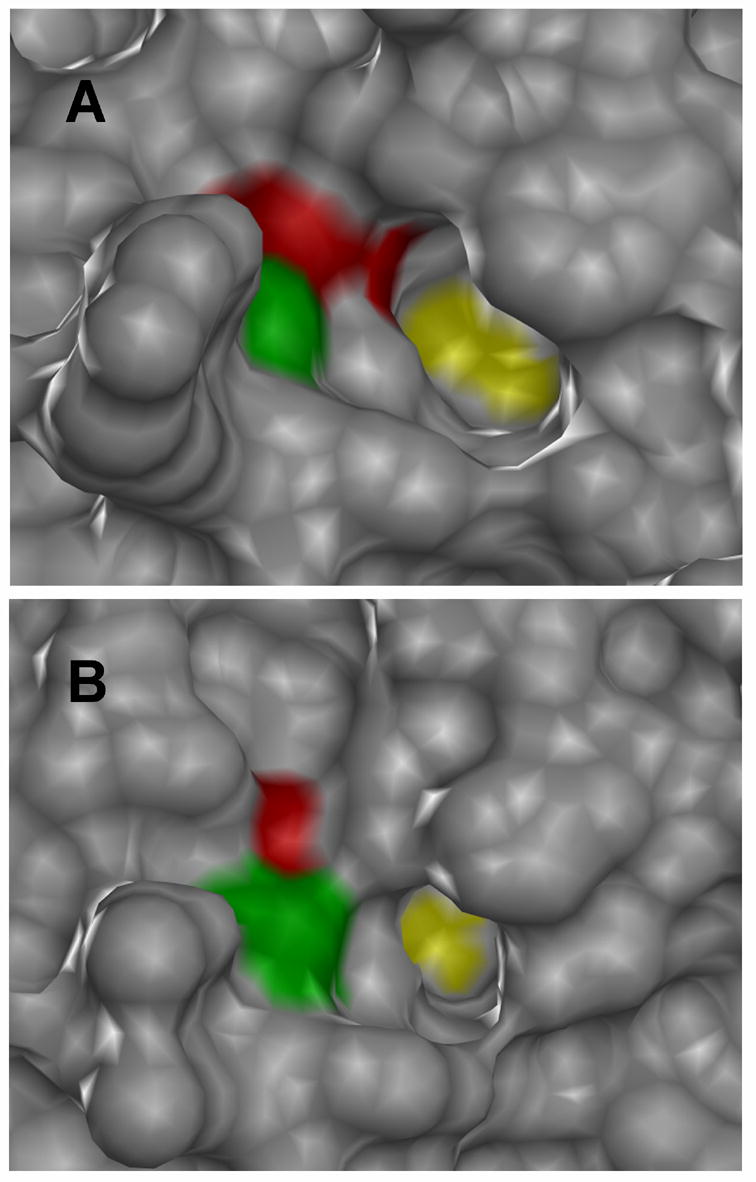
Active-site structural comparison of PTP1B and HePTP. The protein surfaces of PTP1B (A, PDB: 1C83 [38]) and HePTP (B, PDB: 1ZC0 [49]) are shown in gray, with the portions of the surface comprising V49/I107 shown in green and the portions comprising I219/I274 shown in red. For perspective, the active-site catalytic cysteine residues of PTP1B and HePTP are shown in yellow. Both enzymes are crystallized in the closed conformation: an inhibitor (compound 1) bound to the PTP1B active site and a phosphate ion bound to the HePTP active site have been removed for clarity. Images were generated using the Chimera software package (http://www.cgl.ucsf.edu/chimera).
Scheme 1
Scheme 1
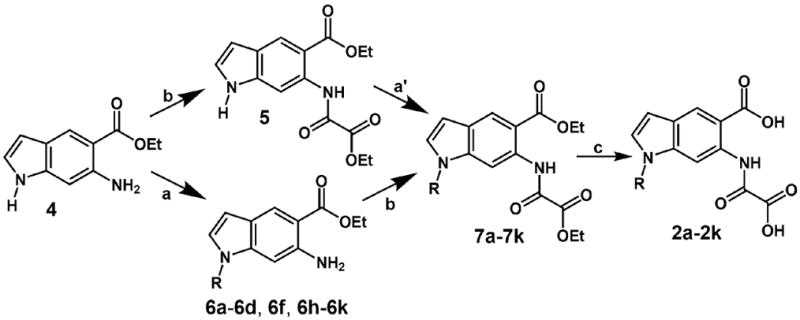
Synthesis of the N-derivatized oxalylaminoindole inhibitors, compound panel 2a-2k. Compound 4 was synthesized in five steps essentially as described [39]. Reaction conditions: (a) NaH (1.3 equiv), DMF, RX; (á) NaH (3.0 equiv), DMF, RX; (b) ethyl oxalyl chloride, THF; (c) 1.NaOH, H2O, EtOH; 2. HCl.

References

    1. Tonks NK. Nat Rev Mol Cell Biol. 2006;7:833–846. - PubMed
    1. Andersen JN, Mortensen OH, Peters GH, Drake PG, Iversen LF, Olsen OH, Jansen PG, Andersen HS, Tonks NK, Moller NP. Mol Cell Biol. 2001;21:7117–7136. - PMC - PubMed
    1. Alonso A, Sasin J, Bottini N, Friedberg I, Friedberg I, Osterman A, Godzik A, Hunter T, Dixon J, Mustelin T. Cell. 2004;117:699–711. - PubMed
    1. Tonks NK, Neel BG. Curr Opin Cell Biol. 2001;13:182–195. - PubMed
    1. Van Vactor D, O'Reilly AM, Neel BG. Curr Opin Genet Dev. 1998;8:112–126. - PubMed

Publication types

MeSH terms

Substances