


Red American ginseng: ginsenoside constituents and antiproliferative activities of heat-processed Panax quinquefolius roots
- PMID: 17538869
- PMCID: PMC2657361
- DOI: 10.1055/s-2007-981524
Red American ginseng: ginsenoside constituents and antiproliferative activities of heat-processed Panax quinquefolius roots
Abstract
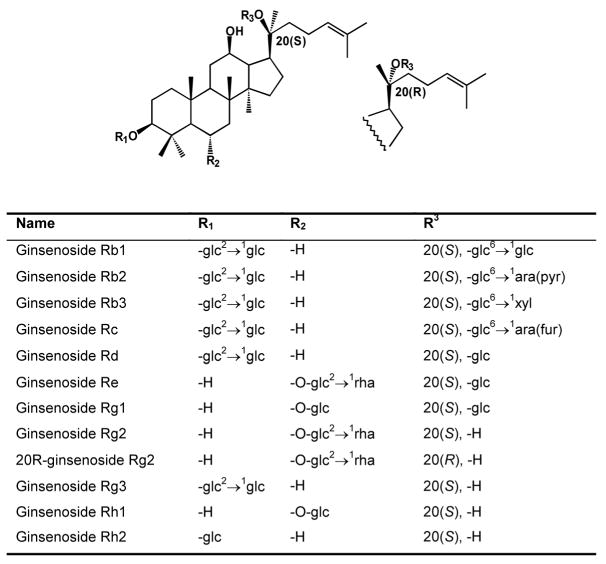
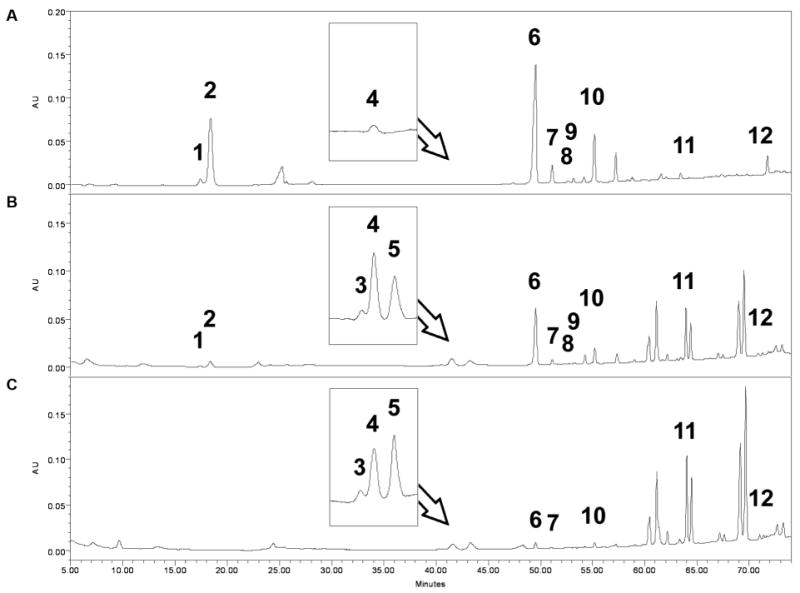
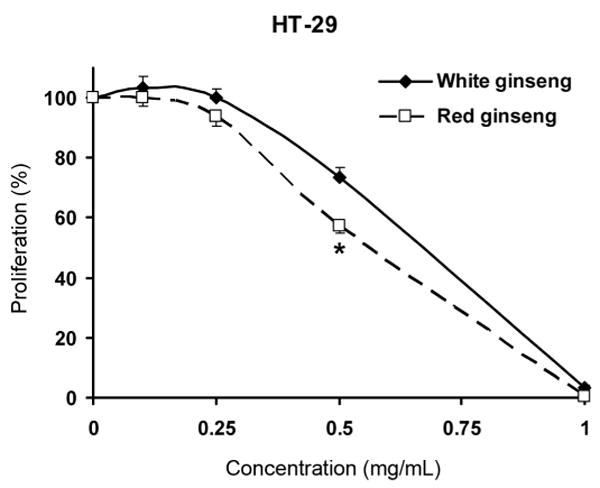
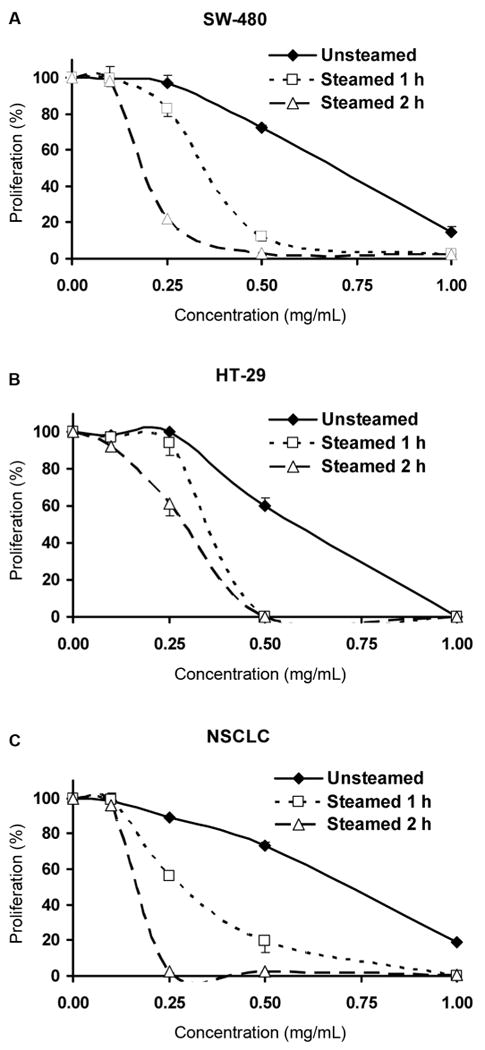
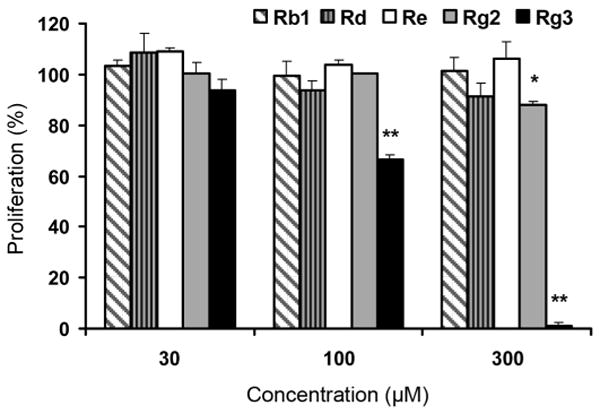
Red Asian ginseng ( Panax ginseng C. A. Meyer, Araliaceae) is used in many Oriental countries. In this study, the saponin constituents and anticancer activities of steamed American ginseng ( Panax quinquefolius L.) roots were evaluated. The contents of 12 ginsenosides in the roots were determined using high performance liquid chromatography (HPLC). After the steaming treatment (100 - 120 degrees C for 1 h and 120 degrees C for 0.5 - 4 h), the quantity of 7 ginsenosides decreased and that of 5 others increased. The content of ginsenoside Rg3, a previously recognized anticancer compound, increased significantly when the root was steamed at 120 degrees C for 0.5 - 3 h. The antiproliferative effects of unsteamed and steamed (120 degrees C for 1 h and 2 h) American ginseng root extracts were assayed by the modified trichrome stain (MTS) method using three cancer cell lines (SW-480, HT-29, NSCLC). Heat-processing increased the antiproliferative effect of American ginseng significantly, and the activity of the extract from roots steamed for 2 h was greater than that of roots steamed for 1 h. Chemical constituents and antiproliferative activities of white and red Asian ginseng have also been evaluated. Five representative ginsenosides, Rb1, Rd, Re, Rg2 and Rg3, were studied. Ginsenoside Rg3 had the most potent effect. The antiproliferative activities of red American ginseng are augmented when ginsenoside Rg3 is increased.
Figures
References
-
- Ang-Lee MK, Moss J, Yuan CS. Herbal medicines and perioperative care. JAMA. 2001;286:208–16. - PubMed
-
- Takaku T, Kameda K, Matsuura Y, Sekiya K, Okuda H. Studies on insulin-like substances in Korean red ginseng. Planta Med. 1990;56:27–30. - PubMed
-
- Helms S. Cancer prevention and therapeutics: Panax ginseng. Altern Med Rev. 2004;9:259–74. - PubMed
-
- Xie JT, Mchendale S, Yuan CS. Ginseng and diabetes. Am J Chin Med. 2005;33:397–404. - PubMed
-
- Liou CJ, Huang WC, Tseng J. Long-term oral administration of ginseng extract modulates humoral immune response and spleen cell functions. Am J Chin Med. 2005;33:651–61. - PubMed
Publication types
MeSH terms
Substances
Grants and funding
LinkOut - more resources
Full Text Sources
Medical
Miscellaneous
