


Association between metabolic syndrome and sleep-disordered breathing in adolescents
- PMID: 17541017
- PMCID: PMC1994215
- DOI: 10.1164/rccm.200703-375OC
Association between metabolic syndrome and sleep-disordered breathing in adolescents
Abstract
Rationale: Metabolic syndrome (MetS) affects 4 to 10% of adolescents. Risk factors include overweight, male sex, and Hispanic ethnicity. Although sleep-disordered breathing (SDB) has been implicated as a risk factor for MetS in adults, its association with SDB in adolescents is unknown.
Objectives: To define the association of SDB with MetS in adolescents.
Methods: Standardized measurements of SDB, anthropometry and bioassays, were made in 270 adolescents, aged 13.6 +/- 0.7 years. MetS was identified if threshold levels were exceeded in three of five areas: waist circumference, blood pressure, triglyceride level, high-density lipoprotein cholesterol level, and glucose levels.
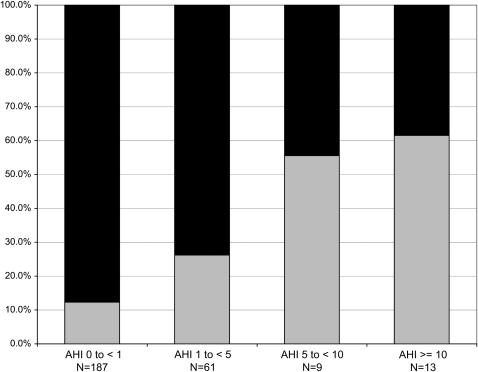
Measurements and main results: Although 70% of children with SDB (apnea-hypopnea index >or= 5) were overweight and 59% had MetS, 16% of children without SDB had MetS. Twenty-five percent of those with MetS had SDB. After adjusting for age, race, sex, and preterm status, children with SDB had a 6.49 (95% confidence interval, 2.52, 16.70) increased odds of MetS compared with children without SDB. Indices of SDB stress associated with MetS included respiratory event frequency, degree of oxygen desaturation, and sleep efficiency. Analyses of individual metabolic parameters showed that, after adjustment for body mass index, SDB was associated with systolic and diastolic blood pressure, low-density lipoprotein cholesterol, and fasting insulin levels.
Conclusions: A majority of adolescents with SDB are overweight and meet criteria for MetS. The close association between MetS and SDB and their putative interacting pathophysiologies suggests a need to develop screening, prevention, and treatment strategies for both disorders in high-risk, overweight adolescents.
Figures
References
-
- Third Report of the National Cholesterol Education Program (NCEP) Expert Panel on Detection, Evaluation, and Treatment of High Blood Cholesterol in Adults (Adult Treatment Panel III). Final report. Circulation 2002;106:3143. - PubMed
-
- Cook S, Weitzman M, Auinger P, Nguyen M, Dietz WH. Prevalence of a metabolic syndrome phenotype in adolescents: findings from the Third National Health and Nutrition Examination Survey, 1988–1994. Arch Pediatr Adolesc Med 2003;157:821–827. - PubMed
-
- de Ferranti SD, Gauvreau K, Ludwig DS, Neufeld EJ, Newburger JW, Rifai N. Prevalence of the metabolic syndrome in American adolescents: findings from the Third National Health and Nutrition Examination Survey. Circulation 2004;110:2494–2497. - PubMed
-
- Srinivasan SR, Myers L, Berenson GS. Predictability of childhood adiposity and insulin for developing insulin resistance syndrome (syndrome X) in young adulthood: the Bogalusa Heart Study. Diabetes 2002;51:204–209. - PubMed
Publication types
MeSH terms
Substances
Grants and funding
LinkOut - more resources
Full Text Sources
Medical
