


Effect of training on primary care residents' performance in brief alcohol intervention: a randomized controlled trial
- PMID: 17541671
- PMCID: PMC2305743
- DOI: 10.1007/s11606-007-0240-2
Effect of training on primary care residents' performance in brief alcohol intervention: a randomized controlled trial
Abstract
Background: Brief alcohol interventions (BAI) reduce alcohol use and related problems in primary care patients with hazardous drinking behavior. The effectiveness of teaching BAI on the performance of primary care residents has not been fully evaluated.
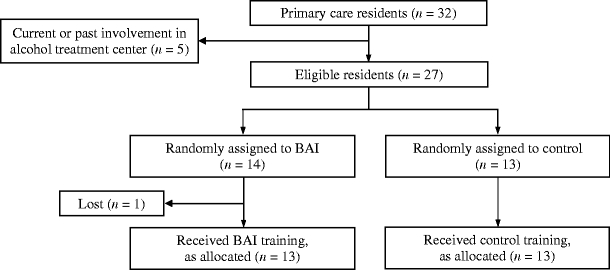
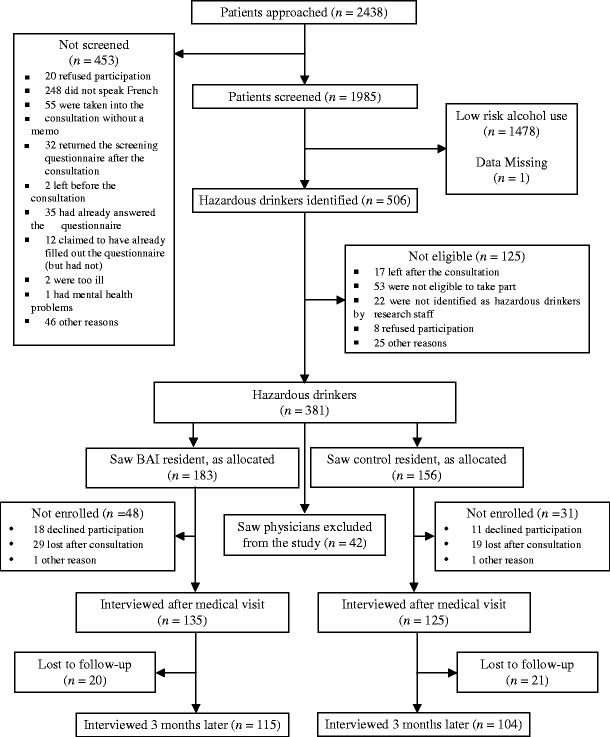
Methods: A cluster randomized controlled trial was conducted with 26 primary care residents who were randomized to either an 8-hour, interactive BAI training workshop (intervention) or a lipid management workshop (control). During the 6-month period after training (i.e., from October 1, 2003 to March 30, 2004), 506 hazardous drinkers were identified in primary care, 260 of whom were included in the study. Patients were interviewed immediately and then 3 months after meeting with each resident to evaluate their perceptions of the BAI experience and to document drinking patterns.
Results: Patients reported that BAI trained residents: conducted more components of BAI than did controls (2.4 vs 1.5, p = .001); were more likely to explain safe drinking limits (27% vs 10%, p = .001) and provide feedback on patients' alcohol use (33% vs 21%, p = .03); and more often sought patient opinions on drinking limits (19% vs 6%, p = .02). No between-group differences were observed in patient drinking patterns or in use of 9 of the 12 BAI components.
Conclusions: The BAI-trained residents did not put a majority of BAI components into practice, thus it is difficult to evaluate the influence of BAI on the reduction of alcohol use among hazardous drinkers.
Figures
References
-
- Screening and behavioral counseling interventions in primary care to reduce alcohol misuse: recommendation statement. Ann Intern Med. 2004;140:554–6. - PubMed
-
- Fleming MF, Manwell LB, Kraus M, Isaacson JH, Kahn R, Stauffacher EA. Who teaches residents about the prevention and treatment of substance use disorders? A national survey. J Fam Pract. 1999;48:725–9. - PubMed
Publication types
MeSH terms
LinkOut - more resources
Full Text Sources
Medical
