


The innate immune system in allograft rejection and tolerance
- PMID: 17548582
- PMCID: PMC2840045
- DOI: 10.4049/jimmunol.178.12.7503
The innate immune system in allograft rejection and tolerance
Abstract
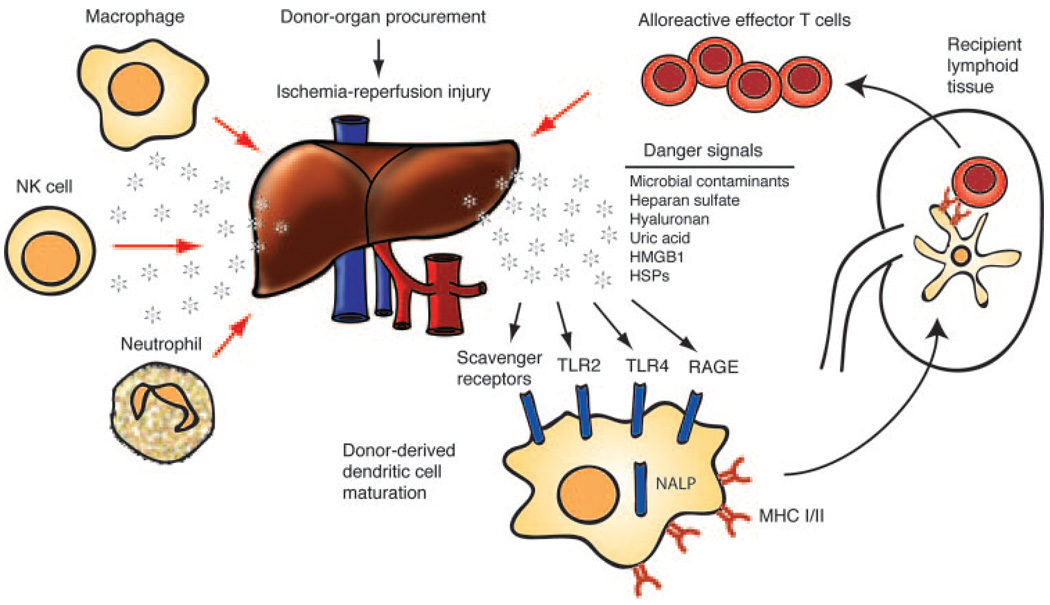
As T cells alone are both necessary and sufficient for the rejection of virtually all allogeneic tissues, much of transplantation immunology has focused on cells of the adaptive immune system. During the past decade, advances in our understanding of innate responses to pathogen-associated molecules have spurred a "rediscovery" of innate immunity. Fueled by this, an increasing body of literature has emerged in which the role of the innate immune system in allograft rejection and tolerance has been examined more closely. This review will give an overview of recent studies and emerging concepts of how the cellular components of the innate immune system participate in the immune response to solid organ transplantation. These important studies highlight the complex interplay between diverse cells of the immune response and provide the basis for optimal strategies of tolerance induction.
Figures
References
-
- Iwasaki A, Medzhitov R. Toll-like receptor control of the adaptive immune responses. Nat. Immunol. 2004;5:987–995. - PubMed
-
- Game DS, Lechler RI. Pathways of allorecognition: implications for transplantation tolerance. Transpl. Immunol. 2002;10:101–108. - PubMed
-
- Le Moine A, Goldman M, Abramowicz D. Multiple pathways to allograft rejection. Transplantation. 2002;73:1373–1381. - PubMed
-
- Christopher K, Mueller TF, Ma C, Liang Y, Perkins DL. Analysis of the innate and adaptive phases of allograft rejection by cluster analysis of transcriptional profiles. J. Immunol. 2002;169:522–530. - PubMed
Publication types
MeSH terms
Substances
Grants and funding
LinkOut - more resources
Full Text Sources
Other Literature Sources
Medical
Research Materials
Miscellaneous
