Sufficiently important difference for common cold: severity reduction
- PMID: 17548849
- PMCID: PMC1886488
- DOI: 10.1370/afm.698
Sufficiently important difference for common cold: severity reduction
Abstract
Purpose: We undertook a study to estimate the sufficiently important difference (SID) for the common cold. The SID is the smallest benefit that an intervention would require to justify costs and risks.
Methods: Benefit-harm tradeoff interviews (in-person and telephone) assessed SID in terms of overall severity reduction using evidence-based simple-language scenarios for 4 common cold treatments: vitamin C, the herbal medicine echinacea, zinc lozenges, and the unlicensed antiviral pleconaril.
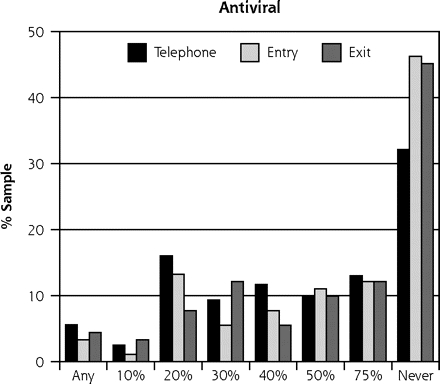
Results: Response patterns to the 4 scenarios in the telephone and in-person samples were not statistically distinguishable and were merged for most analyses. The scenario based on vitamin C led to a mean SID of 25% (95% confidence interval [CI] 0.23-0.27). For the echinacea-based scenario, mean SID was 32% (95% CI, 0.30-0.34). For the zinc-based scenario, mean SID was 47% (95% CI, 0.43-0.51). The scenario based on preliminary antiviral trials provided a mean SID of 57% (95% CI, 0.53-0.61). Multivariate analyses suggested that (1) between-scenario differences were substantive and reproducible in the 2 samples, (2) presence or severity of illness did not predict SID, and (3) SID was not influenced by age, sex, tobacco use, ethnicity, income, or education. Despite consistencies supporting the model and methods, response patterns were diverse, with wide spreads of individual SID values within and among treatment scenarios.
Conclusions: Depending on treatment specifics, people want an on-average 25% to 57% reduction in overall illness severity to justify costs and risks of popular cold treatments. Randomized trial evidence does not support benefits this large. This model and these methods should be further developed for use in other disease entities.
Figures


References
-
- Brand DA. Benefits, harms, and the design of clinical trials. Med Decis Making. 2005;25(3):246–247. - PubMed
-
- Guyatt GH, Osoba D, Wu AW, Wyrwich KW, Norman GR. Methods to explain the clinical significance of health status measures. Mayo Clin Proc. 2002;77(4):371–383. - PubMed
-
- Friedman L, Furberg C, DeMets D. Fundamentals of Clinical Trials. New York, NY: Springer-Verlag; 1998.
-
- Jaeschke R, Singer J, Guyatt GH. Measurement of health status. Ascertaining the minimal clinically important difference. Control Clin Trials. 1989;10(4):407–415. - PubMed
-
- Barrett B, Brown D, Mundt M, Brown R. Sufficiently important difference: expanding the framework of clinical significance. Med Decis Making. 2005;25(3):250–261. - PubMed
Publication types
MeSH terms
Substances
Grants and funding
LinkOut - more resources
Full Text Sources
Medical