


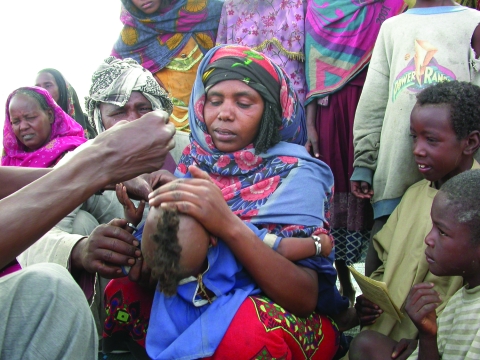
Human and animal vaccination delivery to remote nomadic families, Chad
- PMID: 17552089
- PMCID: PMC2725911
- DOI: 10.3201/eid1303.060391
Human and animal vaccination delivery to remote nomadic families, Chad
Abstract
Vaccination services for people and livestock often fail to achieve sufficient coverages in Africa's remote rural settings because of financial, logistic, and service delivery constraints. In Chad from 2000 through 2005, we demonstrated the feasibility of combining vaccination programs for nomadic pastoralists and their livestock. Sharing of transport logistics and equipment between physicians and veterinarians reduced total costs. Joint delivery of human and animal health services is adapted to and highly valued by hard-to-reach pastoralists. In intervention zones, for the first time approximately 10% of nomadic children (> 1-11 months of age) were fully immunized annually and more children and women were vaccinated per day during joint vaccination rounds than during vaccination of persons only and not their livestock (130 vs. 100, p < 0.001). By optimizing use of limited logistical and human resources, public health and veterinary services both become more effective, especially at the district level.
Figures
References
-
- Wyss K, Moto DM, Callewaert B. Constraints to scaling-up health related interventions: the case of Chad, Central Africa. J Int Dev. 2003;15:87–100. 10.1002/jid.967 - DOI
-
- Cheneau Y, El Idrissi AH, Ward D. An assessment of the strengths and weaknesses of current veterinary systems in the developing world. Rev Sci Tech. 2004;23:351–9. - PubMed
-
- World Health Organization, United Nations International Children’s Emergency Fund. Global immunization vision and strategy 2006–2015. Geneva: The Organization. WHO/IVB/05.05; 2005.
-
- Jamison DT, Mosley WH, Measham AR, Bobadilla JL. Disease control: priorities in developing countries. New York: Oxford University Press; 1993.
Publication types
MeSH terms
LinkOut - more resources
Full Text Sources
Medical