


Suppression of conditioning to ambiguous cues by pharmacogenetic inhibition of the dentate gyrus
- PMID: 17558402
- PMCID: PMC2836794
- DOI: 10.1038/nn1919
Suppression of conditioning to ambiguous cues by pharmacogenetic inhibition of the dentate gyrus
Abstract
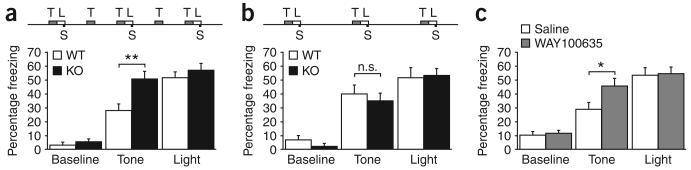
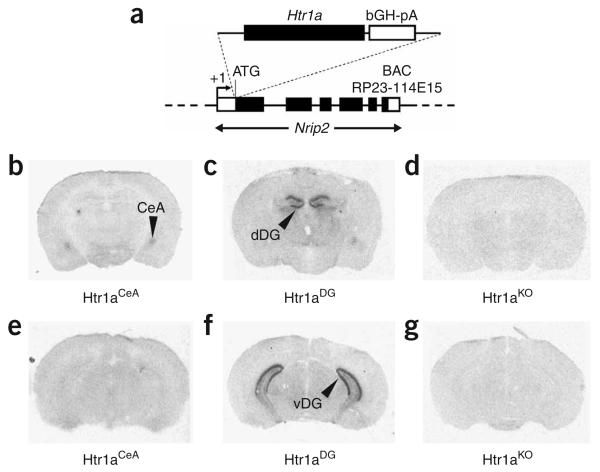
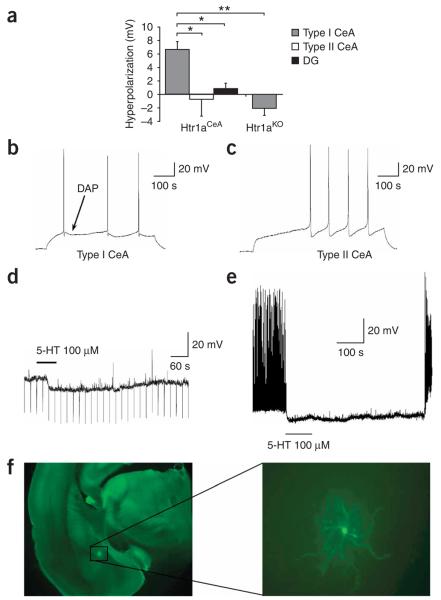
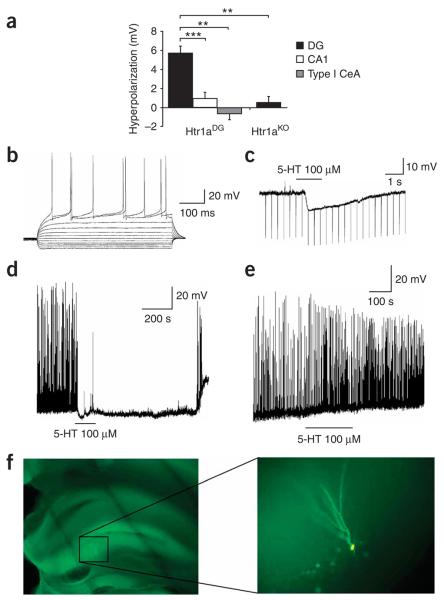
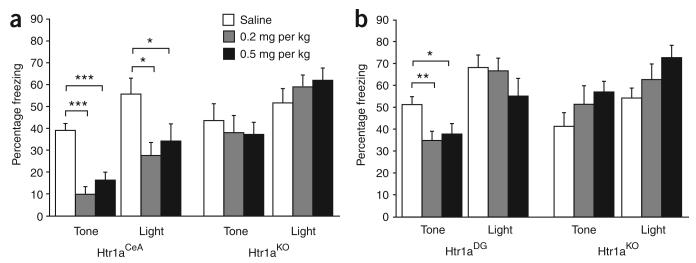
Serotonin receptor 1A knockout (Htr1a(KO)) mice show increased anxiety-related behavior in tests measuring innate avoidance. Here we demonstrate that Htr1a(KO) mice show enhanced fear conditioning to ambiguous conditioned stimuli, a hallmark of human anxiety. To examine the involvement of specific forebrain circuits in this phenotype, we developed a pharmacogenetic technique for the rapid tissue- and cell type-specific silencing of neural activity in vivo. Inhibition of neurons in the central nucleus of the amygdala suppressed conditioned responses to both ambiguous and nonambiguous cues. In contrast, inhibition of hippocampal dentate gyrus granule cells selectively suppressed conditioned responses to ambiguous cues and reversed the knockout phenotype. These data demonstrate that Htr1a(KO) mice have a bias in the processing of threatening cues that is moderated by hippocampal mossy-fiber circuits, and suggest that the hippocampus is important in the response to ambiguous aversive stimuli.
Figures
Comment in
-
Ambiguity and anxiety: when a glass half full is empty.Nat Neurosci. 2007 Jul;10(7):807-8. doi: 10.1038/nn0707-807. Nat Neurosci. 2007. PMID: 17593939 No abstract available.
References
-
- Gross C, et al. Serotonin1A receptor acts during development to establish normal anxiety-like behaviour in the adult. Nature. 2002;416:396–400. - PubMed
-
- Groenink L, et al. 5-HT1A receptor knockout mice and mice overexpressing corticotropin-releasing hormone in models of anxiety. Eur. J. Pharmacol. 2003;463:185–197. - PubMed
Publication types
MeSH terms
Substances
Grants and funding
LinkOut - more resources
Full Text Sources
Other Literature Sources
Molecular Biology Databases
Research Materials
